
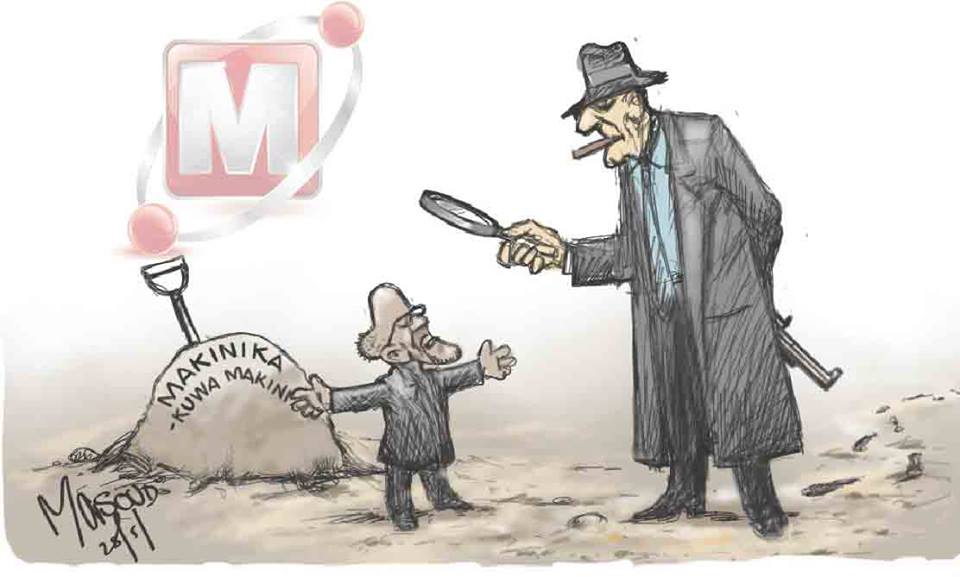
The Costs and Casualties of Magufuli’s Mineral War
Chambi Chachage
“This economic warfare requires enough sacrifice” – President John Magufuli
President
Magufuli has declared that Tanzania is in economic warfare.
This is a protracted struggle to protect our natural resources from plunder. Minerals
are at the heart of this battle.
Of course, we
have not yet experienced a ‘mineral war’ like the one in the neighboring Democratic
Republic of Congo (DRC). However, what Thabit Jacob aptly refers to as the “securitization”
of our extractive sector is increasingly at play. It is an indication of the erosion of
trust.
After years of
luring – and being courted by – investors and our development partners, the investment
honeymoon is over. One only needs to read the ninth recommendation of the
second presidential committee on copper concentrates earmarked for export to grasp
this. “The government”, it
recommends, “is to start guarding mining areas and their airstrips to
prevent companies from engaging in acts of economic sabotage such as smuggling
minerals.”
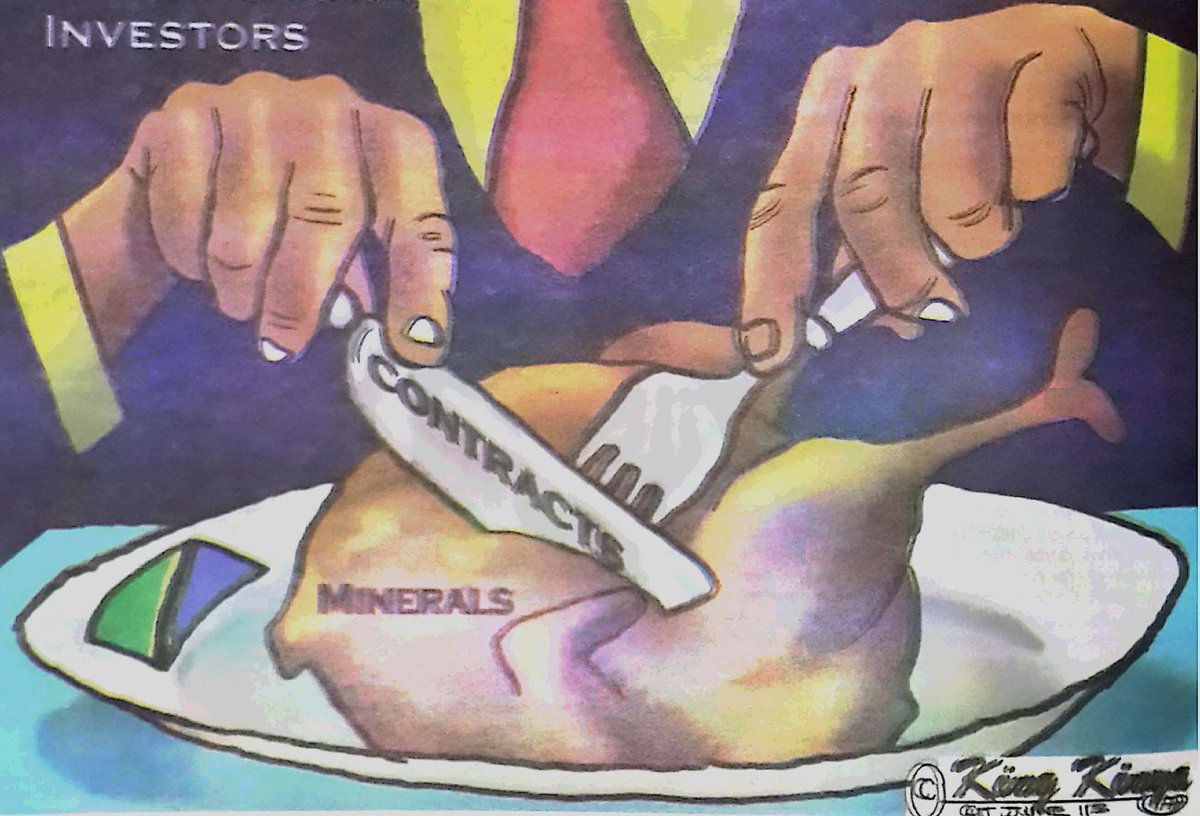
By accepting this
recommendation wholeheartedly, the Commander-in-Chief is ordering the security forces to take their position. In fact, this is what he said
when he received a report from the first presidential committee on the same matter:
“Regarding all activities involving minerals in this country, as of today, all
our intelligence and security organs must be deployed effectively.”
It is thus a
presidential admission or acknowledgement that, as far as the mining sector is
concerned, the state had been captured. What caused the institutions that we
have been attempting to create failed to capture such illicit outflows? How
could this happen when the country was attempting to comply to the demands of the Extractive Industry Transparency
Initiative (EITI)?
EITI, as John
Jingu noted in his PhD dissertation on ‘State
Capture in Tanzania: The Case of the Mining Sector’ in 2013, “is premised
on an assumption that transition countries such as Tanzania face a problem of
the misappropriation of revenue collected from natural resources by corrupt
government officials.” Clare Short, who is renowned
for objecting to BAE’s controversial military
air traffic control deal with Tanzania, chaired EITI from 2011 to 2016.
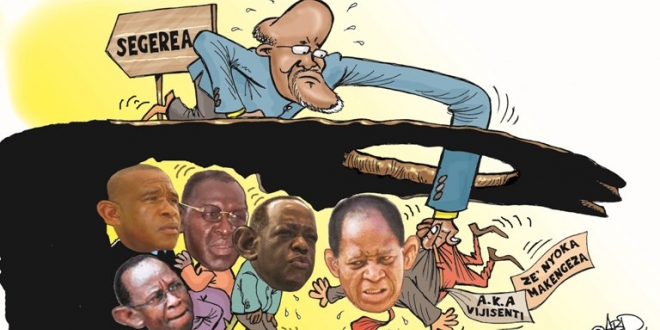
Her letter to the then chair of the Tanzania
Extractive Industries Transparency Initiative (TEITI), Judge
Mark Bomani, dated 18 December 2015 underscore both the utility and futility of
relying on this initiative. “I am writing to congratulate you on the publication
of Tanzania’s 2012/13 and 2013/14 EITI Reports on 27 November”, she
notes, “and to confirm that the EITI Board has lifted the suspension of
Tanzania from the EITI with immediate effect.” This suspension, Clare Short
further notes, “was imposed on 2 September 2015 because Tanzania did not meet
the 30 June 2015 deadline for publication of the 2012/13 EITI Report.”
First, there is no way one can know, by simply reading those EITI reports, whether the export-bound shipping containers, such
as the Acacia ones that the President grounded at the Dar es Salaam port, contains
under-declared minerals. Second, the fact that we need the likes of Clare Short
from Britain to remind us to implement the Tanzania
Extractive Industries (Transparency and Accountability) Act No. 23 of 2015 indicates
that we hardly have a sense of its
ownership.
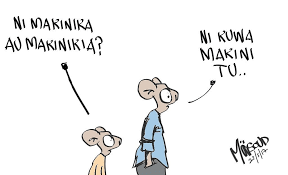
TEITI, as the second edition of ‘The
One Billion Dollar Question Revisited: How Much is Tanzania Now Losing in
Potential Tax Revenues’ notes, is important in contributing to
increasing transparency.” However, this edition further notes, it “lacks teeth, rarely going beyond identifying financial discrepancies to achieve
real accountability and policy change.” For instance, in its maiden report
dated 8 February 2011, TEITI showed the following unresolved differences between
what African Barrick Gold (ABG), i.e. the current Acacia Mining Plc, reported vis-à-vis the
government: US$740,000 in North Mara Gold Mine Ltd; US$2,115,000 in Bulyanhulu
Gold Mine Ltd; US$ 10,143,000 in Pangea Minerals Ltd. In all these cases the Tanzanian government
reported more than what the mining companies reported.
Subsequent TEITI reports also indicate that we
have been on the losing end. For instance,
the sixth
TEITI report issued in November 2015 made this observation: “Bulyanhulu
Gold Mine Limited, Pangea Minerals Limited, North Mara Gold Mine Limited,
Shanta Mining Company Limited and Tanzanite One Mining Limited, all companies
with [Mineral Development Agreements] MDA’s are not paying corporation taxes as they are still in loss making
position. Corporate tax is based on company profits earned and since these
companies are not making taxable profits, corporate tax does not arise.” However,
there were no significant interventions from responsible entities to reverse this.
John Jingu’s powerful critique of EITI is
particularly illuminating in this regard. About 60 Multinational Mining
Companies (MTNCs) and “their home states”, he argues, generally control and direct
the EITI process. “As rational actors”, he further asserts, these “drivers of
EITI seek to safeguard their interests, and thus it is doubtful whether the
interests of a country such as Tanzania can meaningfully benefit from the
initiative when even its ability to develop independently policies geared
towards serving national interest end up being donor-driven.”
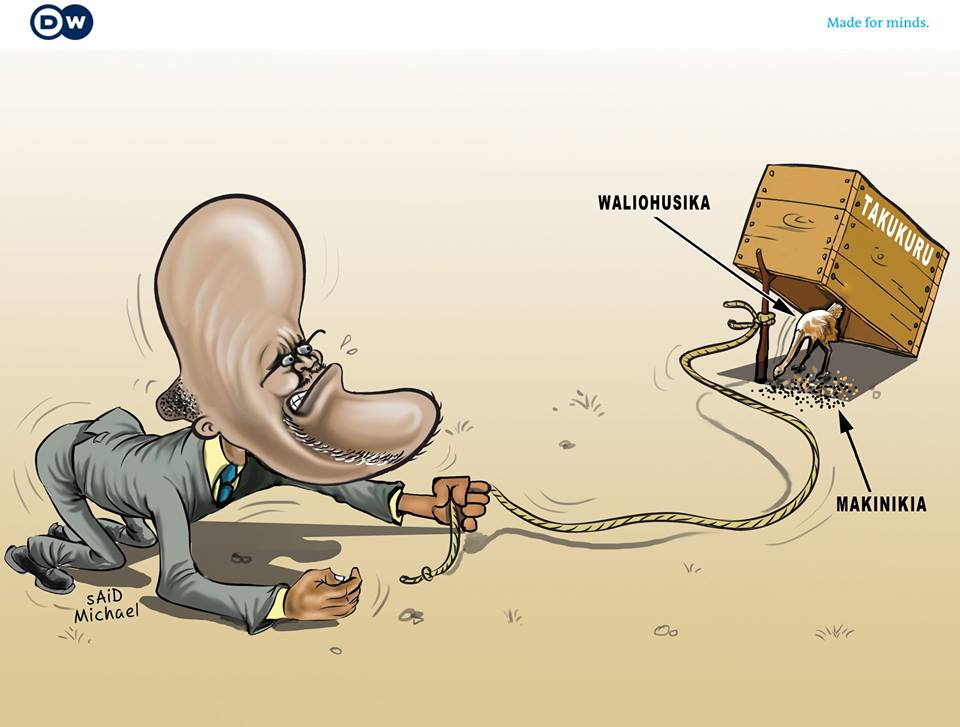
Unfortunately, under the pretext of the
otherwise commendable economic warfare, we are narrowing the democratic space
that enables us to mobilize against the plunder of our minerals. The tug of war of
words between President Magufuli and leading mining rights political
activists, Tundu
Lissu and Zitto
Kabwe, is – as Thabit Jacob puts it – “counterproductive.”
What matters is not he who gets all the credits but those who reclaim their mineral rights.
Moreover, the seemingly fusion between
the supposedly separate powers of the government i.e. the legislative, executive,
and judiciary is worrying. This is particularly troubling when the Speaker of
the National Assembly appears, publicly, as receiving plaudits and directives from the
President on how to deal with the loud and maverick parliamentarians from the opposition
parties.
Even in the well-intentioned case of making
the Parliament amends our unpatriotic mineral laws, the onus is not on the President
to request or consult the Speaker publicly. What it required is for the Executive Arm to draft
a Bill to amend the laws and let the Legislature Arm do its job. Since the President is
also the chair of the ruling party i.e. with the majority of parliamentary seats, there is
a ‘political license’ to caucus to make such a Bill pass. In any case, this is
what MPs from the opposition camp have been calling for, that is, an Act that
requires them to scrutinize mining contracts.
Finally, the muted voices that are calling for extending the
presidential tenure to more than ten year is also troubling. Surely the
clarion call to support the President’s economic warfare is so exhilarating. It is
reminiscence of
the popular excitement of 1967 when Mwalimu Julius Nyerere issued the Arusha Declaration. But this 2017, so, let us be as critical and cautious enough
to know that the (slick) road to dictatorship could be paved with good (populist)
intentions. May we let our President live up to this promise of his:
We should win the battle on resource
nationalism but not lose the war of democratizing development.

Very detailed survey Chambi but can 'development' be democratized? It is an industry with more losers than winners. The populism you refer to (at least in its ujamaa form) was disparaged as 'sharing poverty' but we now have enough hindsight to fairly compare the 20 years of ujamaa to the 20 years of FDI. Do you really think you can democratize the development industry without destroying the global capitalist system? I am for Magafuli because he has identified the real culprits, what democratizing development means is us fighting for the local left-overs while the FDI mafia go off scot-free and leave us to our tribal wars, communal violence, greed and grievance and resources conflict for which the foreign investor will accept no blame or responsibility whatsoever. Let's strategize on this one, your generation is the one that stands to lose everything.
Hi Chambi,
Please see these two links:
1) BMF CONTINUES PARTNERING WITH ACACIA TO SUPPORT SHINYANGE REGION: https://www.facebook.com/permalink.php?story_fbid=1073617522676855&id=655772624461349
2) Rais Magufuli: Mimi nazipenda taasisi zinazofanya kazi tangible kama hii ya Mkapa Foundation, sio zinazotaka watoto wazae mashuleni:
3) Rais Magufuli: Mzee Mkapa umejenga nyumba nyingi, ungeweza kuzitumia kufanya biashara lakini umezigawa bure tu
– Unastahili pongezi: today via https://mobile.twitter.com/JamiiForums
Good to reflect so we reconcile the two?
Thanks,
Fadhili