
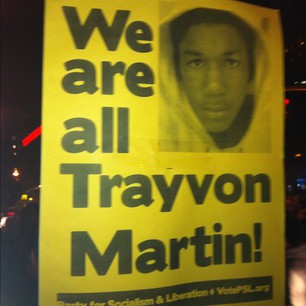
Black Bodies: Of Ghosts, Memories and
Nostalgia
“If you’re lucky, your
story will check out, soon enough” – Laurence Ralph
Chambi Chachage
Laurence
Ralph’s talk on ‘Jon Burge’s Ghost’ and texts on ‘Memory of Gold’ and ‘The Injury of Nostalgia’ are of
particular methodological interest to me. As someone who is wary of Anthropology
due to its historic role in orientalizing and colonizing Africans, Ralph’s multilayered
approach to ethnography offers me hope as I attempt to write a social history
of postnational and postsocialist class formation(s) in Tanzania.
In
‘Memory of Gold’ Ralph, writing about an incident in 2007, combines historical
evidence – as in the case of the formation of the Office of Homeland Security
in 2002 in post-911 US – and ethnographical analysis of cultural artifacts to
unmask how the discourses of race and violence in the age of ‘global terror’
and ‘transnational drug trafficking’ articulate to reproduce and justify the
surveillance and control of ‘black
bodies’. What happened to Ralph resonates with what I encountered in 2004 at
the same airport in Miami when, as a student, I was flying back to Boston. I was
among a handful of ‘black men’ who were singled out of a multiracial group of
passengers for interrogation. Since it was an internal flight I simply analyzed
it in terms of the fear of ‘terror’ and wondered why I would be associated with
it. Of course I was not viewing it with an ethnographical let alone historical eye.
It is only now that it is thus make sense:
Given
that security has shifted since the mercantilist period—given that it is more about
locating possible threats rather than carving up the globe—it is even more remarkable
that whether we are referring to the effects of colonial slavery in eighteenth
century Brazil or drug smuggling in the contemporary United States, the
discipline and surveillance that defines authority still relies on racialized
fantasies that are embedded in everyday practice. And when a young, black,
twenty-something man travels to Brazil by himself, the fantasies of which I speak
produce simple, stereotype reaffirming questions, like: Are you thinking what I’m thinking? And just like that, a man is
turned into a [drug] mule (Ralph 2011: 100)[1].
This
singling out, or rather collectivization, of the ‘black body’, though varying
across geographical spaces and historical cycles, remains fairly stable. As it
was in the case of “white southerners who, in longing, for slaves, used figurines of “happy slaves” to enable them “support
a fantasy of blackness that was fixed, visually familiar, and easily
controlled” (Ralph 2013: 7)[2],
various tropes are still invoked to do so, albeit, in varying ways and with
diverse outcomes. With staggering statistics of ‘black men’ in jails the ‘black
body’ becomes a synonym to a ‘violent body’. Thus, as the discussion on Ralph’s talk indicates, it dialectically becomes a feared body yet one that fear is
instilled in it even through violence on the pretext of protecting it among
other bodies.
Such a dialectical
fear is so audible and visible in this response from a “short, stocky, tattoo-blanketed
leader” of a gang when an ethnographical eye and ear decodes it: “That’s why in
my new shop,” he continues, glaring again at the recorder, “WE. DO. NOT. SELL.
MUFFINS. ANY. MORE” (Quoted in Ralph 2013: 2). It is also vividly evident in a
woman’s testimony, as documented by Ralph (2013), about a presumably innocent
young black man who ran from the police because he was scared they would kill
him since they tend to threaten them. In other words, they are just presumed
guilty until proven otherwise. But with one gunshot the proof could end being
posthumous.
Ralph’s
research and reflexivity on the ‘black body’ in the context of gangs, drug and
violence is thus very informative in theorizing and intervening on a practice
that has proved to be stable over time in its virulent forms and ramifications
– the fear of and violence on ‘black bodies’. It would be interesting to see
how the Social Dominance Theory (SDT) could be pulled in to explain this
stability and ways in which it can be destabilized or demobilized. To slightly
appropriate Ralph and SDT’s phraseology one may go on to ask: Why is the body
of the dominated group being injured in a hierarchical society is itself viewed
as a source of danger to the dominant group? And how can we reverse this stable
trend and protect the bodies from fear and violence?
[1] Memory of Gold (Transition No. 105)
[2] The Injury of Nostalgia (Forthcoming – In Half Dead: The Unexpected Ways We Injure the Urban Poor – Used by Permission)
