
Shall we Address Mwalimu Nyerere’s Unanswered
Question?
Chambi Chachage
14 October 2007
14 October 2007 marks the eighth Nyerere Day. Once again we
commemorate the life and times of Mwalimu Julius Nyerere, the founding
President of Tanzania. It is an opportunity for our society to reflect on the
thoughts of one of its key social thinkers.
This week we rethink Nyerere’s passion. One of the things
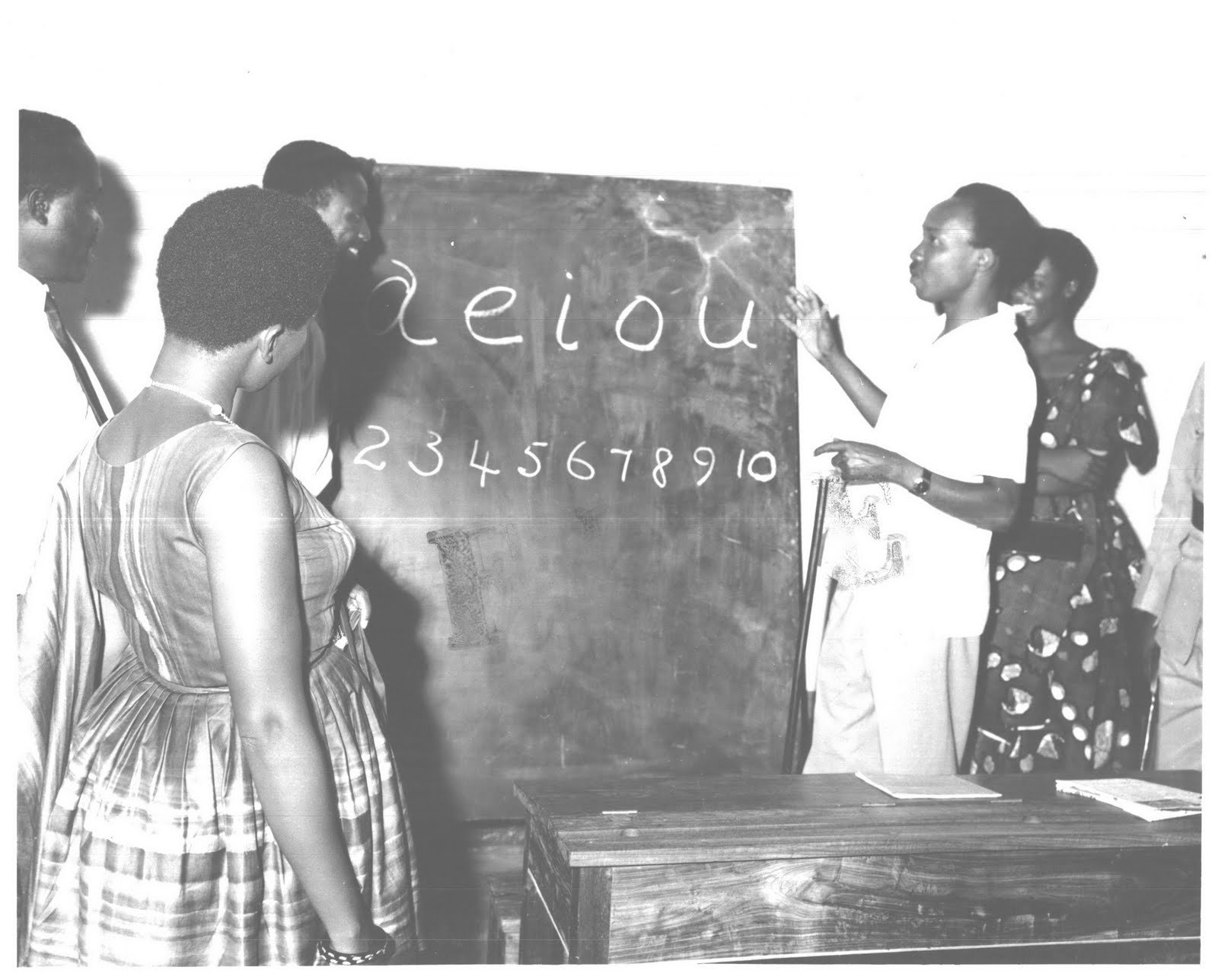
that Nyerere, fondly called Mwalimu i.e. Teacher, had a lifelong passion for
was primary education. He endlessly thought about it, talked about it, wrote
about it and probably dreamt about it. It is not surprising then that two
volumes of ‘Nyerere on Education’ are attributed to him.
Mwalimu raised significant questions about primary education.
He also attempted to provide answers or at least chart out solutions. His mind
particularly wrestled with that old problem that has assailed educationalists
since independence. That is, the problem of balancing quantity and quality in primary
education.
How does a country with limited educational resources provide
education services in large quantity without compromising the quality of the
services? Quantity or quality, which one do you choose when it seems you cannot
have both? The question has proved to be stably divisive.
There are those who, in line with one World Bank
representative, would rather wrestle with the issue of quality when school-aged
children are in schools and not out of schools. Thus, one does not have to put
on hold the large ‘quantity’ of school-aged children who need to be enrolled in
schools until the provision of quality education is assured.
Then there are those who, as Mwalimu said, would argue that “when
public resources are scant, it is absurd for a government to continue wasting
money on pretence of educating everyone and thus being unable to give a good
education to anyone.”
To do away with this absurdity, the argument continues, we
should mainly focus on quality. Quantitatively, it means providing education to
a reasonable number of children. Qualitatively, this translates to minimizing student-teacher
ratios, increasing student-book ratios and improving other qualitative aspects.
And all this is at the expense of ensuring that primary education, whether of good
quality or not, is available to every child.
How do we balance these contending views and get a win-win
situation? While we celebrate our quantitative strides toward achieving Universal
Primary Education (UPE), we better ask ourselves: How do we ensure that the Primary
Education Development Plan (PEDP) is not only about numbers of classrooms built
and children enrolled? How can we make PEDP pays equal, or even more, attention
to the provision of adequate quality books, qualified teachers and teaching equipment?
‘What has been Achieved in Primary Education? Key Findings
from Government Review October 2007’ reveals the way we address Nyerere’s concern.
One disturbing revelation is the wide variation in the percent of PEDP funds
released from the approved budget amounts in the financial year 2005/2006 for
its various strategic components. This is particularly disturbing because only
89.4 percent of the approved funds were released.
When it comes to the personnel emolument component of PEDP, 100
percent of Tsh 237,377,962,000 was released. In terms of percent, this is not
very far from the 98. 9 percent of Tsh 33,370,210,800 released for other
charges/admin. However, for quality improvement only 60.5 percent of Tsh 95,023,895,400
was released. This percent is a far cry from the 96.5 percent of Tsh 33, 616,
453, 970 released for enrolment expansion.
To add quantity of salt to the injury of quality we are told
that a government report stated that the funding gap “was due to non
fulfillment of commitments made by Development Partners.” So much for shelving
Mwalimu’s policy of ‘Education for Self-Reliance’!
Mwalimu did not claim to have answers to the quality vis-à-vis
quantity problematic. He attempted to address it again in ‘Education and
Development in Africa’. But, alas, he ended putting it in more dilemmatic
terms:
“And in Africa if every child does not go to school those to
be left out will be mostly the girls. Yet primary education for all, at least
in Africa, requires full commitment from the state. The fact remain, however,
it is possible for government to choose only between evils. A pretence of
universal education – whether it be primary or secondary – is itself evil: is
it any better than finding some way of giving a modern education to a few
through some system of selection?”
Mwalimu’s question remains unanswered. The search for
answers, he insisted, will have to continue.
And to plan is to choose, he kept reminding us. As we rethink PEDP and
our ‘Education and Training Policy’ we ought to keep in mind the urgent need to
balance quantity and quality in education.
