By Dennis Konga
Lockdown. Shutdown. Automation is possible. Humans are no longer needed in production places. They have to stay home. It is here we seem to have a very serious problem.
Where is home? We have to stay at home. But do we have homes? Or, rather, we have houses full of equipment we seldom use, though very expensive and expansive. The mansions. The villa. The tembe. The shacks like the ones found in Kibera and Khayelitsha. Yes, they are homes to some and houses to many. Only a few can call them HOME, meaning home in a real sense.
The majority of our people need to work every day to live and survive. Their economy is that of hand to mouth. They have to keep moving every day lest they die from hunger. If one fell sick the repercussions are felt by many.
Most of our people need to socialize to not lose connection. A sense of togetherness is seen throughout the day, through greetings and jokes. Though they may not tell you their ordeals, at least you can see their smiles through their daily courtesy call. Like “mambo” and the response “poa,” as if all is well while someone may be in shambles.

African life is so much cyclic. Africans know each other well. They always engage. They are much connected. Though it might not be true to all. However, looking at what is happening or suggested as one of the prevention measures against Coronavirus Disease 2019 (COVID-19), “social distancing,” it is not well understood in the contexts of the home. It has caught them off guard. Africa has to learn the hard way in these home spaces. I believe some may pretend to observe it.
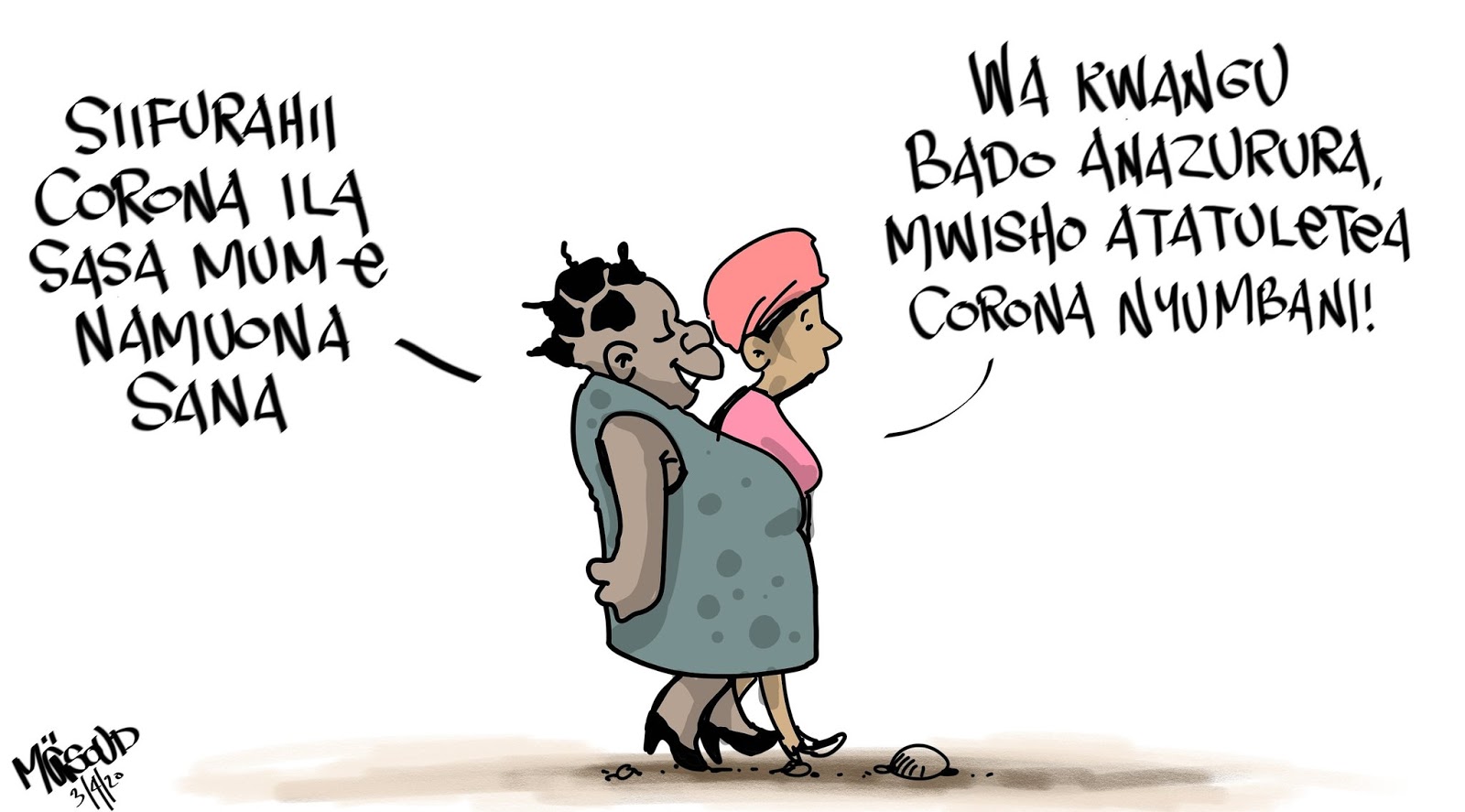
At home where they are supposed to stay, it is seen to be very new to them. Even for the ones who have accepted the design and endorsed its creation. I am talking about the husbands, the wives, the schoolchildren, and others who have to stay at home. The owners of these homes i.e. domestic workers are invaded by all the mentioned strangers. They fear death. COVID-19 is at the doorsteps.
These strangers want to stay at home. But they don’t consider the houses they built with so much resources as home. Husbands are seen to be boring while wives are perceived as dull. Husbands are seen to be limiting and boring. Wives are just there, conventional and stubborn. Do that, don’t touch that, why is that place not clean and so forth, is expected from them. They are now seen frequently in the house. They are at home.
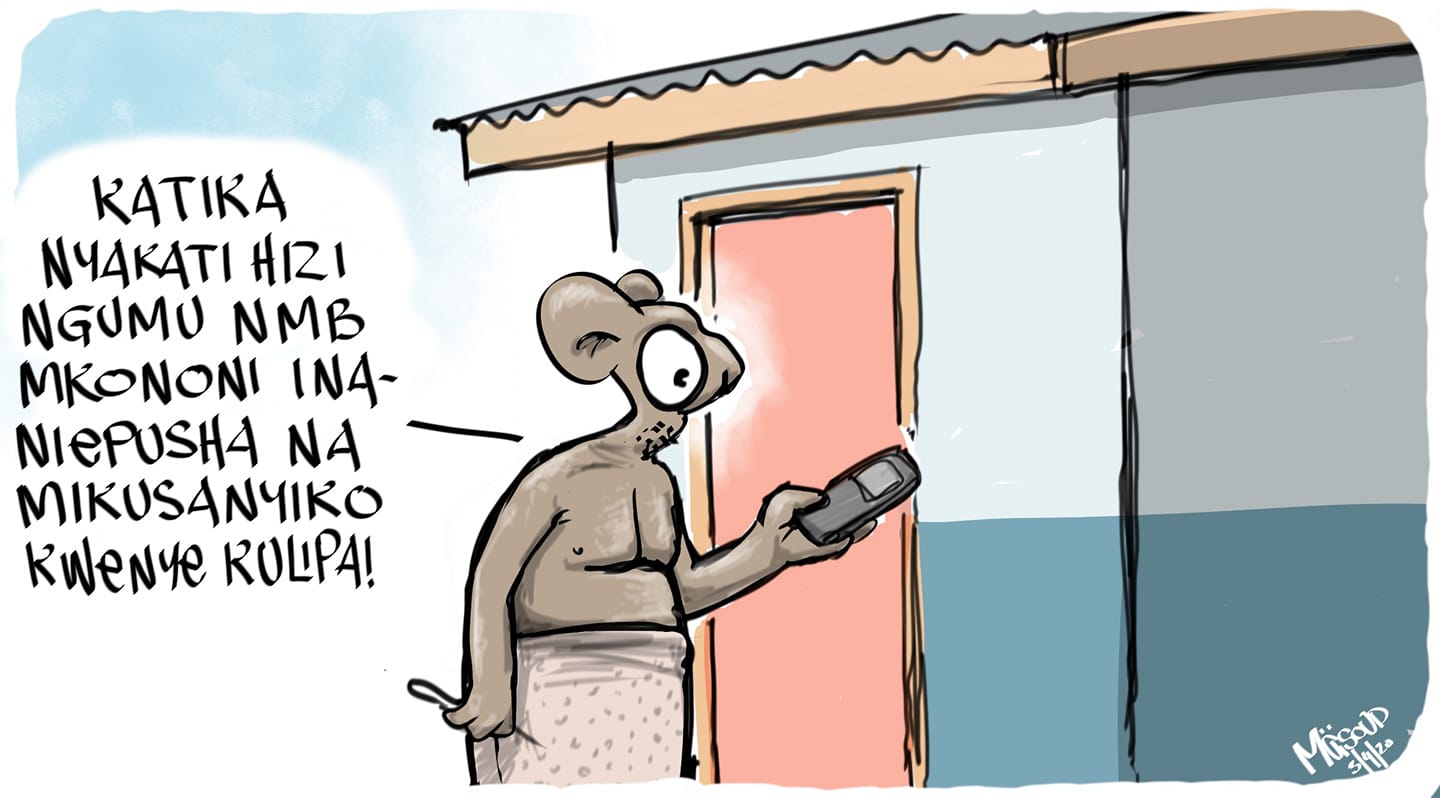
My male colleague contend that husbands are not boring, but very courageous. For him, it is not easy to live with a woman in a single house. It is not easy.
Why am I bringing all this? Because the COVID-19 pandemic has exposed us to the core. Many people consider work places to be more welcoming than their houses. They enjoy and rest while at work and are happy too, but disproportionately sad when the idea of going back home, or rather to their house, strikes.
One could argue that homes have become self-created cells for them. They are remanded. They are chained. Now with the COVID-19 “epic”, which pushes governments to uphold lockdowns, they have to accept being locked. There is no way out.
Domestic workers who happen to understand all corners of the houses better than all other dwellers are now stressed as they are pressed to work more. For them, the lockdown is not there. They will have to continue with their daily duties as usual. The domestic worker’s “home” is invaded. The owners, who are not regular stay-at-home kind of people, but always on the move, are now there full-time. She, for it is almost always a woman, knows very little of these invaders.
She has to cater for the needs of these strangers, who also happen to be the owners of the houses. They are now working from home, afraid to catch COVID-19 or to infect others if they have it. Sad enough, little value is given to the domestic workers. As the statistics shows, they undergo so much pain while doing their daily duties.
Teachers are no longer at school. They are also locked down. They are concerned about their families too. Schools are closed until further notice. Those who used to think paying tuition and transportation fees was a ticket to insult their children’s teachers are now required to take on their “burden.” They now have to teach and look at the homework every day until the lockdown is over. Some of them never bothered checking the homework of their children. But now, thanks to COVID-19, they have to check and re-check if things are okay. Do they care? In the past they may have done that only haphazardly, often with the rescue from domestic workers.
So, where is home? The bar or the office? All these are now closed or some are not welcoming big groups as they uphold social distancing. Houses are not made to be home by strangers, but us. However, we have done so little to make our houses home. We have well maintained fenced houses that appear just like prison cells. We barely enjoy the things we have. The very fancy things, except cars. Some even do not want their cars or just call them “toys” to be touched by their spouses lest they damage them. So, we value the possession of things and not humanity. Dignity? We pretend to love while we don’t. Do we?
We are not as one as we used to claim. We are far apart. The haves and haves not, so Karl Marx would say, have been exposed openly. We clearly know who are in need and who are not. Some collecting – indeed hoarding – enough food to fill their houses, others filling theirs with fear of what would happen. Hope and positive aspirations of and for tomorrow are not seen to work. Fear is not just apparent. It is something they hope for too.
COVID-19 has also shown us that we can change for good. Some behaviors that were seen to be just for certain groups of people now have been part and parcel of our daily life. Washing hands with soap and moving water. Sanitizers? Yes, use them if you can afford. That has been a success to a large extent. Shall we continue with all these? I bet it is a good thing we are learning. I will be glad to continue with them when all is said and done.

Workhouses? Or just working from home. It is not new. History tells us that even during the Victorian era, characterized by a class-based society, a growing number of people were able to vote and work. A growing state and the economy expanded. Indeed, a well to do society. In the period of Queen Victoria’s reign, between approximately 1820 and 1914, though I should correctly put that Queen Victoria’s reigned from 1837 to 1901, people held work as very important. Those without work had to live and work in workhouses. Very similar to prison. The only difference was that children were allowed to attend schools.
Do we have a different scenario now? Maybe yes, but a very little difference. We are still supposed to continue to work from home. Perhaps it is for the justification of the pay we are entitled to. So, homes have turned to be offices. We want calmness. Everybody should listen and concentrate. The working class. Or are we the middle class? Or we are nothing but workers who are just hanging there to serve the day?
So, tell me, where is home? Is that home, home? Or a home office? Should we in the future build houses and home offices? Maybe that might help us to behave and value home as we will continue working from home offices. But not by bringing office issues at home now wanting us to behave as if they are your offices. That shall never happen.
My wife, my husband, my children, my this or that? It is vivid now that we don’t possess anything except our good health. Stay safe.