
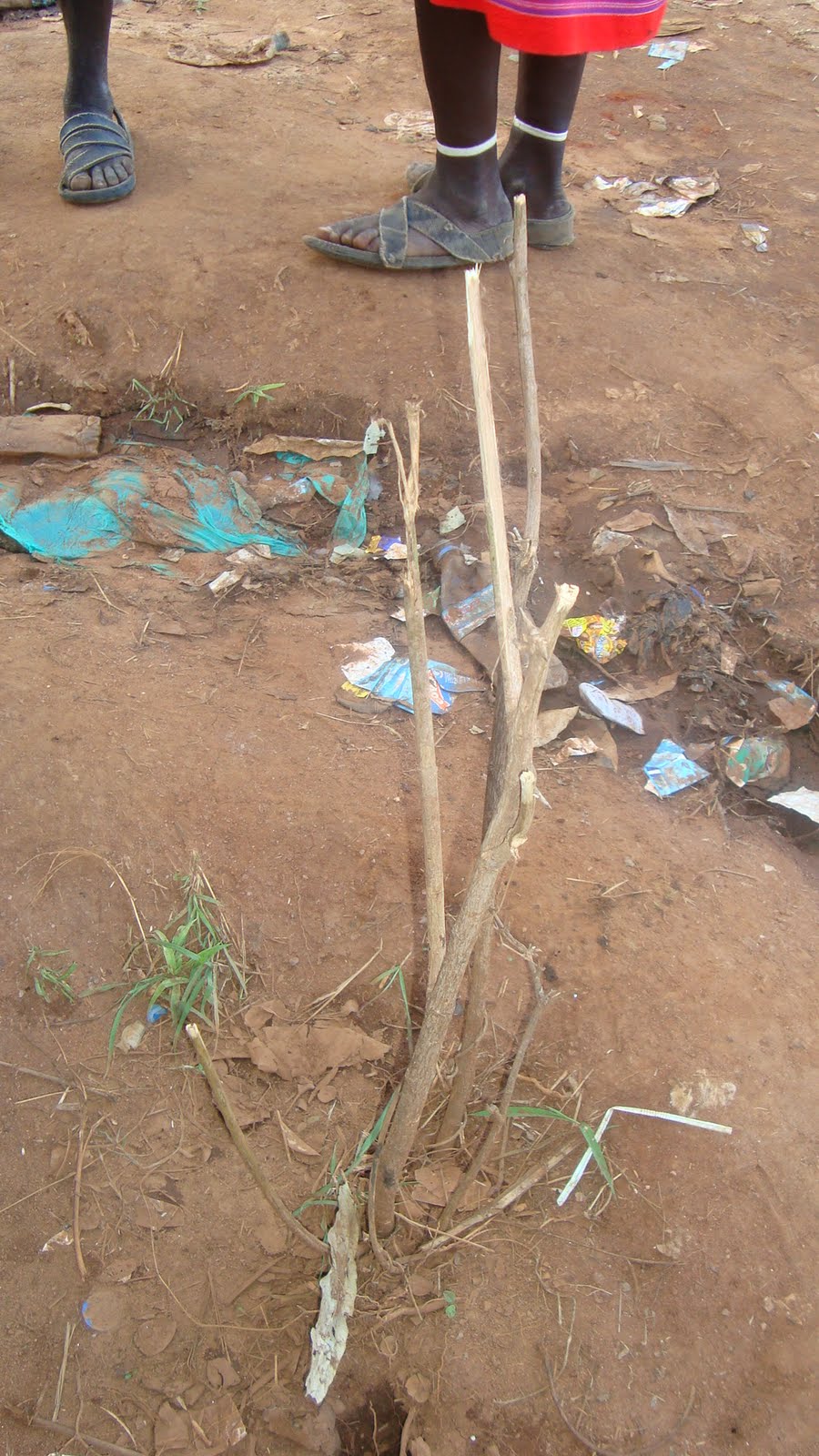
 Yesterday I talked to someone whose grandmother used to heal (or at least claim) to heal cancer but she died without passing that healing knowledge to anyone. The person told me that from the narration of Babu of Loliondoit is quite possible that his ‘medication’ is a herb or concoction that falls in such a category of African ‘traditional medicine’ and what he is saying and doing now is only to protect it from being stolen or/and patented. In African traditional healing, this person asserted, it is not uncommon to hear of ‘medicinal men/women’ getting a vision of where and how to get a certain herb that heals and he also know of someone else who died without revealing the formula of a seemingly effective medication he was administering to patients. I am still a student of African knowledge systems and I found this explanation given by someone from Mwanza quite interesting as it was not any different from an explanation I independently got from someone from Kilimanjaro that ‘herbs follow the healer’ as it is normally shown in a vision and the person who gets it goes to the forest to seek it. It should be noted that Babu uses the general name ‘Mungu’ as in ‘God’, rather than a specific name such as Jesus, to refer to who showed him the medication thus indicating that it could any higher being as claimed by any religion including the so-called ‘animistic’ religions of African ancestors. All these explanations are more intriguing given the fact that the five elders of Samunge village in Loliondo that we spoke to claimed that they have been using that same tree to prevent ‘cancer’ and contain ‘anthrax’ and it has also been a good treatment for pain in arms and knees/legs’ joints when they boil and drink it as a soup; to them this knowledge was/is a heritage from their ancestors. What is also quite interesting is this email that I received yesterday from a colleague:
 Re: Upande wa Pili wa Babu wa Loliondo
[The Other Side of the Story of Babu of Loliondo]
Hiyo [that] plant inayotumika huko [that is used there] inaitwa [is called] Carissa edulis Family: Apocynaceae, it has been there since ancient time and C. edulis is found in Arabia and reaches through tropical Africa to the Transvaal, Botswana and north and northeast Namibia, in warm bushveld and scrub. Geographic distribution Native : Botswana, Cambodia, Cameroon, Eritrea, Ethiopia, Ghana, Guinea, Japan, Kenya, Myanmar, Namibia, Nigeria, Saudi Arabia,Senegal, South Africa, Sudan, Tanzania, Thailand, Uganda, Vietnam, Yemen Products Food: Fruits are sweet and pleasant to eat; in Ghana, they are normally added to the food of invalids as an appetizer. Vinegar can be made from them by fermentation; in Sudan and Kenya, they are made into a jam. The roots are put into water gourds to impart an agreeable taste and are added to soups and stews for the same reason. Fodder: Goats and camels in the dry parts of Sudan browse on C. edulis. Fuel: The species is a source of excellent firewood. Poison: In Kenya, a piece of the root is fixed into a hut roof as a snake repellent. Medicine: Roots contain an active ingredient, carissin, that may prove useful in the treatment of cancer. The twigs contain quebrachytol and cardioglycosides that are useful as an anthelmintic against tapeworm. In Guinea, the boiled leaves are applied as poultice to relieve toothache. Root bark is mixed with spices and used as an enema for lumbago and other pains in Ghana; root scrapings are used for glandular inflammation; ground-up roots are used as a remedy for venereal diseases, to restore virility, to treat gastric ulcers, cause abortion, and as an expectorant. An infusion of roots along with other medicinal plants is used for treating chest pains, and a root decoction is also used for treating malaria.It has also Antiviral effect very successful in treating Herpes simplex virus and other several viral infections.  Well, I can hardly wait to talk to Bongo Mzizi, the famous ‘medicinal man’ in Tanga, and our medical researchers as well as medical doctors about all this within the context of ‘modern science’, ‘western rationality’ and African systems of knowledge production and preservation!

Thank you for this post hope you post more articles opinions I am a strong believer that for any disease there is a cure and I also already cure 95% of all diseases known to mankind using what I call cleansing waters…………
I TREAT 95% OF ALL DISEASE KNOWN TO MANKIND FREE OF CHARGE USING CLEANSING WATERS, SIMPLY CHEMISTRY AND MODERN TECHNOLOGY, DONATIONS ARE OF COURSE WELCOMED AFTER SUCCESSFUL THERAPY WHICH LASTS APPROX 3 WEEKS, EMAIL ME PRIVATELY WITH ANY HEALTH PROBLEMS AND I WILL HEAL IT WITH THE GUIDANCE OF OUR MOST HIGH GOD ………..
zanzibarmagic@gmail.com
Chambi thats a great piece on the the concept on babu's medicine i like the way you have analysed where the tree is found and its healing qualities. I also like the collaboration of Babu's theory of healing with other healers perception of keeping the patent. look forward to more pieces.
Raziah
Chambi, I have enjoyed reading this article.. its very educative.. Masozi
Yes good scientific explanation. It helps most of us to evaluate and understand the scientific point of view about the medicine. It is truly a curative medicine.
Thaks a lot!