
 AN MST EXPERIENCE
By Marc Wegerif
The sun was setting as we arrived at the MST (Landless Rural Workers Movement – http://www.mstbrazil.org/) settlement of Itapeva, Brazil. The five of us stretched as we climbed out of the small Fiat after six hours on the road from Sao Paulo. I had been lucky to sit in the front passenger seat alongside our driver while Yara, a student who was our translator, was squashed between Eric, the Oxfam (http://www.oxfam.org)economic/ Justice Campaign Manager from West Africa, and Baha, a researcher with the land rights organization HakiArdhi (http://www.hakiardhi.org/) in Tanzania. We were here to find out more about the MST.
Earlier that day we had been in the MST office in Sao Paulo. The office in a nondescript house in a mostly residential neighborhood had been bought with the proceeds from a photo exhibition of MST pictures taken by a well known photographer. The lack of any signs of MST on or outside the house indicated the threat that MST remains under. Inside the house were neat offices with walls and shelves filled with MST posters and publications as well as gifts from comrades in other parts of the country and the world. We left a Tingatinga (http://www.tingatinga.org/index.html) painting from Tanzania to add more color to the collection.
Joachim who worked on International relations gave us an overview of the history of Brazil that led to the unequal land relations of today and the land occupations of the late 70s that were the precursor to the formation of MST in 1984. He explained the MST’s current main activities, successes, challenges and key principles: mass organization; independence from political or union organizations; no ‘Presidents’ or figure heads, rather collective organization built from the ground up; self criticism; permanent study; and work.
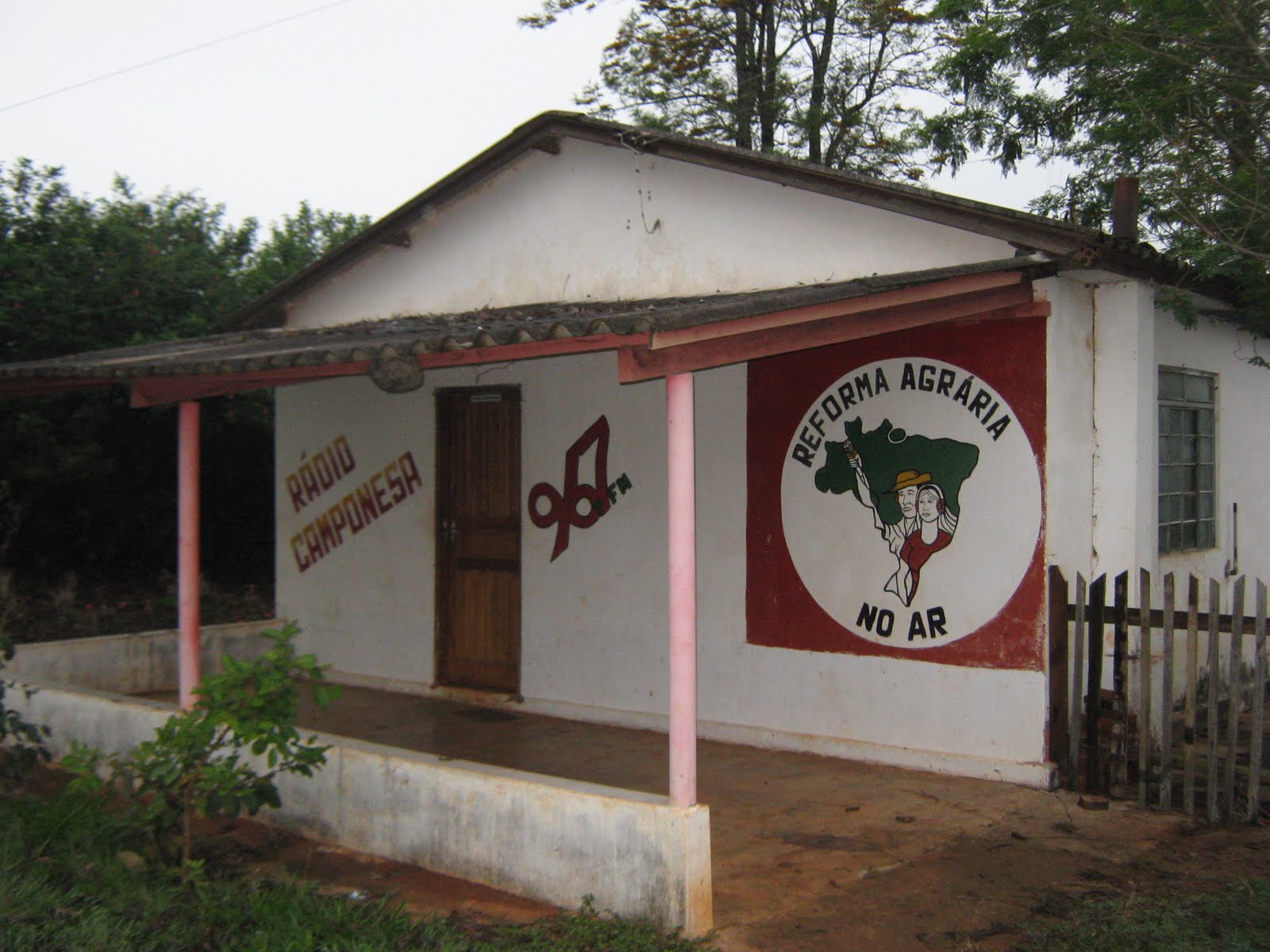
Now we were going to see for ourselves a little bit of the reality of life in the MST. We were warmly welcomed into the small office of the Itapeva settlement and met Adalberto, known in the area as ‘Bell’, who was to be our guide. As well as being the hub for the administration of the settlement the office also provided other community services and as we walked in we found a group of youth there surfing the internet. After eating Bell took us for a short drive around part of the settlement, his large farmer’s hands on the wheel of the small car had clearly seen many years of hard work.
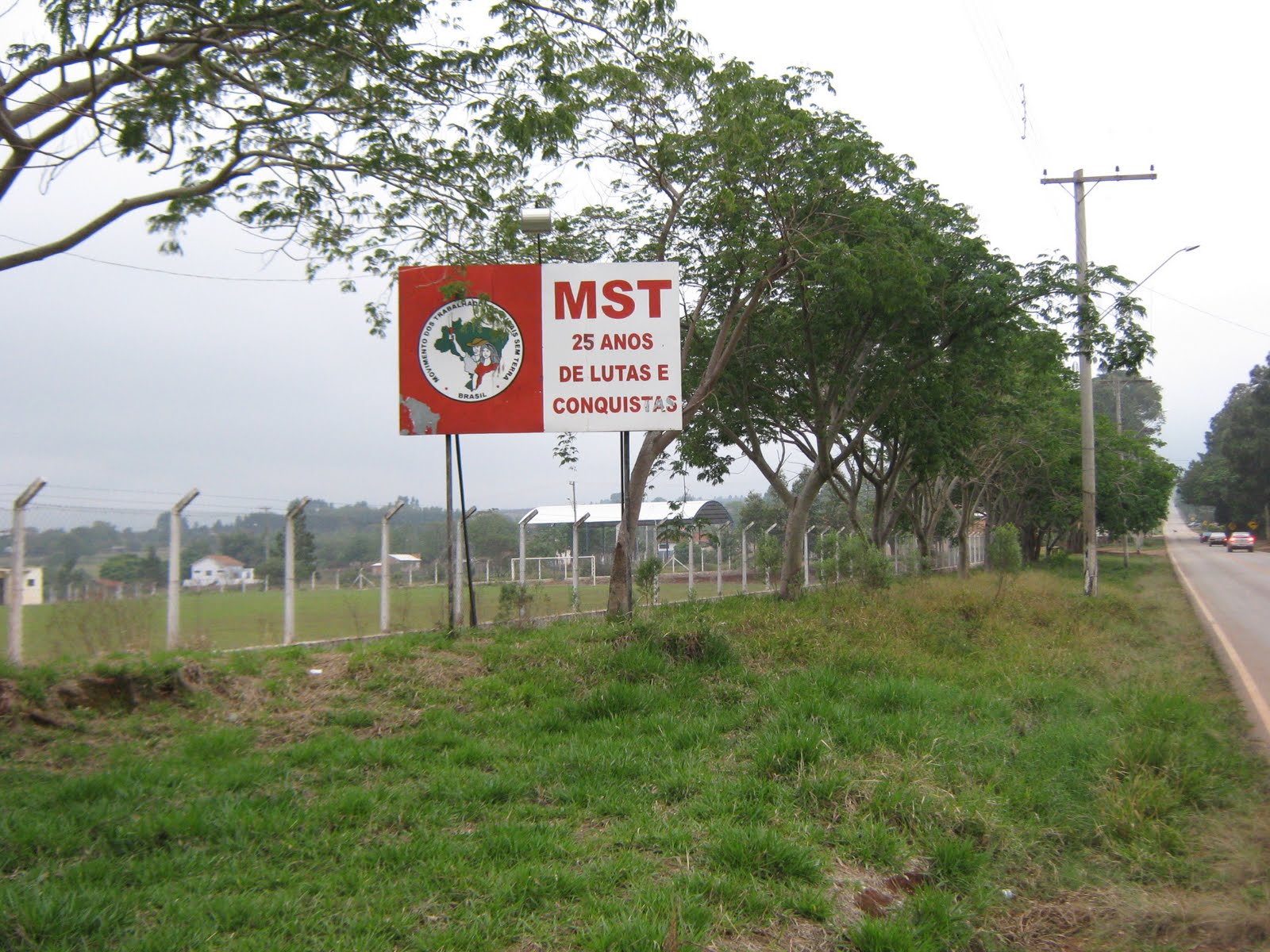
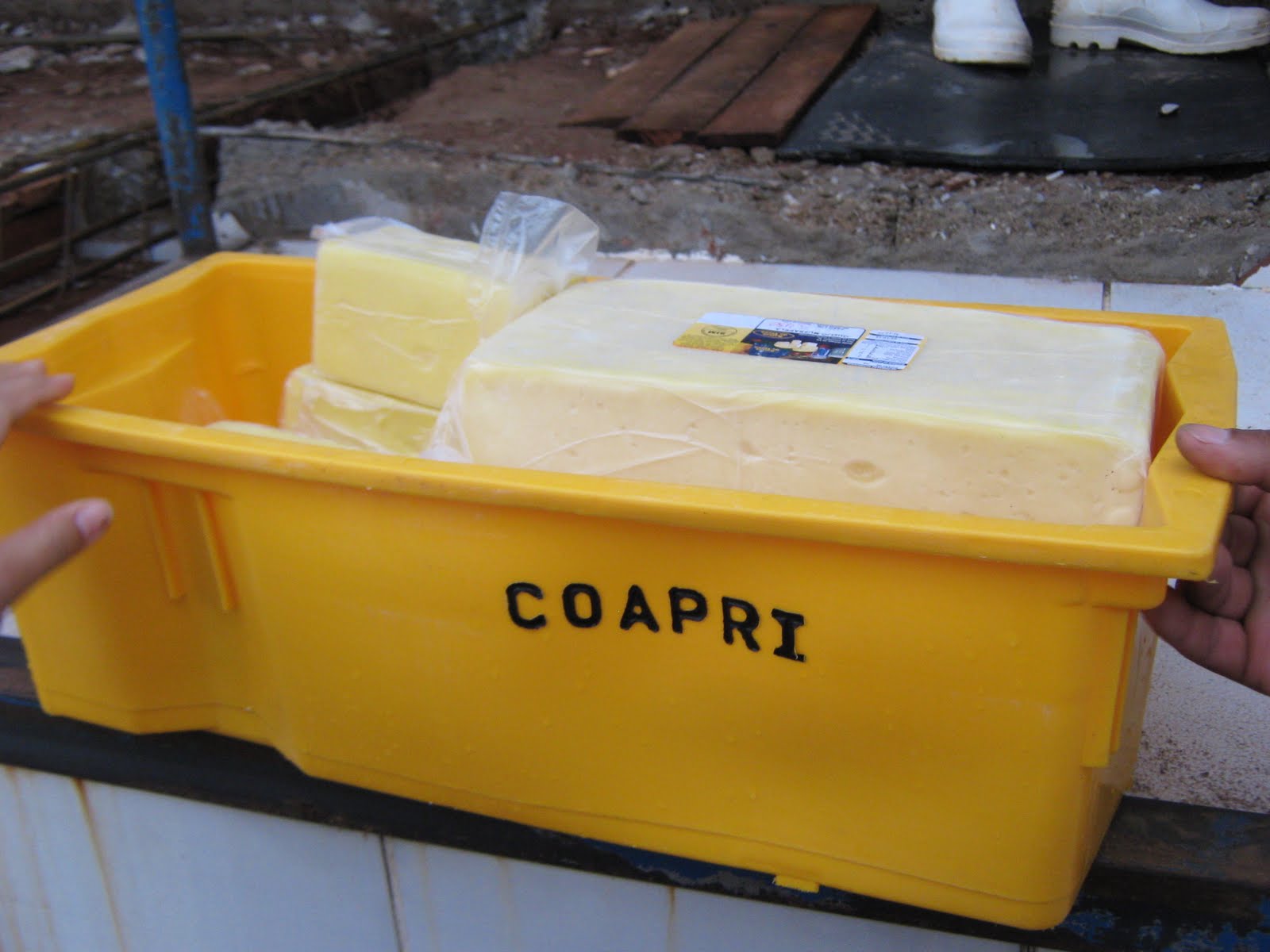
A few kilometers away we found Agrivilla 1, also known as Bairro (Neighborhood) 13th May 1984, the date of the first occupation. Along the road were signs put up by the government advertising their support for the settlement, graffiti covered these as the MST resented the self promotion of the government and claimed the success of the settlement as theirs. The state’s first response had been evictions and they only later provided support when forced to. The MST had their own signs in each settlement noting the date of the ‘conquest’ of the land. Apart from the contested signs it was a neat village with rows of houses along a main road and down some side streets accommodating the hundred and seven families that lived there. This is also where the dairy operation, including cheese making, and the warehouses of the marketing and supply cooperative (COAPRI) that Bell runs is located.
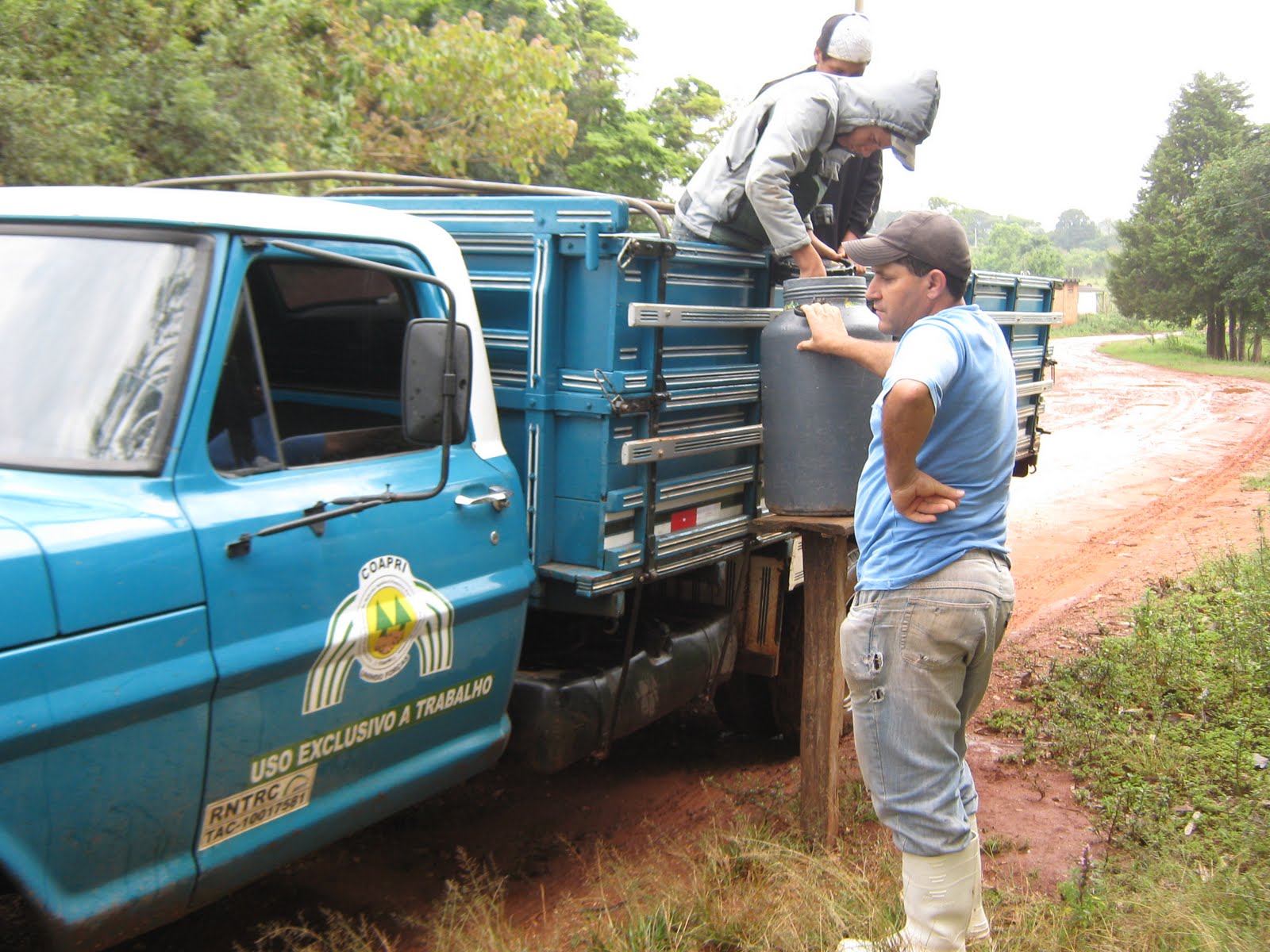 We stopped on the way back at a shop in Agrivilla 4 (another MST settlement) run by one of the residents. The cold beer and the cool evening both enjoyed on the porch of the shop were most welcome after our long day. Several people from the village were also relaxing there and others passed, most greeting Bell on the way. With the assistance of our translator I talked with Lucas who had come to the shop with his daughter. Lucas had been a farm worker on this same land when it was owned by a Dutch company. He had been approached to join MST in preparing for the occupation of the land, but first did not think it would work out. Then he woke one morning to find hundreds of people arriving with flags and tools to work the land. The police were there also and after 30 days the occupiers were evicted. But they continued the struggle to get the land until eventually they succeeded. Lucas decided to join and is now glad he is no longer a low paid laborer on someone else’s land. He explained how he has his own house and works for himself on his 15 hectares where he grows beans, maize, soy and other crops. Some of these he sells, along with other farmers, through COAPRI that helps to get better prices for their crops.
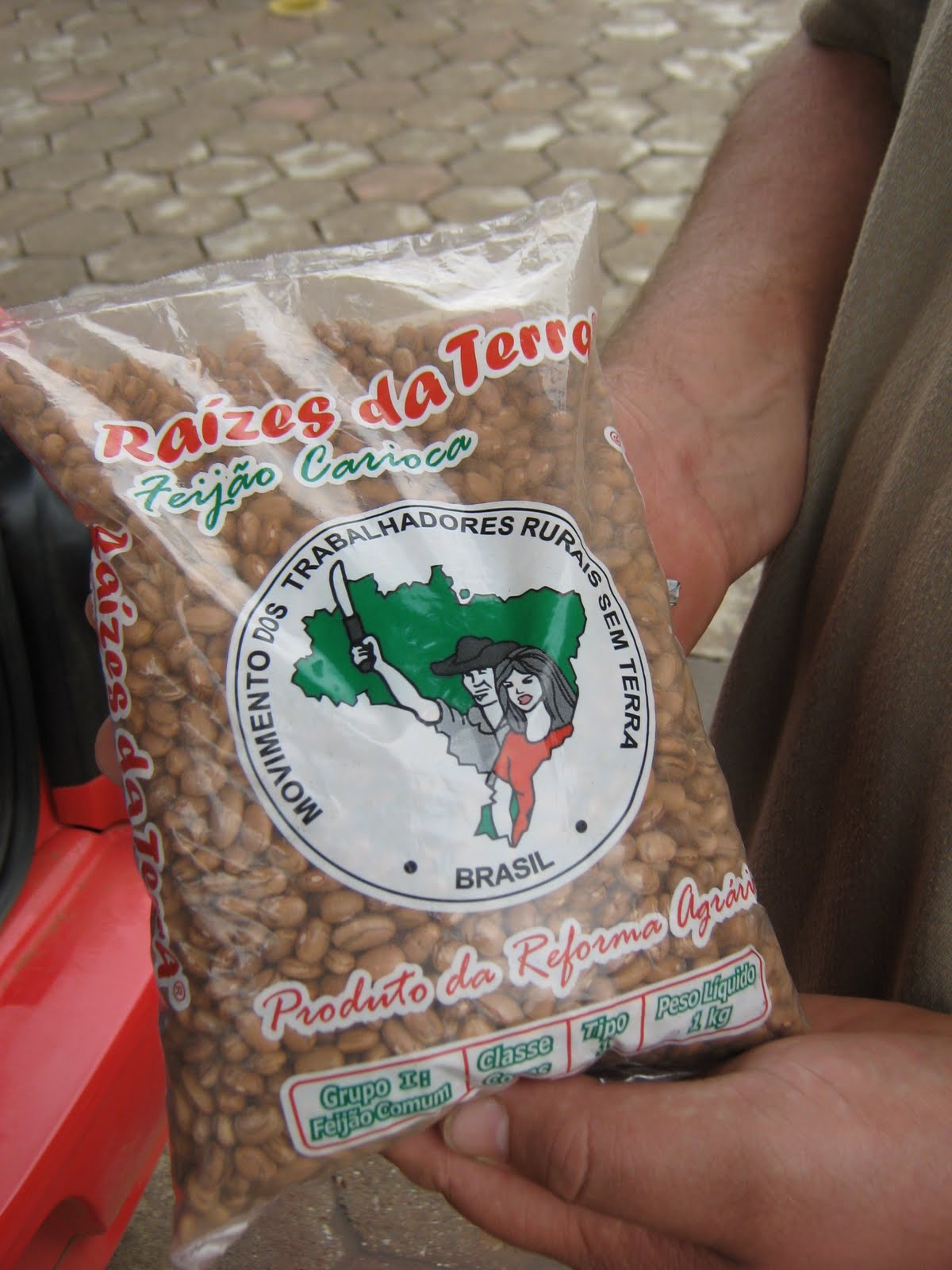 The following morning we shared breakfast with students and teachers of the MST ecological agriculture college that is located in the settlement. We sat on rough benches of the dining room that had a roof and concrete floor, but no walls. The bread, butter, milk, eggs, jam and cheese we ate were all products of the settlement and the different cooperatives.
 At breakfast we spoke to Eliana. She was born and grew up in the notorious favelas of Rio, the daughter of immigrants to the city from the North East of Brazil. When she left home as a young woman she went to the rural areas with her partner and became involved with the MST joining an occupation. She joined a number of different occupations, studied and now, still looking young and full of enthusiasm, she has been a militant in MST for 12 years and is part of a four person coordination group running the 3 year agriculture course. There are currently 31 students, all from MST settlements or occupations, who get taught by a variety of people drawn from within MST and different universities, many of them assisting at the college as volunteers. The students have to do practical work both in the field set aside for the college in the Itapeva settlement and back at their settlements and occupations. With frequent bursts of laughter Eliana explains how the college runs including telling us about the gender imbalance; there are 20 male students and 11 women. She does note though that the members of the Coordination running the course are all women.
The students, many of them young people, but also some older activists are going to graduate in the next month and then go to their settlements or to assist in other settlements. The training has focused on organic and ecologically sustainable agricultural practices that the MST promotes. They will be a key resource in the growth of the productive base that is so important to the lives of MST members and the life and dynamism of the movement itself.
After breakfast Bell squeezed his large frame into a small Volkswagen belonging to the cooperative and we set off driving through another part of the settlement. On the way we found the milk truck from the cooperative collecting milk from the containers left along the road by the different farmers. Bell explained that not all of the residents of the MST settlements are members of the cooperative, but some farmers from outside the settlement have joined the cooperative to benefit from its services.
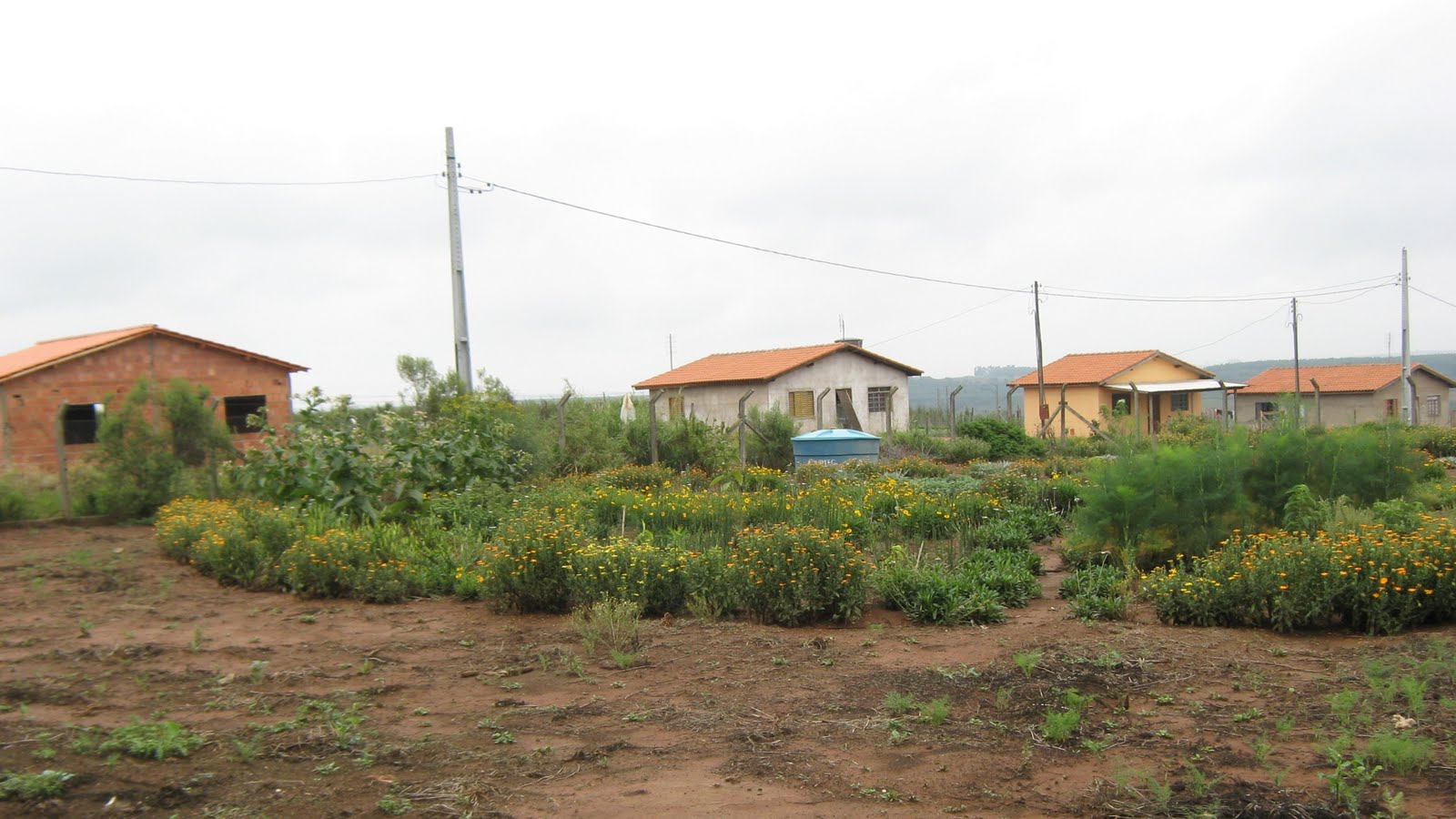
In another village we found the one production cooperative (COPAVA) in the settlement. 30 families pooled their land and their agrarian reform grants to set up collective production, buying larger equipment and also setting up processing and storage facilities. The majority of families in the new settlement decided to farm their own land individually.
Gamil, who is a member of the Regional Directorship of MST as well as COPAVA, shared his experiences of the land occupations, evictions and life on the side of the road going back to the 1980s. “In the end it was worth it, I had been a tenant on someone else’s land and had nowhere else to go” he stated and also explained the importance of the camps and occupations as a place of learning and political formation. Gamil was less positive about the attitude of people today who “don’t have the same spirit of struggle”, some of this due to the political changes, which make people wait for the government to deliver and also the comfort of their lives now in the settlements.
Zezezinho, a squat muscular man, showed us around the farm that the cooperative owns. They grow wheat, rice, beans, maize and soy. They also produce and sell bread, vegetables, milk, pork and cachaça (a Brazilian cane spirit). We passed a large combine harvester in the yard and a building under construction where the cachaça is brewed, but with the extension will also become a refinery for producing their own ethanol for fueling their vehicles. We passed the animal stables and Zezezinho pointed out the boundaries of the farm including a small piece of forest on the other side of the valley that they are preserving as a place to walk and where the children like to play. At the other end of the property a row of small, but neat houses are almost completed. These are being built by the cooperative for their children, the next generation who have grown up in the settlement and are now young adults with their own families. They also have an herb garden where with over 90 species of herbs, some grown for medicinal use. Next to this they are planting a variety of indigenous trees and the all important football field as well as a preschool. At the end of the tour we stopped at the farm shop and some of us tried the cachaça, poured from a barrel on the shop counter.
 Having seen the settlements that have now been in place for some decades we wanted to see an occupation. On the drive Bell told us a bit about himself. He is the son of a small farmer, but along with his brothers and sisters had no prospect to get enough land to live on. He joined MST and the occupations in Itapevo. He was encouraged in MST to study and got a first degree, now he is working on his Masters in Economics. The course is set up as a collaboration between MST and a University. When we asked him what he would do when he had the Masters he was adamant that he would continue to be a militant with the MST. For now Bell runs the marketing cooperative grappling daily with how to make farming viable for its members, in future he could be deployed to another task. As a militant he has not got land of his own yet, he gets to live in a simple house in the settlement and receives a small monthly allowance. More importantly the MST has given him a life and a purpose, he has no interest in another job and in any case he said the type of economics he was studying was not what the capitalist businesses wanted.
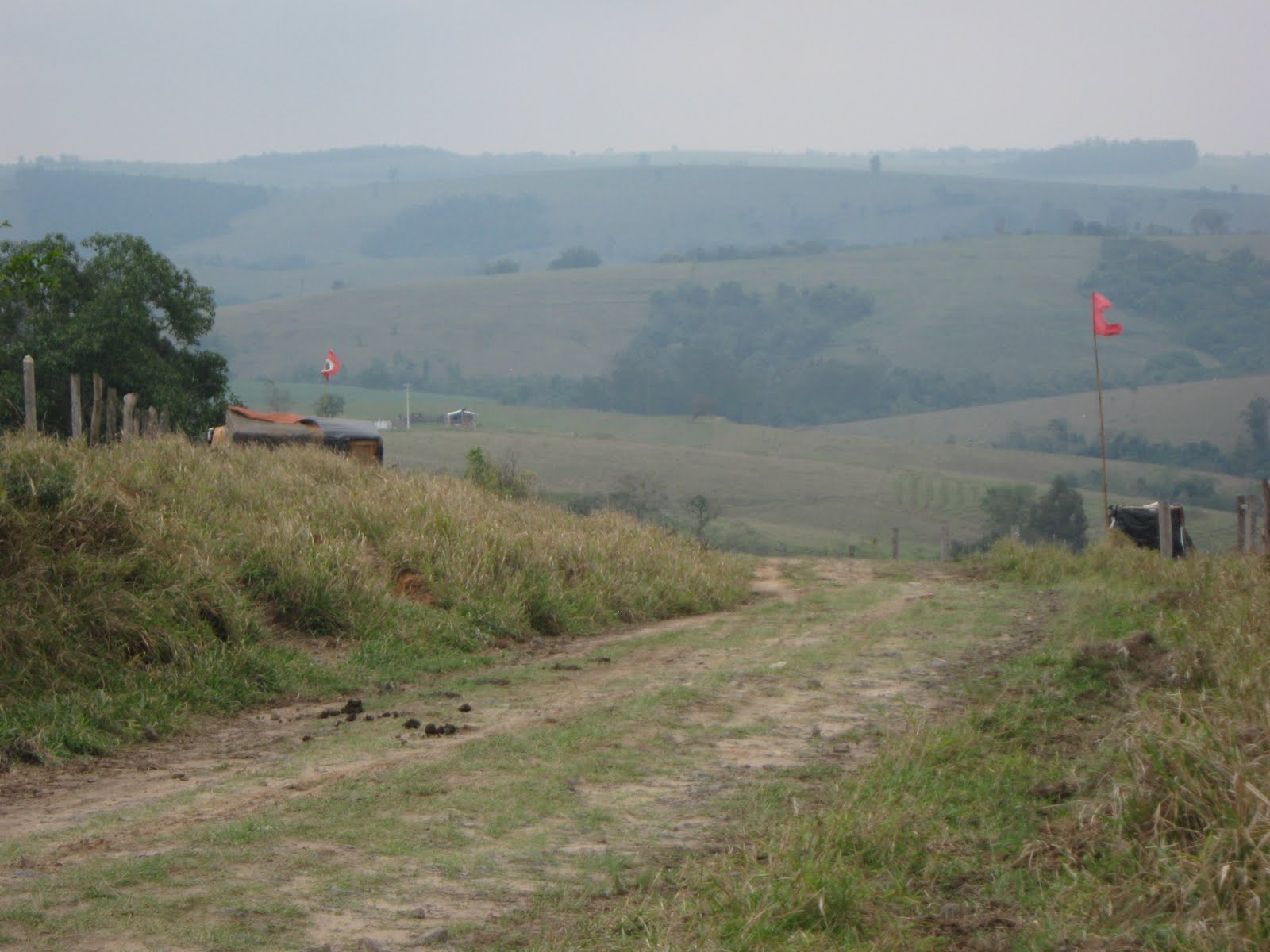
We were close to the occupation, I got out to open a gate and we went down a narrow farm track, then over the next hill we could see the black plastic of the typical MST camp and the MST flags on tall poles marking the beginning of their area. The shacks of the settlement were spread alongside the farm track providing homes for 42 families that are staking their claim to this land with their occupation, they have also taken other actions such as occupying the office of INCRA (the National Institute for Colonization [Settlement] and Agrarian Reform) for four days. MST have found out that this land, belonging to a University is not fulfilling its ‘social function’ as prescribed in the Brazilian constitution. The people using the land have got it corruptly and some of the land is not fully used. The families are all landless and are using this constitutional space to demand that the state allocate the land officially to them so that they can be secure there, improve their houses and invest in production. As Joachim had told us in Sao Paulo “our struggle is that the law will be implemented, fully accomplished”. These families have been organizing for years and occupied other land before, but they were evicted. Some families gave up and left, the less committed being weeded out through the hard life on the side of the road and in the camps, others like Nilsa have continued. They now have support from the local priest, the mayor and some of the deputies in the regional government and are hopeful they will soon be secured on the land.
Nilsa who is living in the camp with her husband and their five children is one of the coordinators. She showed me the cramped shack where her family sleeps and the collective kitchen that a different “nucleus group” takes responsibility for each day. The store room with its sacks of rice and beans and large containers of oil, has food mostly provided by settlements like the ones at Itapevo, but there are no luxury items. The water is collected from a natural spring a few hundred metres from the main camp.
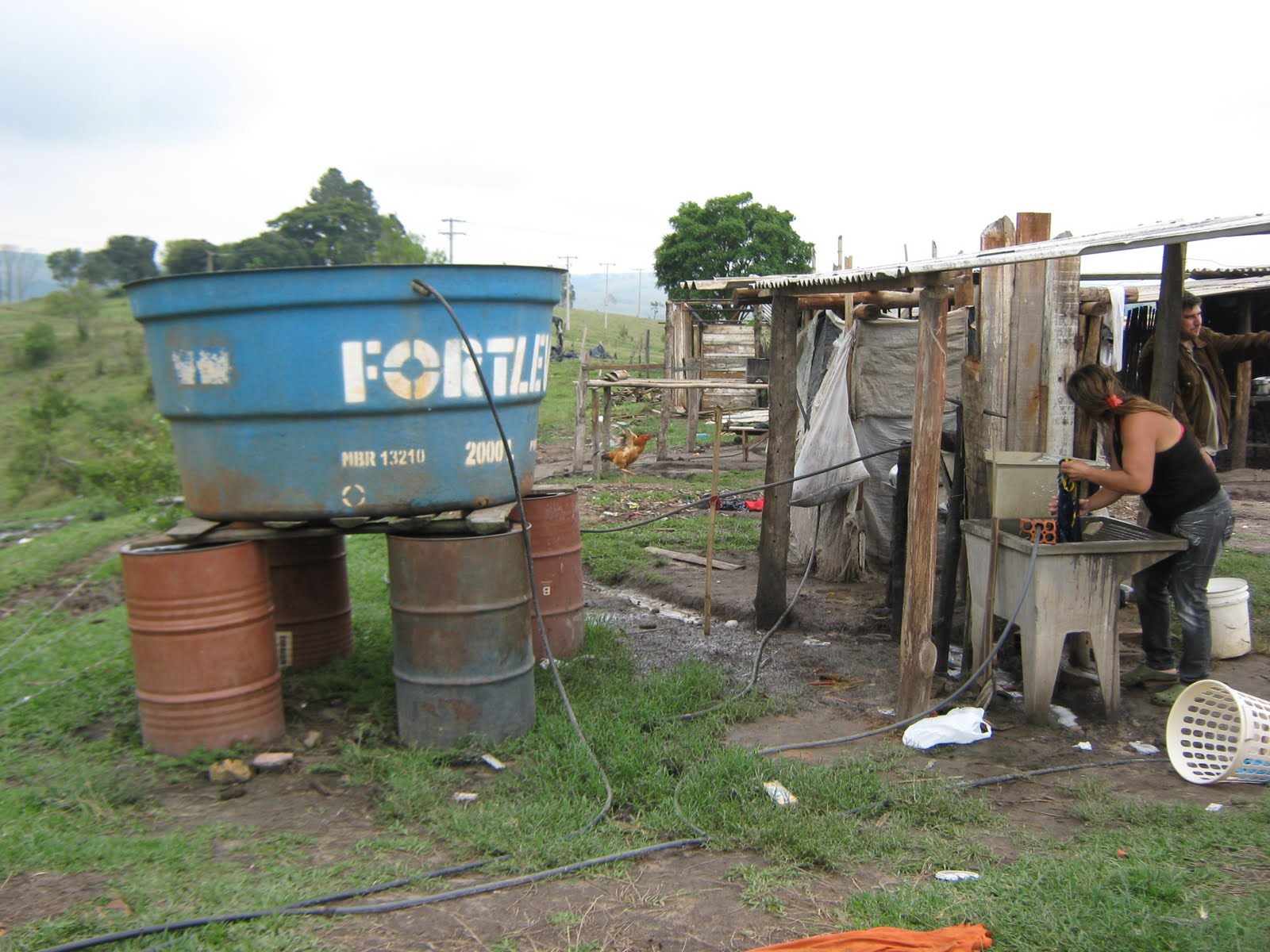 It is the nucleas groups of around ten families each that run the camp and from each group put forward one women and one man to form the coordination for the camp. The camp Coordination, along with similar structures from the settlements, in turn send a woman and man to form the regional coordination and so on up to the state and national levels. This rooting of all leadership in the experiences of the camps and then the settlements is one of the keys to the success of MST. No leader can simply be elected to a senior position unless they have come through the struggles of occupation, and then when settlements are established the equally challenging struggles of production and economic survival.
Nilsa came from the north of Brazil where she lived in the slums and could not find work. Her brother who is part of the Itapevo settlement encouraged here to come and join the occupation. Despite the rough living conditions she is already extremely happy for her children and beams with pride as she watches them playing on the grass. The children are also now enrolled in school and are collected by a school bus in the morning. “It is much safer and healthier here. There is fresh air and space. There was so much drugs and violence where we lived before” Nilsa explained.
 Our visit was short, but we got a good sense of some of the achievements as well as challenges of the MST. The life in the camps is not easy and maintaining the commitment to a larger social transformation is a challenge in the settlements where people have got the better life they struggled for. What stood out for me was that through the MST people who are outcasts in the capitalist society, so dominant around the world today, are creating lives of meaning for themselves. Through the tough years in occupations and camps and then in running the settlements those that have the resolve to stay with the MST and the struggle for land are shaping themselves and the society around them. They are creating more sustainable communities from the ecological production models used to the social organization that keeps them together. They have also, along with other social movements, been drivers of the leftward shift in Brazilian politics that has seen the rise to power of the ruling Workers Party (PT) under Lula De Silva’s leadership. The formation of the Workers Party was around the same time as that of the MST and Lula addressed the inaugural meeting of MST in 1984 and subsequent national congresses, but the MST has always remained staunchly independent. They support policies they like and still vociferously criticize the failures of the state, even under Lula’s leadership. Mass organization and occupations remain the key tactics.
 The Tingatinga art work and South African Vuvuzelas we left behind were an inadequate gift for the generosity of the hard working people of the Itapeva settlement who had hosted us. As we took to the road the Fiat was even fuller than when we had arrived. As well as gifts of posters and educational materials we had received there were products from the land including cheese from Bell’s cooperative and of course a bottle of cachaça.
 Marc Wegerif. February 2011
Oxfam Economic Justice Campaign Coordinator in Horn East and Central Africa

-Great article on Marc's visit to the MST. I wonder if he has anything to say on the lessons African land rights movements could learn from the MST experience. In a profoundly sad way we seem to be so far behind this social movement in our efforts to achieve land rights and liberation in so many states in Africa.