

Find below a collective statement in response to a move towards disestablishment of the Centre for African Studies (CAS) at the University of Cape Town (UCT) from concerned students. Also find further below a revised version of a paper that the UCT CAS Director presented at the launch of theAfrican Studies Centre (ASC) at the University of Michigan in 2009. In this regard kindly “be advised that the Faculty Forum, which will discuss the Centre’s impending closure, is scheduled for Friday, 25 February, 14:00-15:30 in the [Archie] MafejeRoom, Bremner”. Apparently “students have not – at least as of yet – been invited to attend or to speak at the event”. They need your urgent support. Amandla! Awethu!
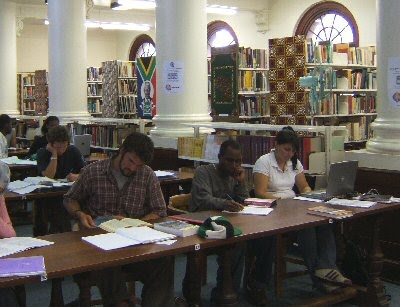 Does Post-Apartheid UCT Need a Centre for African Studies?
As students and indeed clients of the University of Cape Town (UCT), we have chosen UCT for its reputation as a world-class African university. Prior to and during our time at this world-class institution of higher learning, we invest our time, energy, financial resources and intellect, not only to our own work and careers, but to enriching the faculties, departments, clubs and organisations to which we belong. Of course, this is how educational institutions function, which is why were are baffled, appalled, angered, enraged and deeply disappointed by the university’s administrative decision to disestablish the Centre for African Studies without our input or consultation. We include our response and position here, hoping that our voices will be heard and taken seriously.
Our question is simple: Does post-apartheid UCT need a Centre for African Studies?
As students in support of the Centre, our resounding “YES!” is obvious. We affirm our support of a uniquely multi-disciplinary department that cultivates critical intellectual work, which interrogates the study of Africa, the African Diaspora and the global South; a department that centralises Africa and its varied, nuanced and many times disparate intellectual histories and ways of knowing in order to challenge disciplinary paradigms and the relations between power and knowledge production.
With this in mind, we are struggling to comprehend the proposed disestablishment of the Centre for African Studies. The Centre has produced groundbreaking work, dynamic partnerships with other universities and is regarded very highly around the globe. It plays a pivotal role in questions that continue to haunt postcolonial, post-apartheid South Africa, and is placed uniquely to examine just what it means to be a South African tertiary institution committed to the ideals outlined in the South African Constitution.
Among the many questions asked at the Centre are those that encourage us to reflect on and question ourselves and our relationships with others. These are not merely academic questions. Rather, they inspire us to examine critically our own identities and how and why we are represented in particular ways. Through this lens, we are given the space to discuss openly what knowledges are accepted as equal, and how power, institutional and otherwise, operates.
Whilst we understand and respect the autonomy of the university as set out by statute, we believe that as students of a South African university, we will suffer losses (material, intellectual and otherwise) if this closure goes ahead. It will damage the reputation of South African universities abroad, as we will be seen as an African university that does not believe that the scholarship of Africa is important.
Crucially, the question is one that centres on issues of transformation at UCT. As we see it, UCT does need the Centre for African Studies, but can the Centre for African Studies exist in post apartheid University of Cape Town? This is a space of hope that asks us to imagine different ways of being. It is a challenge that is urgent and one that UCT, in its apparent quest for transformation and Afropolitism must accept and support.
Concerned CAS Students
Concerned.CAS.Students@gmail.com
 Advancing African Studies in an African University
Often and again, I am asked the question: why a Centre or Institute of African Studies in an African University ? Would the academic study of Africa not be mainstreamed within the disciplines in an African university? Why then retain an anachronism from the ‘ancient’ past of colonialism and apartheid? I realize that each African university – in all good conscience – will have to answer that question for itself, but there is still a serious question here that requires more than blanket dismissal.
The question gets asked in several ways, and the spectrum of ways of asking runs from the puzzled ignorance of some scholars to the condescending arrogance of some others. These major attitudes at the ends of the spectrum encapsulate the ways in which the question crops up and they deserve attention. There are those who ask it with a genuinely puzzled ignorance of what these institutes really do – like asking a scholar in a Centre for American Studies or Canadian Studies what they really focus upon. Here the implicit assumption is this: amid the proliferation of disciplines where the study of Africa (or America or Canada ) is done, what is it that you really do that is different from these? This is the benign, truly intellectually inquiring form of the question. In instances such as this, being located within a Centre for African Studies within an African university, I pause and patiently explain, rather like other scholars in niche intellectual fields tend to do. And, I feel this current of satisfaction when I have been able to do this.
However, others ask the question with a tone of knowledgeable confidence that African intellectual production or – as more often the case – intellectual production on Africa has become recognized beyond the need to band together to defend and legitimize it. There is often this sneering tone in the asking that is somewhat bothersome for its insinuations; a tone that one discovers sooner rather than later is laden with the arrogance of the expert in the clichéd and conventional. Here the question is not about what you do, it is not really a question seeking an answer but one to which the answer is already presumed to be known. To appropriate what the theorist Frantz Fanon says about “the fact of blackness,” the question comes loaded with history, battered with tom toms, already predetermined from without. At this point, you are tempted to throw the question back at your dishonest interlocutor with the contempt it deserves. But then you realize that those who have been short changed by the history of knowledge production do not have the luxury of silent rebuttal. So here we go again.
Underlying this second manner of asking the question is the conventional wisdom that African Studies emerged out of the marginalization of Africa within the disciplines. Since, Africa was not present at the ‘tea party’ where the fragmented self-understanding of knowledge was consolidated in disciplinary formations, there was no African history, literature, sociology, philosophy, etc., to speak of. African Studies, by this partial historical understanding, became the holding house for all those denigrated knowledges that had been excluded from scholarly attention, the ghetto within the ivory tower. Against this historical background, the coming of political independence and liberation should surely mean that the study of Africa has been mainstreamed within the disciplines and therefore the rationale for a Centre of African studies should invariably disappear. A Centre for African Studies in these postcolonial times is therefore seen as an anachronism, a retrograde retention from the past, something that should be shed like the evolutionary tail. If you have been finally let through the democratic door of knowledge, why lock yourself out? This, in a nutshell, is the summary of this attitude.
As condescending as this may seem, let me say once again that this is the more benign form of this second approach. There are of course the more extreme, dramatic expressions of this which I often refer to as the conspiracy and contamination theories. These range from claiming that African Studies is the creation of the CIA, a field constructed and consolidated by white males as a form of surveillance of an area of the world, either as a handmaiden of the civilizing mission or as agency of ideological control. Between the righteous pontifications of right and the pretentious liberalism of the left, you are given a plethora of historical evidence of how contaminated African Studies is as a field of scholarship. What is often left unsaid in most of these positions is the contaminated origins of all of the fields of knowledge that we all find ourselves in. More importantly, they ignore the agency of African intellectuals themselves and those Africanists not beholden to these agencies of control who located themselves within this field and, in conflicted and contradictory nature of all such undertakings, push forwards its frontiers.
We need to remind ourselves as often as we can that the struggle against marginalization and objectification within the domain of knowledge was not simply a struggle for seamless integration, as the liberal mind likes to think. It was more fundamentally a struggle for epistemological decolonization, to use the lofty phrase of anti-colonial nationalism; it was a struggle to interrogate and reconfigure the enabling paradigms and methodologies that undergirded the entire enterprise of disciplinary knowledge as it evolved within the academy. Nationalist leaders of all hues never tired of insisting that the struggle against colonialism was not simply a political struggle but also a knowledge project. Insisting on the agency of the subjugated means more than just a little more African history or a touch of African literature here and there; it involves re-examination of the protocols through which historical or literary knowledge is produced and their deep rooted foundations in exclusion and Othering. For those of us who have been beneficiaries of that earlier struggle, we need to be reminded that now, more than ever, that project has become more imperative.
I began by saying that every university in Africa has to answer for itself. At the Centre for African Studies at the University of Cape Town , my colleagues and I have tried to place that question and the knowledge project it entails at the centre of our intellectual work. We have sought to claim this epistemological space built on the recognition that what a university really transmits is not only the various contents and objects of knowledge but that the manner in which the objects of knowledge are ordered and organized matters. It is the authority of this ordering that certifies us as universities and as academics and this, ultimately, is what we transmit to our students and to future generations. All the elaborate bureaucratic structures that we erect around what we do revolve around this central function of universities.
In the courses that we teach we endeavour to prioritize and problematize the production of knowledge about Africa, be it within the disciplines, in public culture, and in the intellectual and popular cultures that constantly generate ‘facts’, representations, and images of Africa. We insist that there is a canon of work ordered around these issues that should and must be the object of intense theoretical attention in its own right beyond the fractured offering available elsewhere.


No plans to close Centre for African Studies, says UCT Dean
Statement by Professor Paula Ensor, Dean of the Faculty of Humanities at UCT
Rumours have been circulating that the Centre for African Studies (CAS) at UCT is to be “closed down” and that students will no longer have access to the courses and programmes that have been offered by CAS in the past. This is not true. The Faculty of Humanities at the University of Cape Town is investigating a proposal to merge the departments of Social Anthropology, Linguistics, the African Gender Institute (AGI) and the Centre for African Studies (CAS) into a new Department of Anthropology, Linguistics and Gender Studies. If the proposal is accepted, all programmes currently offered by all these departments, including CAS, would continue to be offered.
A number of points need to be emphasised in relation to this proposed merger. Firstly, the proposal is to disestablish the participating units as departments and not to close down their programmes. The present offerings of all of them, including CAS, would continue to be offered. The particular identity of the AGI would be protected, as the undergraduate major and postgraduate offerings would continue to be offered, and the research activities of the AGI would continue under its banner. The issue of a similar structure to hold and highlight the research interests of CAS colleagues has already been mooted with staff in CAS.
Secondly, it must be remembered that CAS was set up in the 1970s, not as an academic department in one faculty, but as a cross-faculty platform for debate and discussion about Africa. This was at a time when the study of Africa was marginalised at UCT. The situation at UCT is now quite different: the study of Africa is deeply rooted across the institution, and it is important that we reflect seriously, on an ongoing basis, about what the best vehicle is for driving UCT’s engagement with our continent as a whole.
Thirdly, discussions about the merger have taken place over years and have been open and transparent. This initiative emerges after years of discussion within the faculty about how to deal with the challenges faced by small academic departments: problems of capacity when a staff member takes sabbatical leave, problems of diversity in academic offerings, and difficulties in recruiting staff. In 2010 the Dean’s Advisory Committee and the Faculty Board of Humanities formally accepted a proposal that no academic department should have fewer than six full-time permanent academic staff members.
A faculty forum will be held at the end of February, which all colleagues will be able to attend and where a proposal for the merger will be tabled by Professor Paula Ensor, the Dean of Humanities. All staff and students, including those in CAS, will be welcome to voice their opinions on the proposal, which will then go to the Faculty Board in March.
Dear Anonnymous, thank you, check my latest blog post on 'Remembering AC Jordan with CAS at UCT', it was written after reading tha response from the dean that you have just sent – and the board letter forwarded by the Concerned CAS Students, check it out in the links provided and read between the lines.
I find the logic of the response – "The situation at UCT is now quite different: the study of Africa is deeply rooted across the institution, and it is important that we reflect seriously, on an ongoing basis,…" – very tenuous and frightening for the real health of the scholarship of Africa in South Africa. It sounds to me as a defence, an apology to undermine the relevance of the scholarship about Africa in the twenty-first century. So what does it mean, if suddenly we realised that we're human, should we stop breathing it, or should we stop engaging our humanity? Does Europe study europe, and all its ages of glory and wrath? Does America still not study its past, challenge its present, and imagine its future? What is an African University without the study of its own continent?