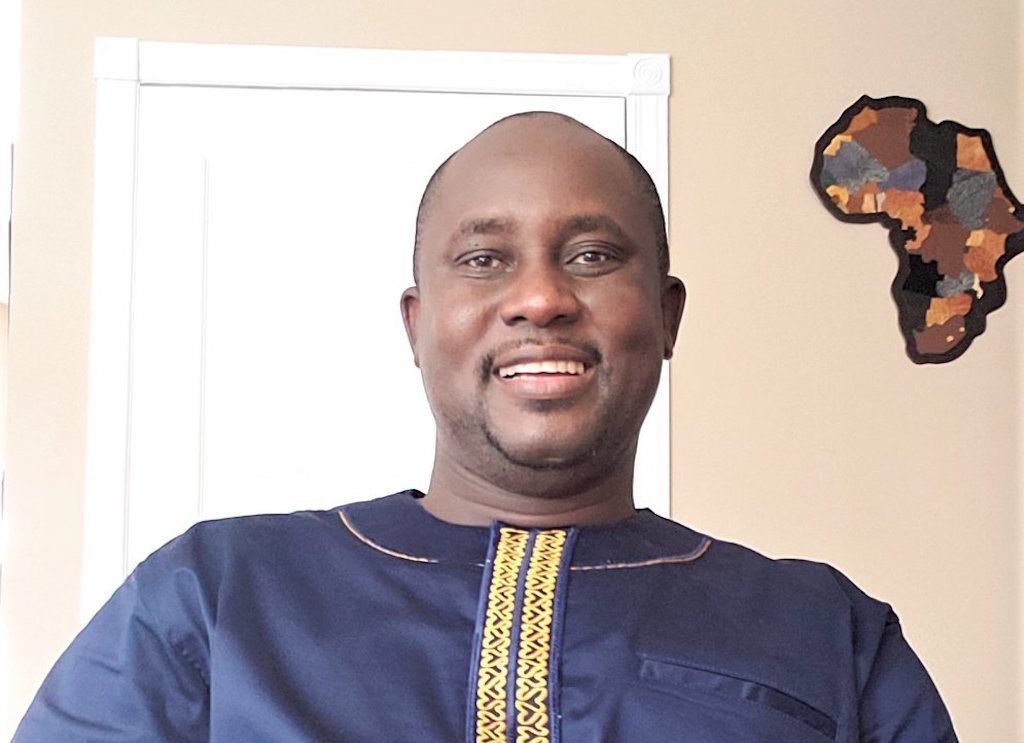
A Tribute to the Returned Son of Africa Pius Adesanmi
Chambi Chachage
Africa is still mourning the loss of one of its finest sons, Pius Adesanmi, and 156 passengers in the tragic crash of Ethiopian Airlines Flight 302 on a Sunday morning. Touching tributes are pouring from all corners of the African continent and its Diaspora. Payo as his compatriots called him surely touched many Africans.
I am one of those who were touched by his love for Africa and its people. We met virtually through the USA Africa Dialogue Series’ listserv. For over a decade I took it for granted that one day we will meet physically in one of the African public forums. So, I received the shocking news of his untimely death with regret, sadness and, of course, anger at such an avoidable loss of lives in our continent.
While grappling with the finiteness of our lives on this earth that prompted Moses, as recorded in Psalms 90, to pray, “So teach us to number our days, that we may apply our hearts unto wisdom”, I have been thinking about the life and times of Pius. His apparent premonition is replayed over and over again in my mind. I have been wondering what went in his mind when he thus quoted Psalms 139 a few minutes before he boarded the plane: “If I take the wings of the morning and dwell in the uttermost part of the sea, even there your hand shall lead me, and your right hand shall hold me.”
The touching tribute from his lifelong friend has helped me to put all this in perspective. “When your plane stalled three hours before landing in Accra in 2016,” recalls Bámidélé Adémólá-Olátéjú, “you were shaken.” She goes on: “I tried to dismiss it as turbulence but you told me oxygen masks deployed and that events of your life flashed in your face. You told me; “Bamidele, ó dà bí plane crash lọ má pá mi”. (Bamidele, it seems I will die in a plane crash)….”
For Pius, it seems, counting ones life like Moses was the order of the day. No wonder, as Bámidélé aptly puts it, Pius lived quickly and circumspectly by tirelessly and hurriedly working as if he knew he won’t live to see his 50th birthday. While in Nigeria in 2013 he is said to have penned this other premonition: “Here lies Pius Adesanmi who tried as much as he could to put his talent in the service of humanity and flew away home one bright morning when his work was over.” It is hard to accept that his work was over on that fateful Sunday morning when he was on his way to meet African colleagues in Nairobi in the service of humanity in Africa.

Judging from the tributes from those he has passed the baton to, however, it seems his work is only over as far as mortality is concerned. In terms of immortality, the work will continue through those he has mentored and inspired both directly and indirectly. Even the spiritual book he loved gives credence to that for it states somewhere in Revelation 14: “Blessed are the dead which die in the Lord from henceforth: Yea, saith the Spirit, that they may rest from their labours; and their works do follow them.” As far as his African country is concerned, and by extension, Africa broadly defined, Pius thus summed up the role of his writings for posterity:
“I write basically these days for the purposes of archaeology. A thousand years from now, archaeologists would be interested in how some people called Nigerians lived in the 20th and 21st centuries. If they dig and excavate, I am hoping that fragments of my writing survive to point them to the fact that not all of them accepted to live as slaves of the most irresponsible rulers of their era.”
Yes, it is sarcastic. Ironic. Witty. That was Pius at his best. I am thus reminded of his intervention in a discussion sparked by my ‘Not So Long a Letter to a Prodigal Son of Africa’, a rejoinder to his article on ‘The Prodigal Son’ in The Zeleza Post. Pius responded:
“Ken, Chambi, and Amato, you have enriched this thread with your various perspectives. I am just going to raise a few questions you have all remarkably ignored. It all comes down to what each of us considers to be the fundamental premiss of this discussion. Chambi’s Fanonian circumvolutions and Ken’s submissions on theory are useful in the sense that they re-state obvious facts that are not – were never – in contention. It seems odd to me that Ken and Chambi took a rather long route to arrive at the conclusion that anybody in a forum such as this needs to be reminded that all hands must be on the deck in terms of ameliorating Africa’s material and developmental condition. That is preaching to the choir.”
Pius felt, rightly so, it was a given that any member of the USA Dialogue Africa Series and any similar virtual and physical space ought to, first and first foremost, work for the betterment of Africa(ns). That was not debatable. What was open for discussion are the approaches, for better or worse. He, therefore, elaborated:
“The point is we have fundamental differences in terms of how we perspectivize contributions to the advancement of the continent. We are also debating how such philosophical differences affect or determine our conflicting understandings of African studies as epistemological proposition and institutional reality. Chambi and I are at antipodal points of these issues because, for him, African studies as epistemology and as institutional reality would appear to be tied to an inflexible idea of geography as destiny: inside good/outside bad, a most insipid Orwellian binary that has led him to the even more insipid assumption that the Africa of his understanding can only imagine narratives of the outsider as prodigal, never mind that the very text he is critiquing speaks of the lumping together as amoral flight of so many rich and diverse trajectories in the transnationalization of African academic labour. If, on the other hand, you believe that African studies as epistemology and institutional reality inhabits multiple loci and spaces of articulation that are not bounded by geography, it follows that agents in those spaces, local or outside, face institutional vicissitudes. The question then, Ken, is: is one set of vicissitudes worthier of enunciation than others? Are the institutional challenges you face as an Africanist in Michigan less equal than those you face in your classrooms in Yaounde and Dakar? Are you a moral, Africanist in Yaounde, an amoral Africanist in Michigan? When is an African classroom?”
One cannot help but say touché in hindsight. At that point I was so disillusioned by spatial location that seemed to limit the material and intellectual contribution of Africans who resided outside Africa’s geographical boundaries. No matter how well-intentioned, it seemed to me, they had ontological and epistemological limits of having to engage with Africa from a faraway vantage point. It is thus not surprising that Pius took me to task when addressing his rhetorical questions on whether geographical locations matter: “These are the questions that nombrilistic and moralizing nativists like Chambi reframe malapropistically in terms of the obviously more formidable material conditions of the African classroom in Africa. But who the heck is arguing with the that?” Ouch!
Now, ten years after that exchange, I am seriously rethinking my apparent nativist position in regard to African scholars living in the Diaspora. It is possible, I am starting to be fully convinced, that one can reside far away from the continent geographically/physically and yet contribute meaningfully to the continent, materially and intellectually. The life of Pius is a testimony to that. The responses he received to his article under discussion exemplify this. He noted:
“This, [is] a text that speaks of “many stories and numerous experiences” of diasporic African friends, colleagues, students, acquaintances gathered over the years. Were she to be able to read English, even my grandmother in the village would understand that the text in question self-fashions as a composite of all these different stories and experiences, hence the deluge of emails flooding my inbox from diasporic African readers of The Zeleza Post since that blog appeared there: “Dear Prof Adesanmi, thank you for telling my story in your Letter to an Old Flame…” Incidentally, the most moving of such testimonial emails came in from Chambi’s Tanzania, authored by a good lady tired of having her Canadian trajectory criminalized every time she is in Tanzania. I hope she forgives my indiscretion because she is one of the numerous silent members of this listserv. Don’t we teach our students not to swith into automatic mode and receive every African text as autobiography? Don’t our friends in Francophone Africa teach their students not to instinctively establish une parfaite adequation entre la vie et l’oeuvre?”
Pius’ conclusion to the debate is as damning to nativism as it is illuminating about appreciating the role of ‘natives’ who have either been forced or even opted to reside outside of Africa ‘proper’ due to various reasons yet work tirelessly for the continent and its people:
“What I consider to be the premiss of this debate has actually been explored with considerable brio in Paul Zeleza’s introduction to his two-volume The Study of Africa and also, his essay, “Africa:The Changing Meanings of African Culture”. Moses Ochonu has also grappled with the crux of this debate in two formidable essays in which he deconstructs the incipient nativism of Professor Pat Utomi who recently found a new calling in the criminalization of Nigerian intellectuals abroad and the delegitimation of their voices. I suggest we consider the insights of Zeleza and Ochonu before we push this thread further.”
Since then deeper collaborative efforts between African scholars in the Diaspora and have been on the increase. For sure, they have their challenges some of which are born of the apparent animosity between their ‘loci’. Nonetheless, overall, there is a clear indication that they are beneficial for what Pius has referred to as ameliorating Africa’s material and developmental condition. In his case, he also became more and more involved in such mutual efforts. As his dear wife, Olumuyiwa Balogun-Adesanmi, reiterates, he “lived and died in service to Africa.” Why, then, am I calling him the returned son of Africa? Simply because Pius was connecting even further with continental Africa as the Council for the Development of Social Science Research in Africa (CODESRIA)’s tribute highlights:
“Though he does not formally appear in the registers of CODESRIA as a member until 2018, Pius’ intellectual work intersected with that of the Council. His convictions, his take on the politics of knowledge production, his interest in mentoring young academics and his expectation, indeed his demand for excellence, all reflect positions that the Council holds, cherishes and advances. It was therefore easy to convince Pius, at a meeting of Carnegie African Diaspora Fellowship Program Advisory Council in Nairobi in March 2018 that he needed to engage the Council activities more. On the basis of such discussions, Pius was invited to the 15th General Assembly with the express task of observing the Assembly and submitting a critical piece on the proceedings. Pius was struck by a tension between the social sciences and the humanities at the Assembly and offered to support our work to enhance the interdisciplinary conversations he sensed the Council wanted to encourage. He was on course to submit this critical piece to a syndicated weekly column carried in four different papers. He also was on course to submit an expanded version of the piece for publication in the CODESRIA Bulletin when the hand of death robbed us of this rare privilege. Pius had also just accepted to support the Council as a resource person for the Meaning-Making Research Initiative (MRI) Methodology and Scholarly Workshop to be held in Abidjan, Cote d’Ivoire from 1st to 5th April 2019. Additionally, he had accepted to be on the scientific team of advisors working with CODESRIA’s Carnegie Corporation of New York-funded programme on African Diaspora support to African Universities. The indefatigable worker, Pius had also just set up a new team that he was leading on a Carnegie-supported project on Higher Education. There is no doubt that the crash has robbed us of a young, energetic, boisterous colleague, one whose presence among us elevated us and bestowed a sense of direction to our work.”
Boeing, why, why? Africa, why, why? God, why, why?
Yes, “Ethiopia shall soon stretch out her hands unto God”!
Rest in Power Pius ‘Payo’ Adebola Adesanmi.