
Are China and the US sidelining “UK’s
space in Africa”?
Chambi Chachage
The African youth who “studied, researched, and taught
in the UK” has
responded to my critique of her query: Is
the UK’s diminishing its place in the global sphere? She has thus come up with a challenge that I
tried to avoid earlier: “I also think that Chambi should have done a
comparative analysis with other great powers such as China in Tanzania, before
concluding, “my question is misguided.” Let me, humbly, give it a try.
In the earlier piece, Aikande
Kwayu asserts: “If you ask most young Africans about an external great power
that is influencing their country and daily lives- the quick answer would most
likely be China or the USA.” By way of comparison, she further states: “If you
get specific and ask them, what about Britain-they would probably say: it’s
too difficult to get a visa; or university fees are expensive; or they don’t
want immigrants; etc.” She then claims it “is unfortunate that Britain is no
more the first place young Africans are thinking of pursuing their university
studies despite its world-class universities.” For her, this “is obviously a
change of attitude towards Britain as compared to the previous generation of
Africa, of which Britain was their “mother” country.” This purported “change of
attitude”, she concludes, “is to be blamed [on] the UK’s foreign policy decision
makers and politicians.”
Probably she is right at
least in the case of our home country. After all, the
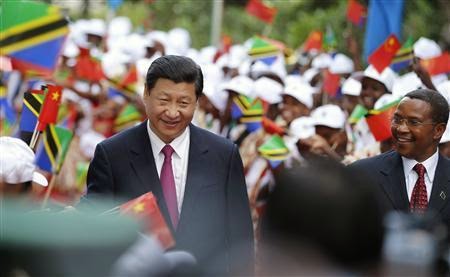
latest Afrobarometer survey suggests that “China has a greater influence on
Tanzania than any other country and is a preferred model for Tanzania’s future
development.” It shows that 40% of the 2,386 adult Tanzanians that its team, led by
Policy Research for Development (REPOA), interviewed said so. The US comes
second at 31%. The UK is in the distance fourth at 5%, trailing South Africa at
6% and being ahead of India at 4%.
All this seems to vindicate
this lamentation of hers in her first piece: “Britain, a historical “parent” to
most African countries is loosing its space in the confident rising Africa. It
is going to a time when the UK will have no voice in the continent that has so
much in common with. Other powers are increasingly sidelining UK’s space in
Africa.” The survey helps us to understand why, in regard to the UK, someone who
proclaims to have “an unwavering admiration [on] its values and ideas, as well as
much interest [in] its history” finds its state in Africa so “disturbing” to the extent that she
gives this clarion call: “The UK needs to wake up ASAP before it’s too late and
restore its vibrancy and lead in the global politics. Why is UK becoming like
a follower of the USA’s foreign policy instead of having its own ground and
lead in international issues?”
My contention, however, is
that as far as Tanzania is concerned, the UK has not been a ‘sleeping giant.’ Hence my
call for Kwayu to closely look at specific cases in Africa within what she
refers to as the “global sphere” and the “external world” that the UK is
purported “withdrawing”/“retreating” from. Would the numbers add up if she does
so?
Escaping from this task,
Kwayu thus opts to thus tutor/teach me the ABCs of International Relations (IR) in her
latter piece: “Without beating around the bush much, I first want to remind
Chambi that foreign policy is not only about selective “activities” a state
carries out with another state. It is bigger than that. It is a totality of all
interactions (diplomatic and non-diplomatic), perception building, image creation,
influence exercising, etc a state does to/with the outer world. An effective
foreign policy is measured by the success and ability of a state to improve its
status in the global sphere on all matters mentioned above and beyond. Having a
number of deals with another state is only a small portion of foreign policy.
That is why the concept of “soft power” is very appealing. It is because states
know that the high status and influence in the global sphere goes beyond deals
or contract agreements. History testifies that the UK knew this fact, but
current trends of its conduct in [the] international community do not give us the
same picture.”
But aren’t these very
“activities” the hallmark of theCorporate-State-Civil Society (CSC) Tripartite Foreign Direct Investment (FDI) Setup that I have loosely defined as the interplay of international power
relations in a given land between entities emanating from a foreign country
with the overall aim of benefitting it. Aren’t they the very activities that
the UK has been competing with China to do in Tanzania since the eve of Tanganyika’s independence and the Zanzibar revolution? Isn’t what the US has been doing in collaboration and/or
competition with the UK?
For the love of history, let
us recall this ‘diplomacy’ in 1966 as
documented in Alicia Altorfer-Ong’s recent PhD
dissertation: “The earliest Chinese reports of the Tanzanian delegation’s
visit described the delegates’ keen interest in the events connected with the
Cultural Revolution. The visitors were reportedly enthralled by the rousing
propaganda performance The Congo is
Rising, even suggesting that it be made into a film for release in Tanzania
to counter negative US influence. The group also requested that visual images
of China’s development – such as factories and cooperatives – be documented in
order to increase the Tanzanian people’s awareness of developments in China.”
China’s “soft power” was at
play then even if the Cold War, with its prevailing “hard power” dynamics, was getting hotter
and hotter. Altorfer-Ong also shares this interesting case: “Coming at a time
of Tanzania’s budget crisis due to diplomatic fall outs with its major donors – West Germany,
the UK and the US – between 1964 to 1966, Nyerere observed the positive impact
of the Chinese medical team in Zanzibar…. On 1 June 1966 the Tanzanian Minister
of Economic Affairs and Development Planning, Paul Bomani, requested assistance
from China to replace the medical support that the UK had withdrawn….Ambassador He
Ying supported the minister’s request and explained to the Foreign Ministry that
Tanzania was having a difficult time economically and was under great pressure from
the West because of its nationalisation policies and growing ties with China. He Ying
recommended that the Chinese government approve the request, as it would achieve
a number of important aims: To support Tanzania’s anti-imperialist stand, help
it withstand Soviet overtures, keep it on its socialist path and further develop bilateral
ties… The request was approved ….”
Now both the US and
the UK are
aggressively funding – and not withdrawing from supporting – health in Tanzania. As the CSC Setup indicates, this support, like many
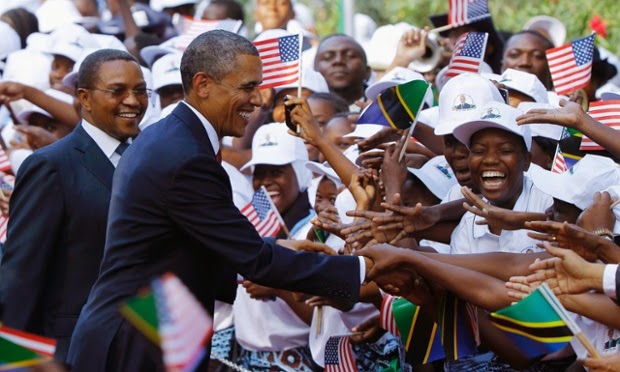
others, is not simply altruistic. I have discussed the case of the US in my
query: Obama
What is so Special about Ubungo in the Battle for Power?
Operational
Plan 2011-2016 DFID Tanzania is thus so clear about the case of the UK when it comes to
what Kwayu refers to as ‘calculated rational national interests’: “In addition
to poverty reduction, the UK’s interests in Tanzania are consolidating a
democratic partnership, enabling a strong private sector, and making sure that
Tanzania remains an anchor for regional stability in East Africa. The UK government
also has an interest in helping Tanzania access technical know-how and attract
inward investment, including from UK businesses, to take advantage of its
strategic location and abundant natural resources – including potential
offshore oil and gas reserves. DFID will work with the British High Commission
and the private sector to improve the business climate and strengthen
Tanzania’s ability to prosper in the regional and global economy, under the High
Level Partnership for Prosperity. Through its contribution to the TradeMark
East Africa Tanzania Programme, DFID will help to deliver on the UK’s Africa
Free Trade Initiative.”
So is the Statement
following [the] meeting between Prime Minister David Cameron and President Kikwete of
Tanzania published on 31 March 2014. And so is Q&A
Dianna Melrose – British High Commissioner to Tanzania published on 25 November 2014. As far as foreign policy is concerned, these faces of their diplomacy have clarity of purpose as they both know what
the UK is strategically doing to/with/in/for Tanzania. The key question is: Do we really know
what Tanzania is doing to/with/in/for the UK?
Yet our very own – the very person who
invokes, albeit in disclaiming quotes, the “parent” and “child” analogy to
refer to the UK and Africa/Tanzania, respectively – has the audacity to thus
conclude her rejoinder: “I will end here, but I think we should focus on the
big picture and look at the foreign policy in totality. The kind of thinking
Chambi is pushing forward here is, I am afraid, very simplistic highlighting
the embedded (and almost old-fashioned now) “core-periphery” mindset. The UK
needs to understand that Africa is now different with lots of choices and its
youths are not blindly bound with historical hangovers. No more
“master-servant” relations of “Yes Sir”…there’s competition and the UK needs
to rebrand and maintain that brand if it wants to continue having influence
among vibrant youths of Africa. This is what other great powers are doing.
Striking 10 or so business deals and contracts is no more an adequate sign of a
successful foreign policy or external influence. Even business entities can do
that with governments leave alone states.”
David Cameron and Dianna Melrose must be ‘laughing out loud’. I hope they won’t be having the ‘last laugh’ on Tanzania. May our African youth save us all from
being the ‘laughingstock’ of the world.

Chambi,
I give it to you, you are smart. But your problem is that you are a Shivji-wannabe. Aikande's description of you as being having "the embedded (and almost old-fashioned now) “core-periphery” mindset" from your hero is very true.
The problem is you are fighting yesterday's war/battle and,while at it, destroying any chance of fruitful discourse on the future of our beloved country. Like Shivji, you are educated in the top elite Western schools (Shivji at LSE and you at Harvard), wear this as a mark of honour – a sign of your brilliance, but yet, hypocritically, are against the very countries that pay your tuition fees.
In other words you are blighting the hands that feeds you, which is disingenuous. For example, Aikande's use of the parent-child language is very appropriate when you think that you, a child of Tanzania, had to go to Harvard, the parent, to be educated.
In other words, the pinnacle of a Tanzanian Marxist-socialist (or whatever it is you espouse these days) is getting a scholarship to Harvard or LSE. Not China, not Russia, not Korea, India or Brazil. At least with her phraseology we admit a reality from which we can develop solutions and appropriate responses.
I get sickened at your arrogance in attacking fellow "scholars" because the implicit takeaway is that you, being Shivji's protege, are somewhat superior. No doubt, a future of living on aid money, conference fess from NGOs and the taxes of poor Tanzanians await you. From that vantage point you will spew the vitriol against the West in the self-deception that you are doing Nyerere's bidding. What a lie! Long live the spirit of the likes of Aikande who are setting a vision for the future…giving us a focal point, not looking backwards to a romanised past.
Wazalendo feki. Wote bado tegemezi. My challenge to you is to utilise your gifting in new positive ways, and analysing and looking at each situation on its own context and applying fresh ideas to it. Doing this, instead of through the eyes of ideology, will have you adding value to the discourse. This would be fruitful for it doesn't take much to channel Shivji, the challenge is to beyond him and the grip his ideas have on you. You will be a great academic if you succeed for you have the reasoning capacity.
I doubt you will approve this comment as I have been very crude. I apologise, but it needed to be said. Food for thought perhaps?
Alunta kontinua,
Nicholas
Chambi,
To bring home Aikande's point with a bit of history, don't forget it was the British army which saved Nyerere after the 1964 mutiny.
(See article: http://www.thecitizen.co.tz/News/national/How-the-1964-Tanzania-Rifles-mutiny-gave-birth-to-TPDF/-/1840392/2448796/-/item/0/-/102sir5z/-/index.html, Google has more formal treatments.)
A British conspiracy to keep Mwalimu in power?
Naomba kutoa hoja!
Nicholas
Nicholas, I never sanction comments so do not worry, keep them coming – all will be approved.
Here are some quick questions for you:
Isn't Aikande romanticizing the past when she refers to the time when the 'parent' UK mattered so much thus calling for it to matter again (as if it doesn't)?
Isn't 'parent-child' analogous to 'core-periphery'?
Is Aikande setting "a vision for the future" of the UK or Tanzania in that article of hers (how so)?