

This is Part 4 of a series of commentaries on Udadisi Blog entitled Tanzania Institutional Diagnostic: A Response and Comments By Andrew Coulson
Chapter 4: The Civil Service and Economic Development
If you have time to read just one of the chapters here, it should be this one [by Rwekaza Mukandala with Discussion by Jan Willem Gunning]. It provides detailed descriptions of how, since Independence, the civil service in Tanzania has struggled to make, even to develop, policies, because so much has been taken over by politicians. The country has moved from being one of the least corrupt (at the time of and after the Arusha Declaration) to one of the most.
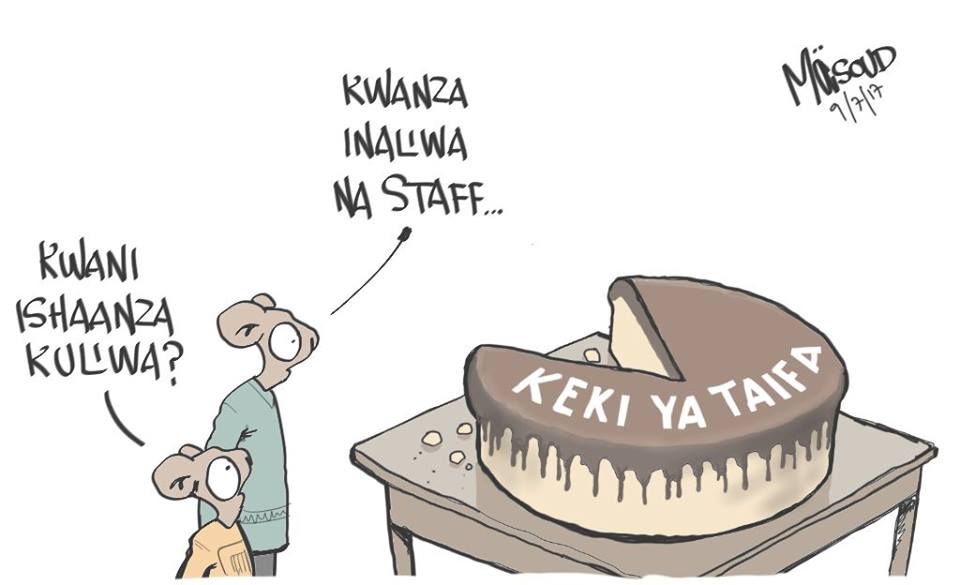
Jan Willem Gunning, in a thoughtful commentary, points out that, in a democracy, politicians should be elected on the basis of promises to implement specific policies – and civil servants put those policies into effect. In reality, in a complex society, many new policies derive from civil servants, but the process of putting them into effect involves a complex interplay with politicians, who have views on how they should be implemented, and have to steer the proposals through Parliament.
Gunning also points out that there is some confusion in the chapter, especially when it draws on statistics. Thus, in a strict sense, a civil servant is any person who is directly employed by a government – from very junior clerks and (say) watchmen who happen to be employed by the state, to highly specialised technicians such as those who work in various inspectorates, or as judges or magistrates or in research stations, right through to the elite group (in the UK the “executive grades”) who make policy. But the term is also used to describe just the elite managers who head departments or divisions of departments, and that is what most of the chapter is about. A statistical annex, which included figures over time for the numbers of different types of civil servants, would have been a useful addition to the chapter and clarified some of these issues.
As Mukandala notes, at Independence in 1961, Tanzania “had 21 graduates, out of whom 11 were indigenous Africans” (p.3). To fill the top posts, staff were moved in from other services, especially teaching, or promoted very quickly. It was a major achievement to keep the civil service operational with so little local technical expertise and practical experience.
Inevitably, others were brought in from outside the country. I was a civil servant in the Ministry of Agriculture from 1967-1971. My work, relating to foreign-aided projects, required me to support the senior civil servants in the HQ of the Ministry. They included, until 1968, the remaining “permanent and pensionable” civil servants who had served in the colonial civil service, most as Provincial or District Commissioners or agricultural officers of various specialisms. The Ministry also employed expatriates on contracts (such as me) who did not have previous experience in Tanzania. Most of the Heads of Departments were African Tanzanians – the first generation to be appointed to these roles.

The expertise of some (but by no means all) of the foreigners was very high. To give one illustration, Nicholas Monck, who sadly died recently, studied at Eton College and Cambridge University, and came on secondment from the UK Treasury in 1967 when he realised that he was unlikely to be promoted in the next 3 years. He later became Permanent Secretary of the UK Ministry of Employment and the first UK civil servant to be made a director of a UK nationalised industry (the British Steel Corporation). He was one of the most senior UK civil servants who was also a member of the Labour Party. In Tanzania he headed the team responsible for crop marketing, which included setting the pan-territorial prices, which was done with great care. [Incidentally, apropro pan-territorial pricing, mentioned on p.8, in at least two places Marc Wuyts has recently defended it, as a form of infant-industry protection, no doubt expensive, but it made it possible for crops such as maize to be grown for sale in remote parts of Tanzania, such as Rukwa or Songea].

Different issues apply to the different kinds of civil service employment. Thus, again from my experience, ten years after I had left Tanzania, in 1986, I was employed as a short-term consultant to help NORAD decide whether to continue its support for the Department of Chemistry at the University of Dar es Salaam. The methodology involved identifying as many recent graduates of the Department as possible to find what they were doing. Many were working in the labs of large companies, such as Kilombero Sugar Co. They were using their technical skills as chemists. But there was little expectation that many of them would move on to become the top decision-makers. We recommended that NORAD continue its support, and that the University maintain its chemistry department not just to train teachers but also technicians such as these – alongside the rapidly developing chemical engineering/process engineering department in the Faculty of Engineering.
Project-aid has had some unintended consequences. A project is created to address a problem. That project includes post-graduate training in regard to that problem, often in the donor country. It also includes a new building for a new institute in Tanzania. Those trained come back, influenced by practice in the country where they have been trained, and take over the project. What they should do, or be prepared to do, is to move into the civil service and use the skills they have gained to develop their technical area. But they are likely to be better paid and with much less stress if they stay with the project. The result is many NGOs and institutes, with complex relationships with the civil service. This may not be the best way to use the skills of those who have been trained abroad.

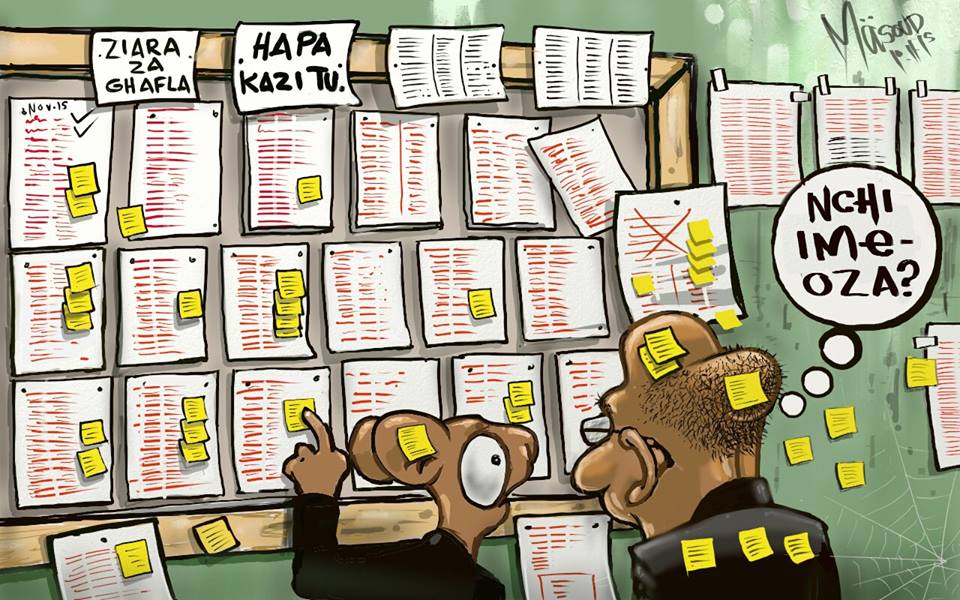
There is much in this chapter about corruption and how to deal with it, about the motivation of civil servants, about the need to deal with scandals such as “ghost workers”, absentee teachers, and high vacancy rates, the need for competence and performance evaluation, and moral and professional incentives. It is notable for not proposing a reduction in numbers, or more privatization.