

This is Part 5 of a series of commentaries on Udadisi Blog entitled Tanzania Institutional Diagnostic: A Response and Comments By Andrew Coulson
Chapter 5: Decentralisation
I spent the last 25 years of my salaried employment working in the Institute of Local Government Studies (INLOGOV), at Birmingham University, the leading institution studying local government in the UK. I worked on local government finance, then developed the Institute’s work on local economic development, and ended working on local politics, especially the “scrutiny” function, how councillors can hold council officials to account.

Most writing on decentralisation to regions, districts, cities or towns, or villages focuses either on finance, or on function, not on both of them. This chapter [by Jan Willem Gunning], interesting as it is, is about finance and says little about the possible functions of local government – which functions should be devolved, and how they can balance the advantages of being nearer to the people with the disadvantages of not always being up to date, or of being “parochial” i.e. not seeing beyond their own boundaries.
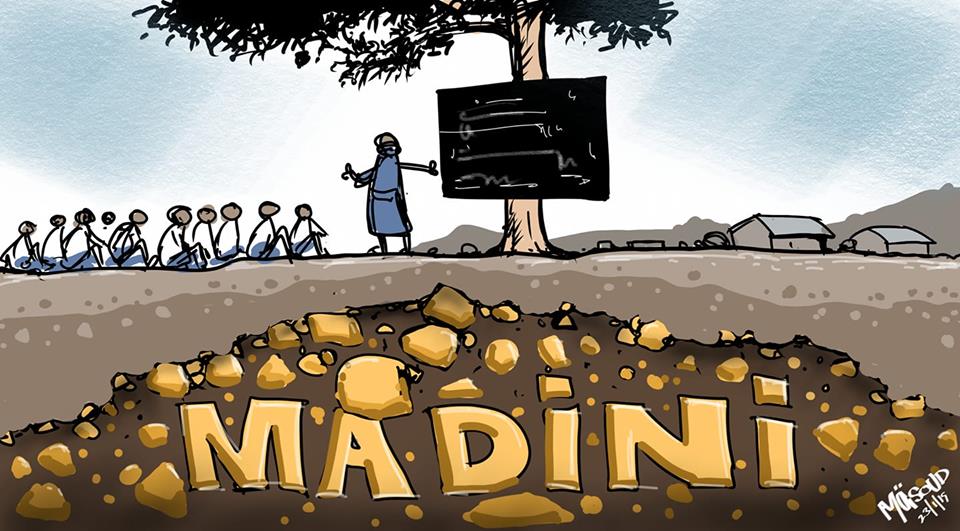
Many problems of the district councils in Tanzania relate to function – how do they decide which feeder roads to maintain? How many dispensaries to open if they cannot be sure of the drugs to supply them? How much resource to devote to maintaining rural water supply infrastructure constructed in the 1970s? How to use the agricultural extension service effectively when most of the extension officers are not up to date in their technical knowledge about crops and their pests and diseases, or aware of short-term changes in prices etc.?

The chapter does not consider what is not decentralised, e.g. the police and judiciary, or the various inspectorates. Or of scale – is there a case for elected councils for regions and districts, with Regional Commissioners and District Commissioners replaced by Council Leaders? Would Dar es Salaam be better with an elected council for the Region rather than separate councils for 5 districts?

It is hard to disagree with its main conclusion, that revenue is best collected centrally and divided between councils using a formula. Of course this means that the Centre controls the money, and, when push comes to shove, will boss the districts – especially if many of them, and many of the most important, are controlled by Opposition parties.

However, more could usefully have been said about the disastrous practice of agreeing budgets for a year on the basis that they will only be funded once the revenue is raised. This has kept the spending on local government under some sort of control. But has had the result that district councils often make promises which they are unable to fulfil. It would be better to have less ambitious budgets which are contractually agreed with central government, which can be supplemented if more revenue becomes available.

In most European states and parts of Asia, local government of cities and towns existed before central government – and in America from the 1790s all city councils were run by representatives elected by people who lived there (but it was far from a universal franchise – those who could vote were male and owners of property, and hence white). There are proud traditions of local self-government across mainland Europe, with councils responsible for basic services elected in small towns or villages. But the advent of welfare states which provide expensive professionalised services, led to councils for much larger areas – or several tiers of councils such as the communes, départements and régions in France. Service delivery may be contracted out to private companies, e.g. collection of domestic waste, or maintenance of roads, but this requires the council to have the expertise as client to manage the resulting contracts so as not to be exploited.

African countries have had to create such structures with much less history. Looking at it the other way round, Tanzania is a very big state, and it is not possible or desirable for all decisions to be taken at the centre – people need to be able to make decisions locally, and to be held accountable for them – but, as the chapter makes clear, this is not without costs and it needs specialist expertise with integrity, e.g. auditors, inspectors, etc. This chapter is very good on what it covers, but there are large areas, and big challenges, which are only mentioned in passing.
