

This is Part 7 of a series of commentaries on Udadisi Blog entitled Tanzania Institutional Diagnostic: A Response and Comments By Andrew Coulson
Chapter 7: The Power Sector
Since 1992, The Tanzania Electric Supply Company Limited (TANESCO) and the Bank of Tanzania (BOT) have been involved in a series of corruption scandals, in which money was syphoned off to finance political campaigns. Before that, and in the early years of Independence, TANESCO was a model parastatal, drawing, I guess, much of its inspiration and practice from the Central Electricity Generating Board (CEGB) in the UK. It was not short of money, so paid its staff good wages and delivered a quality service, to those who could afford to pay for it, mainly in the cities (especially Dar es Salaam) and towns, and in rural areas where there were processing factories for tea, sisal, sugar that needed reliable power supplies. Supply was increased to meet demand, so regular power cuts were much less than now, and faults were usually repaired reasonably quickly.
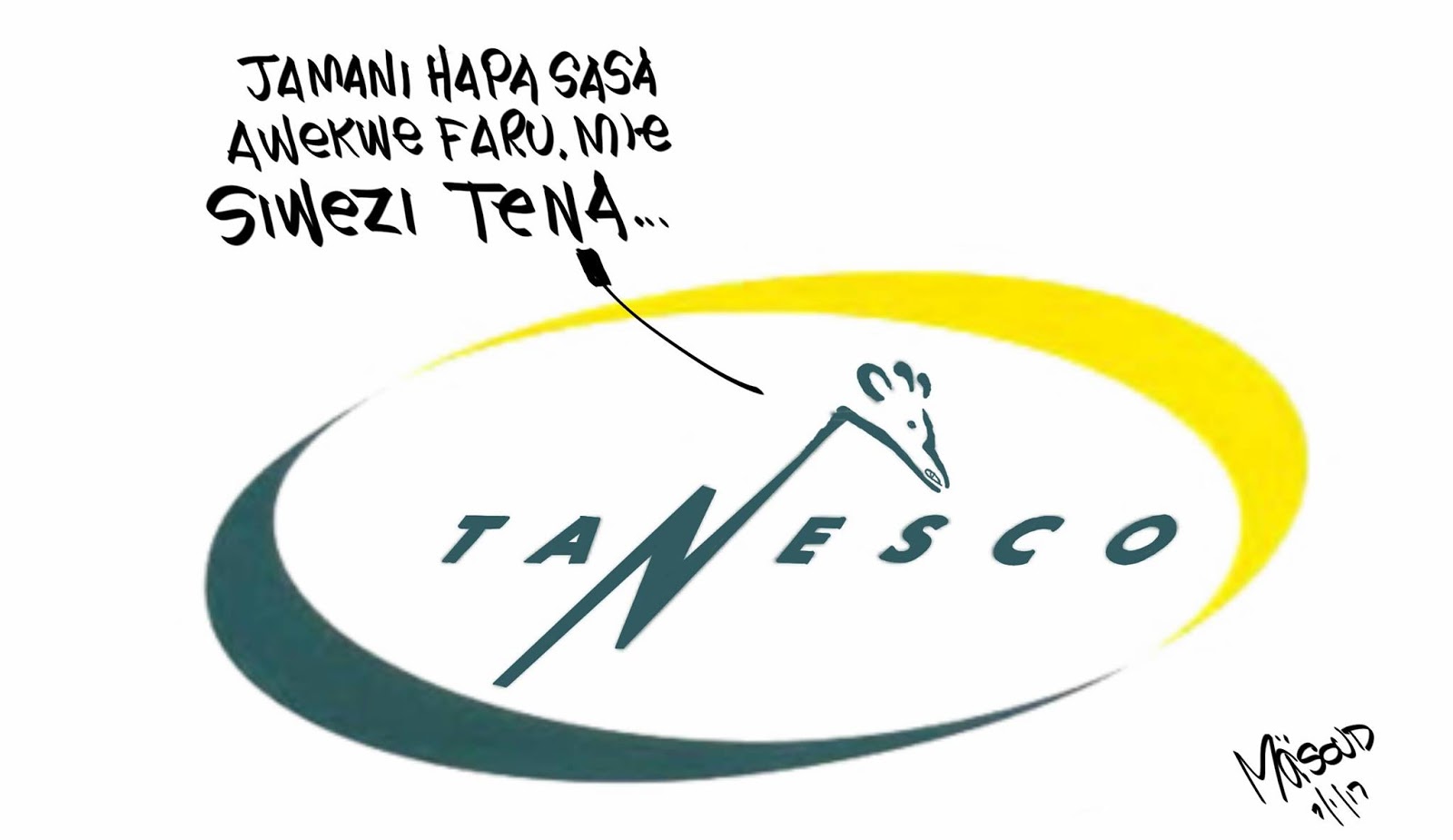
A consequence of the recent history of corruption is that the writing in this chapter [by Catrina Godinho and Anton Eberhard with discussion by A. Estache ] is noticeably more strident than earlier chapters.
The chapter is about the power sector. If it had included more about energy policy generally, it would have needed a consideration of how to phase out the use of charcoal as the main source of energy for cooking – which is having devastating effects on forests, as trees are cut down in more and more remote areas, but also on public health as families breath in the smoke, in homes where the fuel is burned in the main living area, but also in urban areas such as Dar es Salaam where it is a major contributor to the air pollution often visible when driving down the hills towards the city along the Morogoro Road. This will, in a generation or so, lead to an epidemic of lung cancer. On the other hand, charcoal production is a major provider of employment, and one that unskilled people can take part in. There are also powerful vested interests that control the urban trade. So it is a daunting task even to hold production where it is now.
There is also little in this chapter about global warming [there is a feeling now in the UK that this language is too gentle – better to call it global heating or climate emergency]. If a chapter on the power sector had been written for a Western country, this would have been a central theme. Is it not patronising to imply that Tanzania can stand aside from this – when manufacturing and transport across the whole planet is being re-engineered to use less carbon?

The key source of energy for generation of electricity in Tanzania should be solar, as suggested by Estache in his commentary on the chapter and Mufuruki et al. (Tanzania’s Industrialization Journey, 2017). Estache includes references on renewable energy solutions, low cost solar power, and mini-grids, but does not provide much detail. These can be far more than add-ons in semi-rural areas far from the main grid. In the UK farmers are converting large fields into solar generating stations, and wind is now the cheapest source of electricity. Tanzania has reliable sun and regular 12-hour days and land which is not suitable for agriculture and can be converted into solar farms. This is one of the main proposals in the Mufuruki book. The technologies for storing heat or electricity are improving rapidly, e.g. storing heat as hot water, or hydrogen, and mega-batteries, and Tanzania also has reserves of hydro power which could be kept back for use in the nights, and regular winds. What Tanzania should not do is use gas to generate electricity, which will contribute to global heating but is also a low-return use of the gas.

Mufuruki et al. suggest (on p.88) that the state should make a commitment that that every household should have at least 150-200 watts of electricity by 2025 – sufficient for basic lighting, domestic appliances such as fridges, some cooking, and the running of basic tools such as drills or welding machines or water pumps. In most places this would come from solar, and it would be delivered by the private sector – providing an important new source of employment in the manufacture of the panels as well as in their installation and maintenance.
In larger settlements it makes sense to network the houses and for the provider to supply the machine that convert DC current to AC, so that any surplus can be fed back into the grid, with the town or village getting paid (on a “buy-back tariff”) and making useful income. In many advanced countries such as the UK, this is resisted by the major interests that supply electricity who much prefer a few large power stations, but these vested interests need to be challenged, and the sooner the better.
The chapter does not discuss Steigler’s Gorge. President Magufuli has made it a priority. He tore up the contract with the Brazilian company Odebrechtthat Kikwete had negotiated, and signed a new contract with an Egyptian contractor where the financing is not included. The preliminary work has already led to thousands of trees being cut down, and great intrusion into the Selous Game Reserve. The environmental case against it is formidable – not just the loss of trees and habitats but the loss of the highly productive agriculture in the flood plain, and both inland fisheries (which will be lost because the ox-bow lakes will become saline) and sea fisheries (because there will be less nutrients in the water). If smaller dams are not built on tributary rivers, the Steigler’s Gorge lake will fill up from silt running off the land, especially if global heating leads to more big storms in the dry seasons.

Benno Ndulu has strong views about the likely downsides of the dam – he was employed as a research assistant and co-authored a paper about it, when a masters student in the 1970s. The issues have not changed since then. Except that population is much more, and that no-one at that time envisaged a standard-gauge electrified railway, which if it is successful, and runs trains at high speeds, will require a lot of electricity. Or the extent of global heating. Antonio Andreoni, at a Britain Tanzania Society seminar in London, suggested that the Tanzanian state is happier dealing with a single large supplier, and a single contract, than with many smaller suppliers each with a contract to be supervised and monitored. If this is correct it is another illustration of the State being reluctant to trust the private sector. (For my summary of points made at the seminar, see https://www.britaintanzaniasociety.co.uk/xxx/).
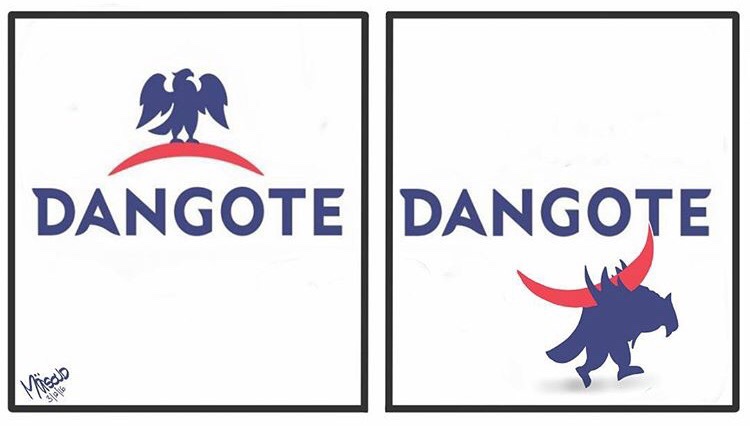
It is easy to understand why this chapter is more strident than the other chapters. Yet care should be taken about generalising from this. Some of Magufuli’s interventions have had spectacular results. By going eyeball-to-eyeball with Dangote, he achieved much lower prices for cement, to the great benefit of all involved in construction. His intervention to publicise the illegal export of mineral sands led to major concessions from Acacia. He was prepared to tear up contracts with Odebrecht for Steigler’s Gorge, and with the Chinese for the Liganga/Muchuchuma iron ore/steel/titanium/ vanadium/coal development in the SW of the country. He achieved much lower prices per kilometre for the standard gauge railway than in Kenya. If this can open up the corridor from Uganda (and Burundi and Rwanda) to the Tanzanian coast, there will be many benefits from cross-border trade.
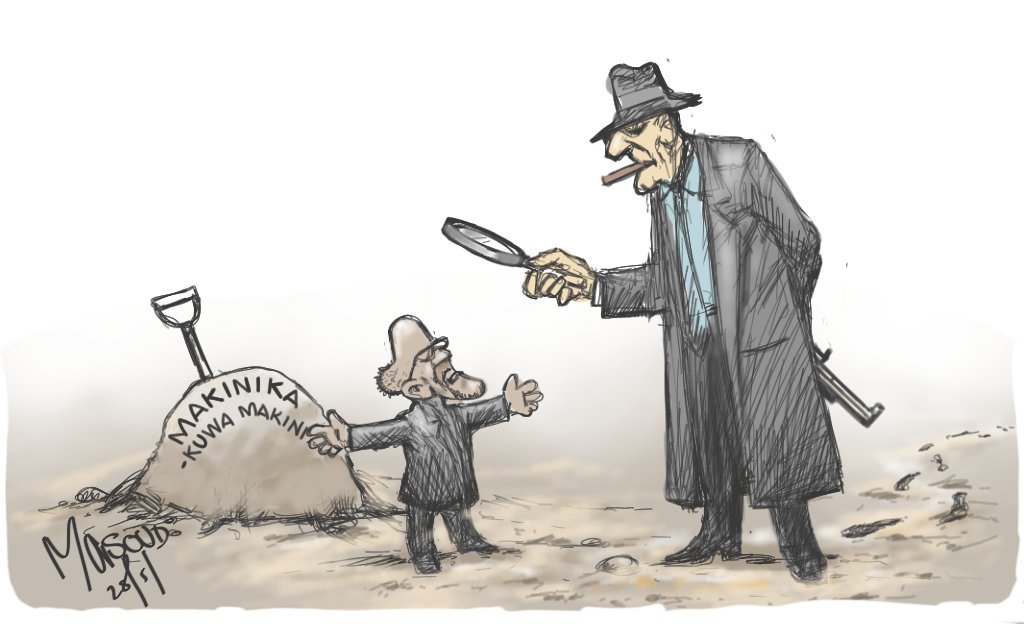
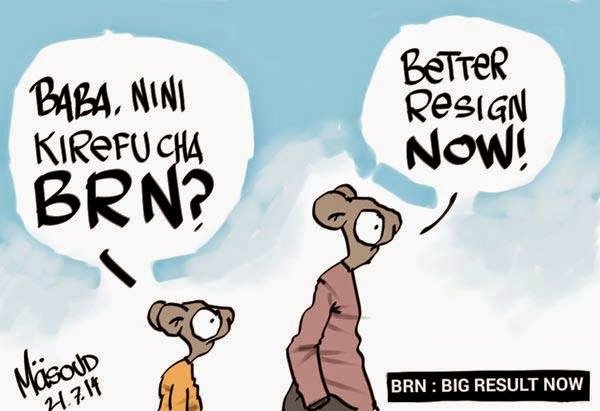
The writers seem disappointed at the end of Big Results Now (BRN), which was innovative both in its involvement of Malaysian technocrats from PERMANDU, their Management and Delivery Unit, and the use of “labs” in which groups of experts were almost locked away until they had come up with key proposals for their sector. One of these was Energy, interpreted as electricity, another was Transport, focussed on the port of Dar es Salaam. But BRN was abandoned in 2016. Why? Probably the main failure was the lack of any link between those who created the plans in the labs, and those expected to implement them. This had the consequence that the plans kept being modified, and the benefits of concentrating on a few key issues were lost. Whatever the reasons, Tanzania needs to learn the lessons from what happened.
Last but not least, I think the time has come when we should all be careful how we advocate the “standard model” for countries like Tanzania. PFI (the Private Finance Initiative) is now thoroughly discredited in the UK, where it started, and from where it was promoted and exported to other countries. It led to many overpriced contracts. It trapped clients into very long-term links with contractors which were often dysfunctional and inflexible. The contractors themselves, such as Amey in the UK, are rushing to get out of PFI contracts before they have to meet very high costs towards the ends of their lives, or not meeting their obligations and having to cope with the resulting lack of trust and legal claims. It is very clear that contracting out can fail badly, sometimes if the client does not have the expertise to supervise the contract properly, or if the contractor is so determined to make money that costs are cut and quality is not maintained. More and more contracts are being brought back in-house (in the UK).
Advisors and academics should not advocate failing models to African countries, or at least not without very strong qualifications and warnings.
