
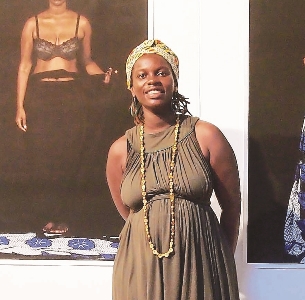
“It is about the sacrifices of a woman who is part of the reason my mother is where she is and who she is today. This is the reason why I am who I am as well. My mother was raised by her grandmother for most of her formative years” – Rehema Chachage, http://www.thecitizen.co.tz/magazines/26-thebeat/29461-exhibition-mshanga-designer-reviving-age-old-traditions
“Mshanga interrogates nuances in gender, generation, and poverty. It tells (and was inspired by) the story of Orupa Mchikirwa, my mother’s grandmother-and hence my great grandmother-from whose house my mother grew up in for most of her childhood years. Orupa was a fairly poor woman surrounded by many grandchildren, relatives’ children and some of her own children still living under her. Because of having to sacrifice all her food to the children, there was always very little food left for her to eat, and she was therefore perpetually hungry. She used to, very tightly and securely, tie around her abdomen what in Pare (my tribal language) we call ‘mshanga’–which is basically cutout pieces of an old rug, followed by an old Khanga (traditional Tanzanian fabric)- so as to destruct herself from being hungry, and to retain some energy to continue farming (her major activity and only source of food)” – Rehema Chachage, http://rc.atkariakoo.com/?p=77
