

The Arusha Declaration at
Fifty: A Return to its Praxis?
Chambi Chachage
Introduction
It had been
thirty years since the Arusha Declaration on Socialism and Self-Reliancewas a
primary subject of national and international symposia. After its proclamation
in 1967, it became both an ideological and intellectual ritual to commemorate
the Declaration after each decade. Mwalimu Julius Nyerere who was instrumental
in its formulation initiated this practice in 1977 when he issued ‘The Arusha
Declaration –Ten Years After’, a publication that received much scholarly
attention to the extent that it was republished in several academic journals. Scholars
from the University of Dar es Salaam and other institutions also gathered in Arusha and London on the eve of 1987 to reflect, critically, on twenty years of its implementation. In 1997 and 2007, however, such gatherings were conspicuous
by their absence. What has happened since then to make 2017 as a year of
convening such reflective commemoratives of the virtually discarded Declaration
in Arusha, Nairobi, Dar es Salaam and Edinburgh?
In this paper, I
attempt to address that question of ‘why now’ as I reflect on my own journey of
making sense of the history of the Arusha Declaration. My starting point is
Mwalimu Nyerere’s prediction, or rather a ‘deathbed wish’, about its future. After
acknowledging his mistakes in implementing it to Ikaweba Bunting in 1998, he
affirmed that he thinks that the country will return to its values and basic principles.
My paper is thus divided into four sections that reflect on the extent to which
Tanzania has returned or is returning to those values and principles ideologically,
politically, legally and socioeconomically, respectively. In practice these
arenas of engagement are entangled; however, for theoretical clarity, I hereby
disentangle them.
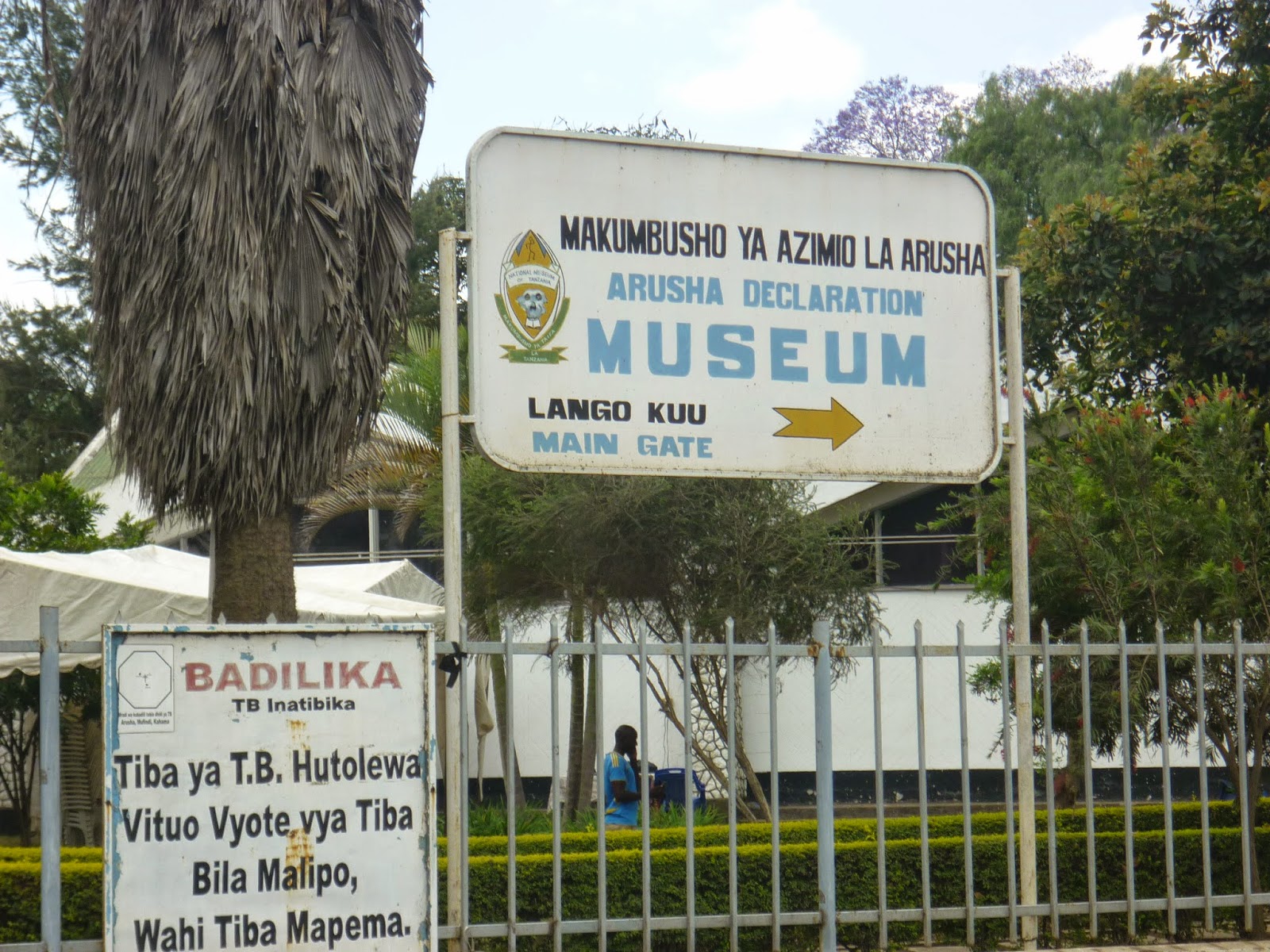
Ideological (Re)Turn
I was born a year
after the commemoration of ten years of the Arusha Declaration. As I came to
learn later, the country was at a critical juncture. It was at war to ouster
Dictator Idi Amin from Uganda. The East African Community had collapsed. Some
regions had experienced draught and plague of locust whereas production in
other areas dwindled. Productivity in the industrial sector had also hit a
record low. Hence the economy that had shown some signs of improvement was on
the brink of a crisis.
As such, I was
raised at a time when the government was attempting to come up with a workable
economic recovery programme. The only childhood memory I have of the difficult
economic conditions is having to eat a slippery cornmeal from a yellow flour
known as ‘yanga’ in Kiswahili that the country received as food aid. Oblivious
to me was that fact that the ruling party and the government were going through
an intense struggle over the tenets of the Arusha Declaration. In hindsight,
one sees that this obliviousness was partly due to what we were taught in
nursery and primary schools.

The songs we sung
in school were carefully chosen to inculcate the values and principles of the
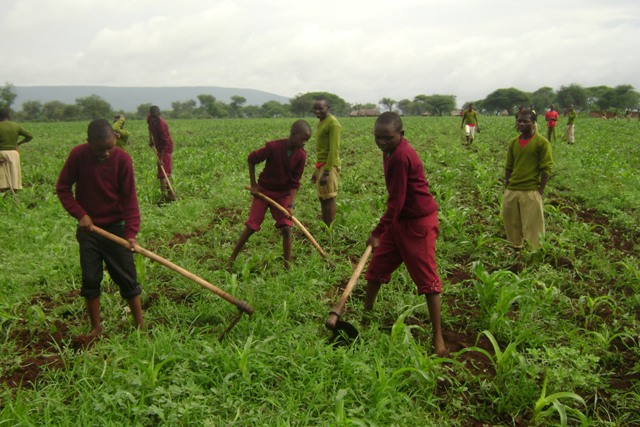
Arusha Declaration. For example, we committed to memory a popular poem on a dying fatherwhose final words to his sons is about the importance of farming
together. Although my primary school was in an urban area, it also had a school
farm for collective farming. However, in contrast to the primary school in my
grandmother’s village, we did not spend half a day or so tilling the land
collectively.
It is thus
interesting to observe – and indeed participate – online in collective recollections of the late
1980s and early 1990s with my generation. We were the last cohort of Tanzanian
schoolchildren to read 9 volumes of a textbook on Kiswahili entitled ‘Tujifunze Lugha Yetu’ i.e. ‘Let us Learn our Language’. Published in 1971 and republished
between 1980 and 1982, these volumes contained chapters that were primarily
concerned with ensuring that we understand and embrace the Declaration.

For instance, chapter
11 of volume 9 is entitled ‘Mji wa Arusha’ i.e. ‘The Town of Arusha’. Out of
more than 20 regions in the country, the Ministry of Education opted for this particular one because of the Declaration. This is
how its second paragraph describes it:
Kwa wanasiasa
mashuhuri duniani jina la Arusha lawakumbusha mahali ilipotangazwa siasa ya
Ujamaa na Kujitegemea iliyo lengo la maendeleo ya Watanzania. Siasa hii
ilikubaliwa na kupitishwa katika kikao cha Mkutano wa [Tanzania African National Union] TANU uliofanyika mwaka 1967.
Katika kikao hiki Watanzania wameamua kukomesha kila aina ya unyonyaji,
ukabaila na ubepari na kusisitiza usawa wa binadamu [For prominent politicians the name Arusha reminds them of where the political ideology of Socialism and Self-Reliance, which is the target of the development of Tanzanians, was declared. This ideology was embraced and approved by TANU’s General Assembly that was held in 1967. In this Assembly Tanzanians decided to stop all forms of exploitation, feudalism and capitalism hence upholding human equality.]
The same volume
also contains a chapter on ‘Usawa wa Binadamu’ i.e. ‘Human Equality.’
Interestingly, chapter 22 of Volume 5 is entitled ‘Azimio la Arusha’ and it
concludes with a poetic dialogue between a brother and a sister in which one of
them asks what the Declaration is all about and the other explains its role in
ending exploitation. It is important to note that we read these impressionist materials
between the tender age of 7 and 13, so, one can imagine their ideological
imprint on our minds.
Incidentally, I
completed my primary school education in 1991 – the year of the Zanzibar Declaration that delivered
a coup de grâce to the Arusha Declaration. By allowing political
leaders to accumulate private wealth while in public service, the new
resolution was an assault on the principle of equality. As I started my
secondary education in 1992, the country returned to multiparty politics and
soon ‘Civics’ replaced ‘Politics’ as a core subject in both primary and
secondary school. This change, as Hilda Mushi recalled on 22 February 2017 at
the Nyerere Resource Centre’s commemoration of fifty years of the Arusha
Declaration in Dar es Salaam, shifted our attentions from it. We stopped
learning about it in school and started focusing on the discourses of
governance from the likes of Plato and David Ricardo.
Little did I know
then that the country was on a neoliberal turn that did not only cause the
change in our curriculum but also in how we access social services such as
education. We started asking our parents for school fees even though I went to
a public school. As one of our teachers, Peter Mashanga, led a massive protest in 1995, I hardly understood the shift from the Arusha Declaration that had
promoted free social services to the Structural Adjustment Programs (SAPs) that
imposed user fees. This is the context that led Nyerere to utter these words
about a trip he made in the US:
Twenty years
since then, the conditions have not improved significantly. As we shall see in
the socioeconomic below, the steady growth of the economy at an average rate of
7 percent for over a decade has not trickled down to the majority of the
people. It is thus not surprising that there is nostalgia about the aborted
promises of the Arusha Declaration. Young people are starting to ask questions
about its whereabouts. Intellectuals across the left-right divide are also
going back to the drawing board to reflect on it. When one such intellectual,
Honest Ngowi, searched for “Arusha Declaration” in Google Scholar on 9 June
2007 he got a total of 2,930 hits. Today, on 24 February 2017, the hits are 5,920
with inverted commas and 16,600 without them.

Another
intellectual, Issa Shivji, has been instrumental in renewing the debate on the
Arusha Declaration. I had the privilege of working with him in reprinting 2000
copies of the Declaration in 2010 when he was the Mwalimu Professorial Chair of
Pan-African Studies at the University of Dar es Salaam. These copies were
distributed to participants of the second annual Nyerere Intellectual Festival
Week. More significantly, copies were also sent to students at Makongo, Perfect
Vision, Manzese, Azania, Tambaza and Jangwani secondary schools and uploaded on
the World Wide Web. The generous support from HakiElimu, a leading civic
organization advocating for educational rights, in reprinting it is a testament
to its recent relevance.
