
By Mary Fadei
I woke up at 4 am to get to the market on time. The road to the market was dark and scary. I wanted to learn from women vendors. I’m calling it being in their shoes, but I also understand their shoes are too big for me to fit in. Yet I still wanted to know what it’s to be a woman vendor just for a day.
In my privilege and taking my safety seriously, I was in a private car. I wasn’t scared of anything happening to me (at least on my way to the market). So I arrived at the market on time before most of the buyers and sellers. Then it started raining at 6:30 am (my privilege allowed me to just sit in the car).
I had forgotten to ask what time the trucks are allowed inside the market and dealers start selling to vendors. But that was not a big deal, I was safe in the car. I even got the time to take one or two pictures of the trucks and anything I found meaningful.
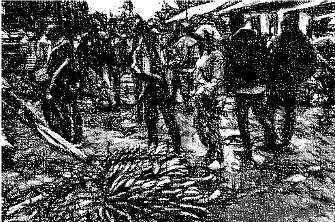
The rain stopped at around 7:15 am. People started to get into the market after the door opened (by door, I mean a rope), and immediately the chair of the market called for an emergence meeting. Everyone started to whisper “corona virus”. Most were worried the chair was making them crowd into one place. The chair didn’t mind the screaming and questions being thrown at him, he gave a few remarks on the coronavirus (at this point no one wanted to be close to anyone, they all were aware of the risks, and they were not happy the chair called a meeting, to begin with).
Only a few people had masks on them. Not the usual masks you’re thinking about, they had a piece of clothes on and whatever can act as a shield on their faces. And only a few people had their faces covered throughout the morning. Those whose faces were uncovered made jokes on those who had masks, telling them they will die first before them. I guess a sense of humor in a panic situation helps to calm people down.
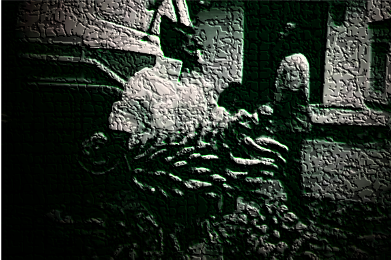
Then the scramble began, everyone wanting to get enough banana for sale. I’m told today was not a busy morning, nothing to do with Coronavirus Disease 2019 (COVID-19). There were about 10 trucks full of bananas, usually, they get 3 to 5 trucks and according to them, that’s where the game is. The fewer the trucks, the more the struggles.
Whenever there are fewer trucks, the women I was with said, usually women leave empty-handed, while men (the strong ones) get all the bananas. This leave most women with nothing or an option of selling on behalf of men and get a tip afterwards. When there are fewer trucks of bananas, the women further said, it’s not unusual to find only two, sometimes three, or zero women getting bananas to sell.
I must say, it’s a survival of the fittest, the stronger gets all leaving nothing for the weak ones. Everyone is there to provide for their families. I’m not sure if they think its men and women, but they are aware women cannot fight when there are fewer trucks. Women, on the other hand, are aware of their challenges, and they know those challenges face them because they are women.
Women spoke of harassment mainly between men and men, or men to women, and in some cases, women cursing back (the strong ones and who knows the ins and outs of the market). I didn’t hear much of the cursing from women, but I can’t say they never curse, maybe today was just one of those days when they just wanted to do what brought them to the market and leave. Some men were minding their business, no cursing or calling people names.
It was just a few hours of supporting one of the vendors to watch her bananas and sell for her if she was doing other stuffs or getting more bananas from the truck, but my privilege reminded me I’m tired. Having been standing for over four (4) hours, I needed a stretch. Yes, I needed to rest and just do something else instead of standing there waiting for customers.
By the way, I sold zero bananas in her absence, while the other women vendors sold almost everything. They know what their customers want, they know how to bargain and re-bargain. All of them have the language codes. I was a stranger to all these tactics, had no idea what or how to do any of them, or probably could not try harder because I’m privileged, my livelihood does not depend on that, or I simply lacked the skills. Either of these could be true, or maybe I’m just feeling guilty. I have no idea.
By staying with these women and poor men, observing them struggle, being cursed, and pushed in the rain made me reflect on the just-finished International Women’s day and the 25 years after Beijing. We had so many meetings, workshops, and conferences… a lot of events. Just thinking if that reflection on where we have come from included these women’s everyday experiences and challenges. Just wondering if we (me included) reflected them when we said, we have advanced; we are not where we were 20 years ago.
These women are still at risk of being raped when they go to the market early in the morning or late at night on their way home. They are more likely to be verbally and emotionally abused/harassed. Most of them will remain poor because of poor infrastructure, lack of substantial capital, and so many other challenges. These women vendors represent most poor women who are street sweepers, cleaners, bartenders, stone crashers, farmers, and more who have it rough Monday through Monday 360+ days a year.
Did (do) we think about them during our celebrations of womanhood and the successes we have? I’m not saying we should not celebrate, of course, we should. There is a lot to celebrate and pat ourselves on the shoulders. Just thinking if we also thought about them in those celebrations, reflections, and awards?
How do we define success or women of substance? Will these women ever make it to the awards or guest-honor those events? Do what they do and their struggles count as success or things to emulate? Just thinking.
I thought I can fit or try to be in their shoes, BUT I left feeling so small to fit in their shoes, and what they go through every day to put food on the table. And now with COVID-19 hitting the whole world harder, their experience is even harder than what these few lines can explain. The cost of running their everyday business has gone high, there are extra expenses like buying buckets for water, soap, sanitizers, and everything that is needed to keep them and their families safe. Their household chores and care have doubled.
As we get to prepare for the next International Women Day’s (IWD) in 2021 (If the COVID-19 pandemic slows down or ends), I hope their experiences will feature more in the IWD stories and themes. I hope to see many of their faces and their voices being at the heart of the celebrations and reflections. I hope to see more than women matching wearing t-shirts with words they have no idea if those words reflect their struggles and stories. I hope to see the usual stories and conventional definition of success taking a back seat, not because their time is up, but because other definitions matter too. I hope to see a mixture of usual faces with never seen faces to show different versions of women and their stories sharing the same stage.
Looking forward to seeing what the next chapter of our celebrations and reflections will look like.
—
The author can be contacted through this email address: Maryfadei05.mn@gmail.com
