
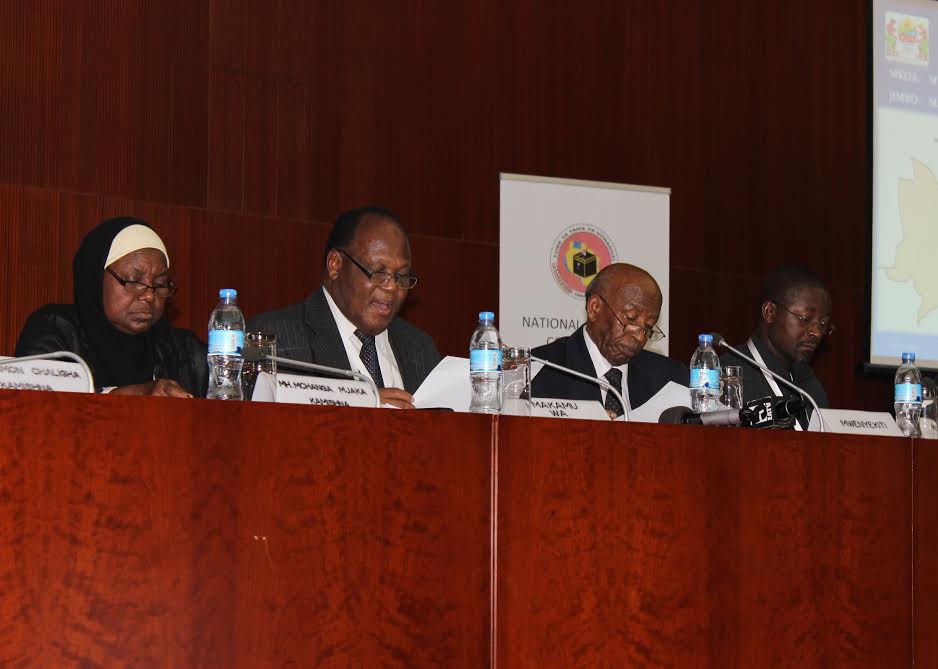
Is the Tanzanian National
Electoral Commission (NEC) credible?
“There is a grey area between incompetency and conspiracy” – Election Observer
By Chambi Chachage
If a palm wine
tapper is praised, he/she dilutes it with water. This Swahili proverb
captures what has been happening in the aftermath of Tanzania’s General
Elections that seemed to be held freely and fairly on Sunday, 25 October 2015. No
sooner had the local and international observers hailed the National Electoral
Commission (NEC) than the political parties started lodging complaints about
irregularities and/or rigging.
Headed by a
retired judge, Damian Lubuva, NEC has been sluggish in announcing the results.
As Elsie
Eyakuze aptly noted a day after the voting, one could hardly comprehend
how, in this day and age, we could be down to one man reading from a
spreadsheet. To make matters worse, the initial focus seemed to be more on announcing
results from the constituencies that the ruling party – CCM – was leading.
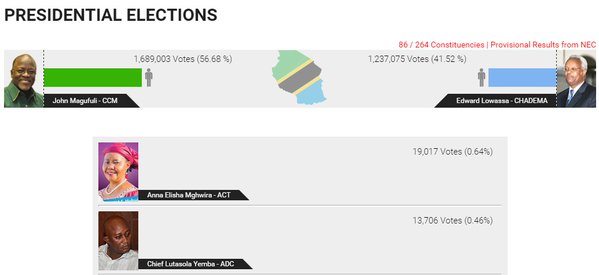
conspiracy theories abound. The presidential candidate of the main opposition
party, CHADEMA, has publicly claimed that the delay tactic is NEC’s gimmick
geared towards preparing people ‘psychologically’ to just accept defeat no
matter how unjust. By people, it seems, he is referring to supporters of a
coalition of four opposition parties known as UKAWA that endorsed him as their
sole candidate.
Hoseana
Lunogelo, however, views it positively: “I think it is a commendable strategy
to ‘manage expectations’ from the youthful voters supporting Ukawa who were
promised that ‘Ukawa will be the outright winner before noon on
election day.’” So, he insists, “by showing them that they are trailing from
the start is part of a clever strategy to diffuse tension otherwise we
could have seen streets already full of youth celebrating victory even when
less than a quarter of the votes have been counted.”
While we have
been watching what Elsie Eyakuze refers to as a public institution fighting an
uphill battle over the legitimacy of results, CCM’s machinery has been churning
out projected results so efficiently. How come, one wonders, the ruling party
seems so well equipped than NEC? And why is CHADEMA ‘inept’ this time around?
The answer, it
seems, is twofold. First, CCM’s tech-savvy ‘spokesperson’ – January Makamba – who
also happens to be the Government’s Deputy Minister of Communication, Science
and Technology has marshaled an Obama-like machinery of campaign and information
bombardment. For instance, I had never subscribed to CCM’s listserv but both my
yahoo addresses have been receiving ‘his/its’ statements.
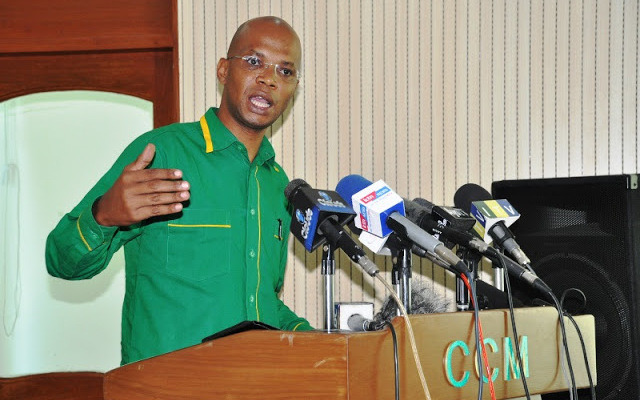
At the end of
each statement there are these words: “You received this email as part of our
network. Click here to UNSUBSCRIBE.” Tellingly, the statement that January
Makamba sent a day after the voting had a section that translates to “CCM’s Results”
whereby he claimed that, according to the results that were posted on voting
booths, up to that point CCM had won 176 out 264 seats in the regions their
party had tallied.
Probably aware
that it would be so problematic to also give their projected figures for CCM’s
presidential candidate, he shrewdly stated that the parliamentary trend was in
tandem with NEC’s then ongoing announcement of presidential votes. In other
words, January Makamba was simply saying their candidate was ‘winning big’. On
twitter he did not restrain himself that much when he tweeted, on 25 October
2015, that on 29 October 2015 CCM’s candidate ‘would/will’ be announced as “The
President Elect.”
Expectedly, the
tweet triggered a furor, leading the co-founder of an opposition party known as
ACT, Kitila Mkumbo to thus tweet on
the same day: “I have also asked @JMakamba
to exercise restraint.” Understandably, the deputy minister responsible for
communication thus kept going on the ‘defensive’: “For [a] party to say it will
win is allowed (all parties been saying that since Aug). Announcing tallies not
allowed.”
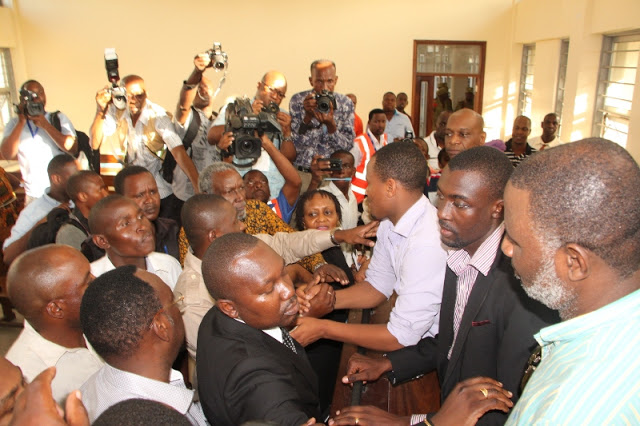
Meanwhile – and
this is the second reason for the contrast between NEC, CCM and CHADEMA –
UKAWA’s machinery staggered, apparently, because the police captured its
tech-team that includes one respected young Tanzanian activist,Frederick
Fussi. The contentious matter is in the courts hence beyond the scope of
this analysis.
One thus finds it
ironic that now even CCM seems to be complaining about NEC. In its latest
statement dated 28 October 2015, January Makamba claims that those in charge of
the following constituencies that they lost ‘messed up’ the elections: Iringa
Mjini, Mikumi, Ndanda and Kawe. Some folks in WhatsApp
groups, which have proved to be a main online site of campaigns and
contestations over the elections, claim that this is a ploy, by the ruling
party, to play the game of the opposition party.
In such a setup,
NEC is indeed facing an uphill task to safeguard its credibility. But for many
a critic, it lost its legitimacy long time ago when the constitutional reform
process that could have led to an independent electoral commission process faltered.
It is also ironic that UKAWA, as self-proclaimed movement for the ‘Constitution
of the People’, was a product – indeed a byproduct – of the faltering that
favoured CCM.
No matter how
just NEC’s current chair and new
director of elections were, they are new wines in an old bottle. The wine taper
may have not diluted it. But who can really tell?
