
Moralizing Racism through the Middle Class?
“Perhaps antiracist academic discourse should focus more on
the theme of the universality of human nature, as it might resonate better with
the worldview of ordinary people than more intellectual arguments having to do
with multiculturalism and cultural relativism” – Michèle Lamont
Chambi Chachage
Michèle Lamont’s (2000) chapter on ‘Euphemized
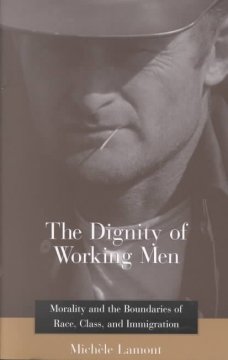
Racism: Moral qua Racial Boundaries’ from her book on The Dignity of Men: Morality and the Boundaries of Race,
Class and Immigration is an important contribution to the
theorization of the interplay between race and class. On the basis of
interviews on the perceptions of workers across the class and racial lines
in the United States of America backed up with general social surveys and
comparative institutional analyses across a couple of countries, the author
introduces the ethical concept of morality as an explanation of racism. Both
‘white and black workers’, it appears, subsume the racial in the moral.
These findings lead the author to conclude that moral and
racial boundaries are intertwined i.e. virtually synonymous among the working
class. For her this pattern is particularly the case among ‘white
workers’ who “repeatedly and spontaneously referred to blacks when drawing
moral boundaries” (p. 57). In the case of ‘black workers’ the racial boundaries
were found to be much weaker, nevertheless, they also generally invoked morality
to define, or rather, explain the racial boundary away.
Curiously, on the basis of her previous study, Lamont confidently asserts
that this pattern is significantly different among white professionals and
managers “who rarely mentioned race when they were asked to compare themselves
and to talk about their likes and dislikes” (Ibid.) Although in both studies
she did not ask anything about race it is in the case of workers that such
questions were more likely “read as pertaining directly to race” (Ibid.) As if
race was absent or irrelevant in the ‘class consciousness’ of ‘white elites’
they “were more likely to mention people like themselves, that is, white middle
class people who are highly educated” (Ibid.) This observation leads her to
point out, in contrast to workers who seems to have ‘racial consciousness”,
that their “feelings of superiority and inferiority were often organized around
income and around their children’s educational and occupational success”
(Ibid.) i.e. around class.
This contrast is particularly important as it lays the
foundation upon which Lamont attempts to build a strong case of why race
matters in moral terms among workers. The explanation that she gives below
seems to pay little if any attention to the nature of global racism and the
ways it camouflages itself through ‘color blindness’. That racialism, disguised
as ‘race blindness’, when unpacked, enables one to unmask the racial consciousness
that cut across class and thus perpetuates institutional racism.
I mentioned at the beginning of the chapter that blacks play
little role in the mental maps of professionals and managers. This is in part
because blacks are even less present in upper middle class neighborhoods and
workplaces than they are in those of white workers…. The low salience of blacks
to professionals may also be accounted for by the fact that the latter have
learned to conceal racist attitudes. This hypothesis is supported by research
showing that (1) compared to the non-college-educated, the college-educated
express subtle, as opposed to blatant, racism, and hence are less likely to
make explicitly racist statements…(and, indeed, high school graduates are
repeatedly found to express more prejudiced attitudes than college-educated…and
opposition to race-targeted policies is weakest among college-educated and
strongest among the self-identified working class (p. 73).
The institutional role of the class in perpetuating
the racial discourses that structurally influences the working
class’ “‘moral discourse’ of race, racialism and racism cannot
be overemphasized. As Lamont also notes, the availability
of cultural repertoires from the media and other channels that
are dominated by this class has been instrumental in the
construction of ‘blackness’ among white workers. Even the then
instant popularity of The Bell Curve, a book “which sold
400, 000 copies in a few months after it was published in 1994” (p. 68),
that Lamont refers to as providing a suggestive genetic argument in regard to
racial inequality, indicates that the ‘moralization’ of racism among the
working class is not independent of that among the middle class who have the
cultural and institutional power to shape public discourses on race. An
anecdote from a book on the history of such a class in New York in the 1800s
suffices to underscore how ‘race blindness’ among the middle class can
masquerade itself to stabilize institutional racism:
“Indeed, the city and its public spaces were not sharply
segregated…On streets and in parks, but also at public ceremonies such as July
Fourth celebrations, the city’s rich and poor, native and foreign born,
Protestant and Catholic, would meet”[1].
How could that be possible then? No doubt Lamont unearths how
moral perceptions among the white working class “contribute to the formation of
racial inequality” (p. 68). Its pitfall, however, is to detach its middle class
counterpart.
—
[1] Beckert, Sven (1993). The
Monied Metropolis: New York and theConsolidation of the American Bourgeoisie,
1850-1896. Cambridge, UK; Cambridge University Press.
