
“But I did want to just talk a little bit
about context and how people have responded to it and how people are feeling.
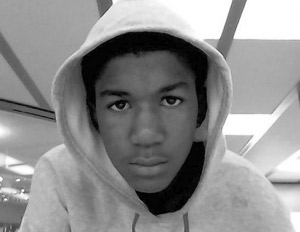
You know, when Trayvon Martin was first shot
I said that this could have been my son. Another way of saying that is Trayvon
Martin could have been me 35 years ago. And when you think about why, in the
African American community at least, there’s a lot of pain around what happened
here, I think it’s important to recognize that the African American community
is looking at this issue through a set of experiences and a history that
doesn’t go away.
There are very few African American men in
this country who haven’t had the experience of being followed when they were
shopping in a department store. That includes me. There are very few African
American men who haven’t had the experience of walking across the street and
hearing the locks click on the doors of cars. That happens to me — at least
before I was a senator. There are very few African Americans who haven’t had
the experience of getting on an elevator and a woman clutching her purse
nervously and holding her breath until she had a chance to get off. That
happens often.
And I don’t want to exaggerate this, but
those sets of experiences inform how the African American community interprets
what happened one night in Florida. And it’s inescapable for people to bring
those experiences to bear. The African American community is also knowledgeable
that there is a history of racial disparities in the application of our
criminal laws — everything from the death penalty to enforcement of our drug
laws. And that ends up having an impact in terms of how people interpret the
case.
Now, this isn’t to say that the African
American community is naïve about the fact that African American young men are
disproportionately involved in the criminal justice system; that they’re
disproportionately both victims and perpetrators of violence. It’s not to make
excuses for that fact — although black folks do interpret the reasons for that
in a historical context. They understand that some of the violence that takes
place in poor black neighborhoods around the country is born out of a very
violent past in this country, and that the poverty and dysfunction that we see
in those communities can be traced to a very difficult history.
And so the fact that sometimes that’s
unacknowledged adds to the frustration. And the fact that a lot of African
American boys are painted with a broad brush and the excuse is given, well,
there are these statistics out there that show that African American boys are
more violent — using that as an excuse to then see sons treated differently
causes pain.
I think the African American community is also
not naïve in understanding that, statistically, somebody like Trayvon Martin
was statistically more likely to be shot by a peer than he was by somebody
else.nSo folks understand the challenges that exist for African American boys.
But they get frustrated, I think, if they feel that there’s no context for it
and that context is being denied”
