

Oiling our Economy the Norway Way
Chambi Chachage
“How do
different interest groups define and protect their diverse interests?” – Sufian
Bukurura and Donald Mmari on ‘Hydrocarbon Resources in Tanzania’
Tanzania is on its way to become a petro-state. This
prospect was a bone of contention on Friday, 24 October 2014, when the Ambassador
of Norway, Hanne-Marie Kaarstad, her compatriots and counterparts in our
country launched a program on the subject. The heated debate rekindled my quest
for making sense of our overhyped oil and gas industry.
It is instructive to recall that three years ago we
made this observation: “The Norwegian
trio – government, non-governmental organizations and companies – have of
recent been involved heavily in matters pertaining to oil prospecting off the
Indian Ocean Coast of Tanzania”. We noted that this “triad constitutes what can
be regarded as a Corporate-State-Civil Society (CSC) Tripartite Foreign Direct
Investment (FDI) Setup.” We loosely defined this setup “as the interplay of
international power relations in a given land between entities emanating from a
foreign country with the overall aim of benefitting it.”[1]
Today we need to revisit
this setup, not only because the Norwegian triad has step up its involvement,
but also because we need our own strong tripartite setup. As the old biblical
adage goes, a threefold cord is not quickly broken.[2]
The first question we need to ask ourselves is: Do we also have a Corporate-State-Civil
Society setup that is capable of engaging critically with our counterparts to
ensure that we also benefit from oil and gas?
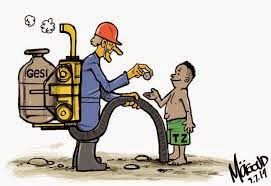
Of course the answer is a
resounding no. The second question, then, is: Can we? Yes, we can. Despite the
fact that neither the state nor the corporate, let alone civil society, is monolithic,
there comes a time when various sections of these entities come in unison on
matters of civic, public or national interests. This is what we ought to learn
from Norway.
The recently launched
“Programme for Research, Capacity Building and Policy Dialogue” on “Tanzania as
a Future Petro-State” is illustrative. Funded by the Norwegian Embassy, this five-year
research program (2014-2019) is “dedicated to combining the expertise, insights
and influence of established researchers, private sector representatives,
public officials, civil society organizations and the media.”[3]
Here we are seeing the Norwegian petro-state funding the Chr. Michelsen
Institute (CMI) from Norway to partner
with Policy Research for Development (REPOA)
and the National Bureau of Statistics (NBS)
of Tanzania – a consortium of government and non-government entities.
We are talking about the
same petro-state of Norway that co-owns Statoil, a corporate entity that is
busy prospecting for oil and gas in Tanzania under a contentious leaked
Production Sharing Agreement (PSA) that has generated a heated public debate.[4]
This is a state that has been playing a significant role in shaping the
Tanzanian oil and gas policy landscape. Professor Sospeter Muhongo, the
Minister responsible for this sector in our country, has underscored its celebrated
role in his foreword to the draft petroleum policy.
He thanks “the Royal Government
of Norway for partly sponsoring the policy making process through the
Institutional Co-operation Programme between Tanzania and Norway in the
Petroleum Upstream Sub sector.” The minister, a geologist by academic
profession, also notes that the Petroleum
Policy Committee “visited Norway and had constructive discussions with
Norwegian Government institutions responsible for governance of the petroleum
upstream sub-sector.” More interestingly, he informs us that this policy
committee “worked closely with a
moderator/advisor from Norway right from the initial stages of problem
identification to the drafting of the Policy Document itself.”[5]
Upon reading it, an oil and gas engineer quipped on Wanazuoni social
media: “After knowing what we
know now about the leaked Statoil/ExxonMobil
PSA. It raises questions on who was the “Norwegian moderator”,
what exactly was his involvement in the policy drafting. Smells like a conflict
of interest. Anyway, in my opinion they should have formed a
completely independent committee without any members with potential vested
interests. I mean the Norwegian government has a 67% stake in Statoil.”[6]
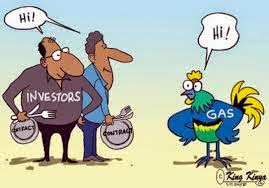
Conflict of interests, as we have noted elsewhere, are
broad and involve non-monetary aspects.[7]
Here it is important to note that what seems as conflicting interests stem from
the way Norway’s CSC setup operates in our country. Regardless of their differences,
Norwegian actors are, first and foremost, involved in our gas and oil industry
for the benefit of Norway. This holds true whether we are talking of NORAD, the
Norwegian Agency for Development
Cooperation; NPD, the Norwegian Petroleum Directorate; PETRAD, a Norwegian
non-profit government foundation; Norsk Hydro, a company whose gas and oil division
merged with Statoil; or NorWatch, a Norwegian watchdog.
However, there is nothing wrong in learning from a
friend. It is indeed the right thing to do especially when your friend has been
successful. And surely Norway is a success story of how one can use oil and gas
for development. But, as Professor Sufian Bukurura has eloquently noted in his
commentary on the inception report of the research program on Tanzania as a
future petro-state, it is an elusive Norwegian magic thus hardly replicable.[8]
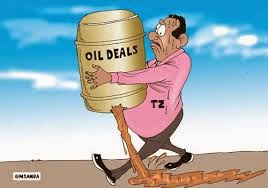
For him the difficulty arises from the fact that it is
not simply about having institutions like the ones the Norwegians built to
avoid turning oil and gas into a resource curse. While we agree with him, we
also contend that the CSC setup that is working in ensuring that oil and gas
remains a resource blessing to the Norwegians could work against us,
Tanzanians, if we do not effectively come up with our own CSC setup that would
not only collaborate with, but also counter, them in situations where they
could be benefitting at our expense. This also ties with Professor Bukurura’s
caution against local free riders.
By these riders he mean those local researchers who do
not contribute equally and are obedient followers or low profile partners in
joint initiatives, albeit from outside of our country. They simply rubberstamp
whatever arguments and findings that foreign researchers come up with. By
merely being there, they fulfill “the local content requirements and carried
interest”, terms that are so common in the oil and gas industry. It is those
who are sarcastically referred to as spare parts rather than counterparts and
they can be present across the CSC spectrum, letting down their compatriots along
the way.
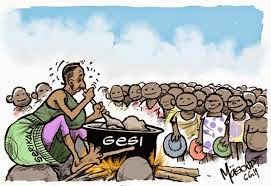
Professor Bukurura and Donald Mmari, a member of the
launched research consortium, have also produced a working paper that strongly
argues for bringing back the state in managing such important natural
resources. It is ironic that we are attempting to import the Norwegian oil for
development model that is state-centered after abandoning our own statist model
that we created during the heydays of the Arusha Declaration on Socialism and
Self-Reliance. The privatization honeymoon is over. So now it is conducive to
recall some of the nationalization aspects of our old model that anticipated
that of Norwegians.
Listed as “Norway: the Ten Commandments” in their
paper are the following five that are pertinent in this regard: “National
supervision and control must be ensured for all operations on the Norwegian
Continental Shelf (NCS)”; “Petroleum discoveries must be exploited in a way
which makes Norway as independent as possible of others for its supplies of
crude oil”; “Petroleum from the NCS must as a general rule be landed in Norway,
except in those cases where socio-political considerations dictate a different
solution”; “The state must become involved at all appropriate levels and
contribute to a coordination of Norwegian interests in Norway’s petroleum
industry as well as the creation of an integrated oil community which sets its
sights both nationally and internationally”; “A state company will be
established which can look after the government’s commercial interests and pursue
appropriate collaboration with domestic and foreign oil interests.”[9]
They almost sound like our (then) Arusha Declaration blueprint.
Yet having a strong state – Tanzania – requires
having a solid civic society. Here we use this term because it is more fitting than civil society, which is conventionally associated with civil society
organizations, some of which are simply personal properties. Civic societies
tend to be located where particular people and their activities are. In this
regard they are those that any oil and gas discovery or utility directly affect, positively
or negatively.

Hence if we were talking about oil and gas in Mtwara
then a local civic society would be the people and forms that their organizations take there. But since their lot is inextricably tied to that of their fellow
citizens of Tanzania in other places then the national civic society
encompasses all Tanzanians and their organizations that are (directly) involved
in the sector. When strong, they are capable of collaborating and/or
confronting the state and the corporate depending on where the pendulum swings
in the CSC setup. What is important is that when the Tanzanian and foreign CSC
setups meet, nationalism should prevail. And here nationalism simply means
national interests as defined by nationals.
The Tanzania Petroleum Development Corporation (TPDC)
is a key player between the state and the corporate as it is both statist and
corporatist. What remains to be seen is a strong civic component. Such a
complete CSC setup would make it an effective negotiator with the likes of Statoil
that somehow get ‘legitimacy’ from their state and civic entities.
It is “possible”, as Professor Adolf Mkenda – the
Deputy Permanent Secretary in the Tanzanian Ministry of Finance – points out, “to
have a petro-economy without maximizing national public revenue” and it is also
“possible to have a huge boom of public revenue without proper management” so “the
two must go hand in hand”[10]
To do so in Tanzania, as in Norway, requires a strong and strategic
Corporate-State-Civic setup.
[1] Sharing the
Spoil: Norwegians and Oil Prospecting off the Indian Ocean Coast of Tanzania https://udadisi.com/2012/09/sharing-spoilnorway-and-tanzanias-oil.html
[2] Ecclesiastes 4: 12, KJV
[3] REPOA, NBS & CMI (2014:1) Information Sheet on
‘Tanzania as Future Petro-State’
[4] Statoil Gas Contract:
Tanzania’s Media picks up the Story http://mtega.com/2014/07/statoil-gas-contract-tanzanias-media-picks-up-the-story/
[5] Draft Petroleum Policy 2014
https://mem.go.tz/wp-content/uploads/2014/07/DRAFT-PETROLEUM-POLICY-JULY-2014.pdf
[6] Norway and Tanzania’s Petroleum Policy https://udadisi.com/2014/07/norway-and-tanzanias-petroleum-policy.html
[7]
Lionel Cliffe na Mgongano wa Maslahi Tanzania https://udadisi.com/2014/09/lionel-cliffe-na-mgongano-wa-maslahi.html
[8] REPOA-CMI-NBS Research Consortium: Tanzania –
Prospective Petro-State Inception Report – (Un-researched) Commentary
[9] REPOA’s (2014: 22) Special Paper 14/3 on ‘Hydrocarbon
Resources in Tanzania: Achieving Benefits with Robust Protection’ http://www.repoa.or.tz/documents/REPOA__SP_14_3.pdf
[10] Quoted in REPOA, NBS & CMI’s (2014: 9) Inception
Presentation on ‘Tanzania as a Future Petro-State’
