
WHAT IS THE CORRECT ANSWER?
The Twitter world has been gripped by, of all things, a controversy relating to mathematics, a subject not liked by most people. The issue is, given the expression:
What is the correct answer? Some say it is 1, and others declare it is 16, and the sparks begin to fly.
To get at the heart of the matter, a few introductory remarks are needed. Mathematics is a discipline based on Aristotelian rules of logic, clearly stated assumptions and explicitly laid down rules to handle the symbols it employs. All its branches, from arithmetic, algebra, geometry and calculus to the more esoteric ones like topology follow this scheme. The most crucial thing is consistency: in conducting an operation, you need adhere to the same rules and assumptions and avoid ambiguity. If there is a potential for ambiguity, then the expression has to be so written that it is resolved.
Different assumptions (or axioms) produce different forms of maths. Take the case of geometry. We were taught in schools that the angles of a triangle sum up to two right angles (180 degrees). This result is derived using the axioms formulated by Euclid more than two thousand years ago. But in the 18th and 19th centuries, two other forms of non-Euclidean geometry were developed. In one, the sum of the angles of a triangle is more than 180 degrees and in the other, less than 180 degrees.
These versions of geometry utilize slightly different sets of axioms than those of Euclidean geometry. Which of the three results for the sum of angles of a triangle is correct? It depends on the assumptions made. If you do not state them with clarity, you create confusion. Under its own set of assumptions, each form of geometry is as valid and logical as any other.
Which form reflects the physical reality? That is difficult to say. On a plane surface, Euclidean geometry seems the way to go, but on the surface of a sphere, spherical triangles behave in a different way! In his theory of general relativity, Albert Einstein used non-Euclidean geometry as the basis for modeling the universe. Space-time, as has been experimentally verified since then, is non-Euclidean.
The same considerations apply to the problem we started with. State the assumptions and rules with clarity and formulate expressions without ambiguity; then there is no controversy.
Basically, two sets of rules for handling algebraic and arithmetical expressions exist; PEMDAS and BODMAS. They are almost identical if you note that that ‘parenthesis’ ( ) and ‘brackets’ [ ] are two equivalent words for the same idea and ‘exponents’ and ‘orders’ as well mean the same thing. The one difference is that PEMDAS does multiplication first, then division but BODMAS does division first, then multiplication. As both the sets of rules derive from the same axioms about number systems, if used consistently and unambiguously, both will give the same answer for a given problem. But in the given problem, they differ!
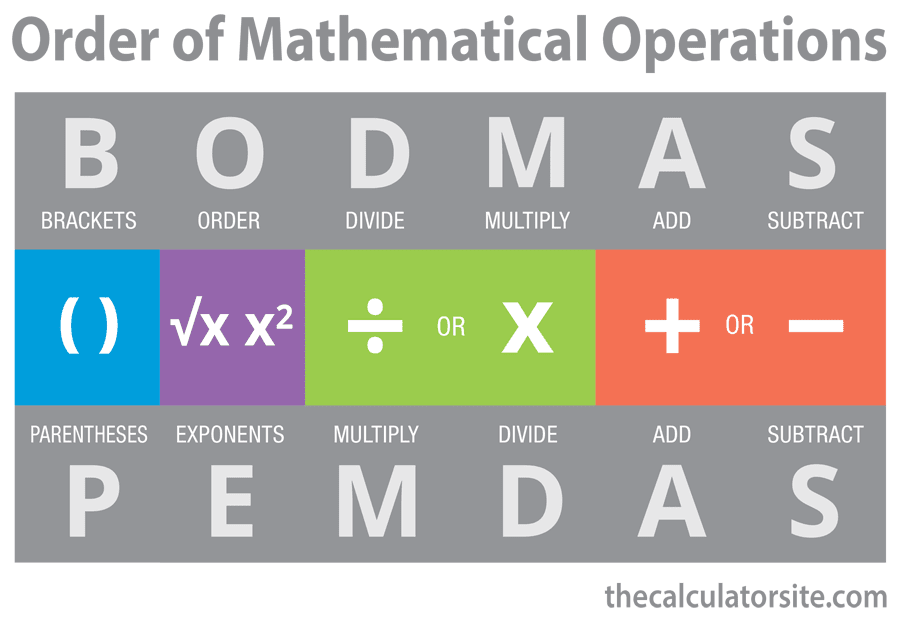
Under BODMAS, the expression is interpreted as
(8÷2) × (2 + 2) = (8 ÷ 2) × 4 = 4 × 4 = 16
Under PEMDAS, it is interpreted as
8 ÷ (2 × (2 + 2)) = 8 ÷ (2 × 4) = 8 ÷ 8 = 1
This is also written as 8 ÷ [2(2 + 2)] = 1
There is nothing mysterious here. Because the expression has been given in an ambiguous way, and it is unclear what rules the originator of the expression followed, one set of rules gives you one answer and the other, another answer. But If you state it unambiguously, you get the same answer under both sets of rules, as a Form I student knows (or should know). That is what all the exercises in algebra and arithmetic we did in school were about.
It does not make sense to say the PEMDAS is superior to BODMAS or the other way around. Both are valid; if used consistently, both yield identical results. A British or Canadian trained accountant using the latter will produce identical accounts for a given company as a US trained accountant who uses the former.
THERE ARE SEVERAL KEY LESSONS TO BE DRAWN FROM THIS BASICALLY ARTIFICIAL CONTROVERSY
ONE: The fact that such a trivial issue has caused a Twitter firestorm is a good indicator of how the social media today promotes triviality and prejudice, not deeper objective thought. Instead of reading books and doing lots of exercises, students of today learn from superficial electronic media exposures.
TWO: Though the US is a leader in several areas of science, there are important aspects in which it remains in the backwaters. For example, while most nations have adopted the metric system (meters, kilograms, liters) the US continues to use the archaic system based on feet, miles, pounds and gallons in the economy and schools. This is one manifestation of American exceptionalism which proclaims what we do is right and what you all do is wrong. PEMDAS is the way to go, not BODMAS. It is sad to see that even scholars from Africa falling prey to this narrow minded line of thinking.
THREE: Mathematics can be misused or abused as well. Modern economics, a highly mathematized field, is a prime embodiment of that possibility. In the name of econometrics, it uses sophisticated mathematical methods to model trends in different sectors of the economy. But that has not meant that it now provides a better understanding of how national or global economies function. Far from it; as has been well said, economics is a dismal science, and I would add, econometrics is its poorest cousin. This is clearly demonstrated by an examination of how well or how poorly it has managed to anticipate critical economic events.
In the 1990s, the mathematization of economics reached a new height with the emergence of a field known as Financial Mathematics. It uses advanced multi-dimensional techniques from theoretical physics and spline functions to model the behavior of stock markets and financial flows. Major banks, insurance firms, hedge funds and stock brokers used it to predict the changing values of derivative stocks, mortgage rates and stock fluctuations.
As millions upon millions financial transactions of this sort occur on a daily basis, the one who has the best prediction method can outbid the competitors to secure a hefty profit. So these companies employed top-level mathematicians to formulate the best predictive algorithms based on these methods. The stock market kept on rising for several years and the companies prospered as never before.
But it was a hollow form of growth. Speculation, whether through a naïve hunch or a sophisticated algorithm does not create wealth. It was irrational exuberance, as the 2008 global financial crisis demonstrated. Major banks, insurance firms and even huge corporations like the General Motors went bust and had to be rescued (nationalized and revitalized) at tax payer expense.
All the economists with their fabulous mathematical models had failed to predict this catastrophic outcome, even as it began to unfold. Only traditional economists who used the Keynesian models and simple mathematical tools or Marxist economists who were well versed in the cyclical boom and bust nature of the capitalist economic system had given prior warnings. But no policy maker had paid attention to them.
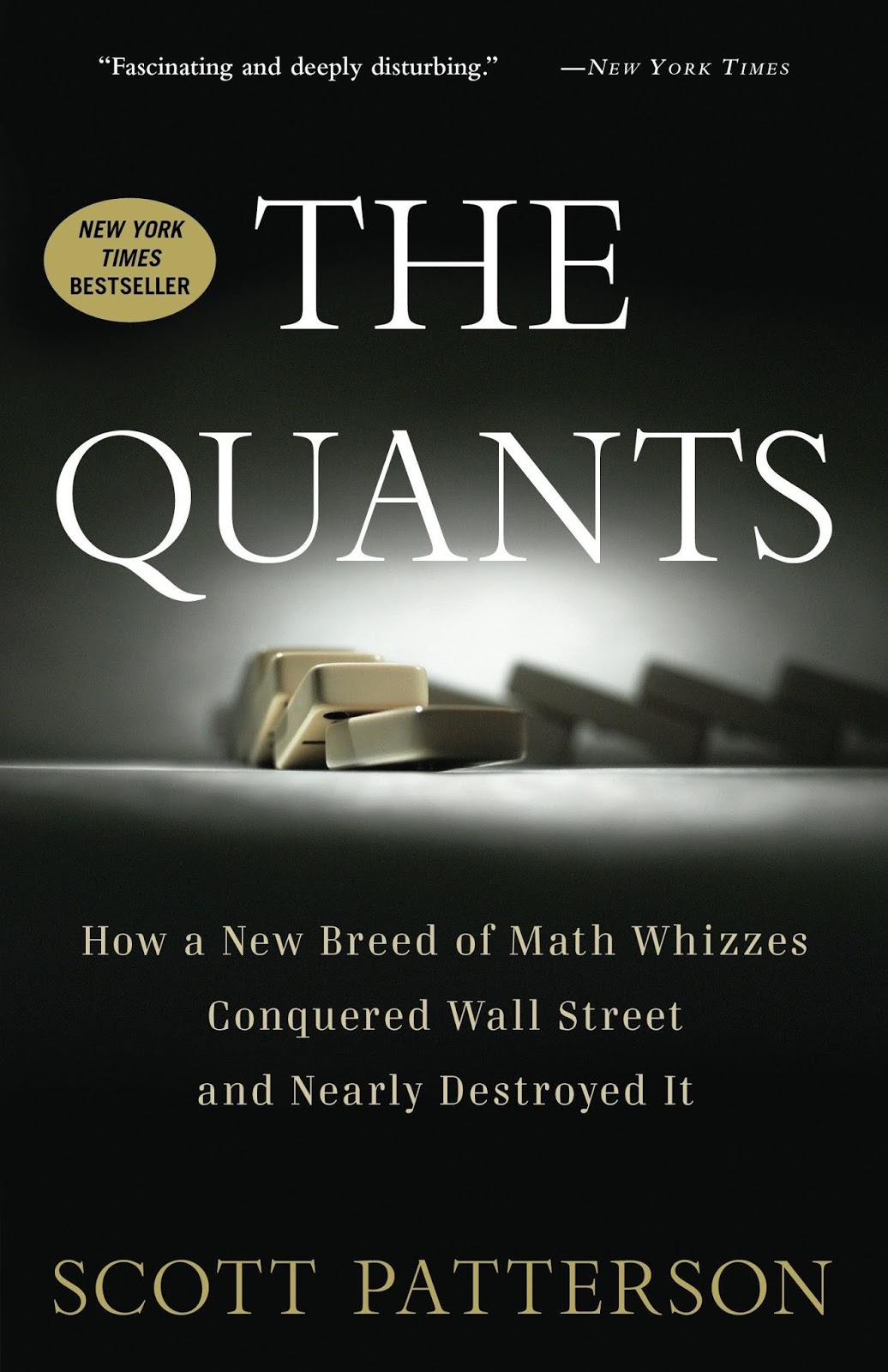
There is much more to be said on this point but it will take us too far. Consult the fine book, Patterson S (2010), The Quants: How a New Breed of Math Whizzes Conquered Wall Street and Nearly Destroyed It, Crown, New York, for further details.
My main point is that econometrics is not a role model for sound, grounded mathematical thinking. And it is illustrated by the fact that we now have a specialist in econometrics trained in the US who has come out to categorically and emphatically trumpet the superiority of PEMDAS over BODMAS. It is the way to go; any other way is fraught with ‘cardinal sin.’
Such a stand only further clouds the thinking about evaluation of arithmetical expressions. Instead, the message should be: use either method, but use it in a consistent and unambiguous way and you will not make errors.
Consider the expression
3 * 3 / 3 * 3
Under multiplication first rule, you get
(3 * 3) / (3 * 3) = 9 / 9 = 1
Under division first rule, you get
3 * (3 / 3) * 3 = 3 * 1* 3 = 3 * 3 = 9
Which is the correct answer? You do not know because the expression is stated ambiguously and the rule system used for it is not known.
Now consider a simpler expression:
1 ÷ 2 ÷ 4
There is no bracket, exponent, multiplication, addition or subtraction here; only division. Thus it does not matter if you use PEMDAS or BODMAS. Under either, you should get one and only one identical answer, right? Wrong, because it can be evaluated in two ways; do the first division first and the second, last. Or the other way around. But
(1 ÷ 2) ÷ 4 = 0.5 ÷ 4 = 0.125
And
1 ÷ (2 ÷ 4) = 1 ÷ 0.5 = 2
(The technical reason for the difference is that unlike multiplication, division is not a commutative operation. That is, while a×b is the same as b×a; a÷b is not necessarily equal to b÷a).
So the essence of our conundrum is ambiguity, not PEMDAS or BODMAS. And there are thousands of such examples. Each has the potential to generate a flawed, superficial controversy where there should be none.
A spokesperson from the American Mathematical Society and a professor of mathematics from Oxford University both stated that ambiguity is the key factor in this controversy.
Clarity of expression and explicit assumptions are the foundations of sound mathematics, not superficial social media ballyhoo. And that is what we need to impart to the young generation everywhere.
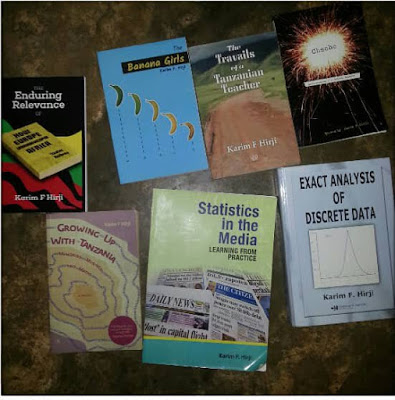
AND FINALLY, why should one bother about such things? In my view, for two main reasons: Mathematics is as much a part of human culture as are poetry, literature and art. It embodies elegance and beauty, nourishes the mind, sparks curiosity, foments logical thought and reveals the astounding capacities of the human brain. It entertains in the same way as a game of Chess, a crossword puzzle, a jigsaw puzzle or a picture maze. You become engrossed in it and lose the sense of time. And, for the elderly, it may reduce the risk of Alzheimer’s disease.
The other equally important reason to bother is that mathematics is a critical, indispensable component of modern science and technology. Without it, everything you take for granted now like electricity, automobiles, medicines and computers would not exist. If we are to lift our nation out of poverty, it is necessary that our youth have a good grasp of the subject. And they also have to appreciate that while the wonders of life and nature are too complex to be fully grasped by mathematics alone, without it a major portion will remain beyond our grasp. Learn your algebra and poetry; that is the lesson of the day.
I end with a question: Suppose you are given 5,000 numbers to add:
X = 5 + 6 + 7 + 8 + . . . . + 5,002 + 5,003 + 5,004
Can you do it in one minute or less without using a computer or calculator? And the answer is: Yes, any person can! First remove 4 from each of the 5,000 numbers to get:
X = 4×5,000 + 1 + 2 + 3 + . + 4,998 + 4,999 + 5,000
Then write the last portion in two ways:
S = 1 + 2 + 3 + . + 4,998 + 4,999 + 5,000
S = 5,000 + 4,999 + 4,998 + . + 3 + 2 + 1
Add the last two equations in a pairwise fashion to get:
2S = 5,001+5,001+5,001 + . +5,001+5,001+5,001
Which means:
2S = 5,001×5,000 = 25,005,000 or S = 12,502,500
So we get:
X = 4×5,000 + S = 20,000 + 12,502,500
X = 12,522,500
Now, that was not too difficult, was it? Mathematics, especially geometry, is full of puzzles and intriguing, even paradoxical results.
Go for it!
