
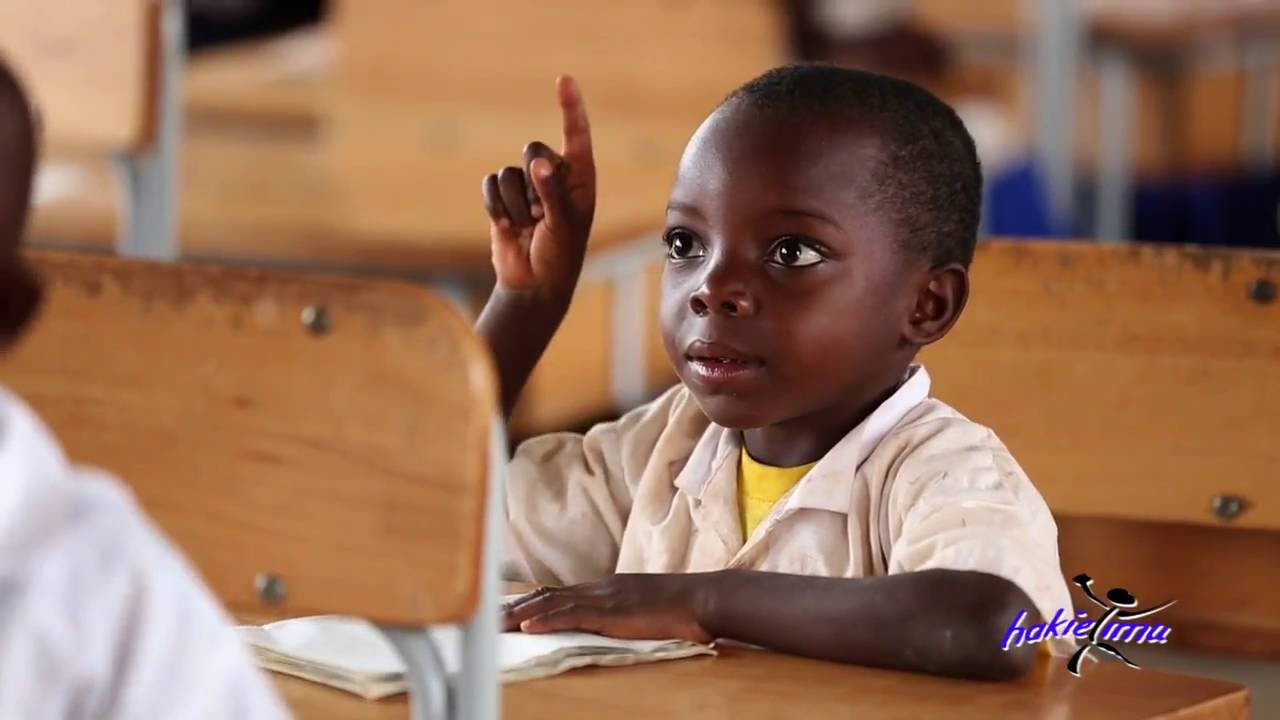
TANZANIA NEEDS CRITICAL THINKING CITIZENS
Introduction
Tanzania’s
General Elections of October 2015, by way of hindsight, was a very critical
turning point in the political history of Tanzania. These elections took place
to institute the Fifth Administration Phase of the United Republic. The
previous four phases were marked by national unity construction, liberal
economy adoption, market economy accommodation and accelerated wealth creation, respectively. Although the previous phase (2005-2015) was a phase of ‘accumulation’ – because leaders had begun to talk about wealth
creation, meaning more wealth should be created so that they could accumulate
more – thank God there were voices shouting for more equitable wealth
distribution! This was so despite the scandalous disparity between those who
have and those who have not! The tragedy is that these voices may be shut up in the current phase because liberal economy or the open market economy always creates poverty for
the majority. Poverty is nothing but a result of lopsided and unjust
distribution of both the international (global) and the national (local)
wealth. In liberal economy there is no wealth democracy! This is where the need
for critical thinking citizens comes in.

Civic transformation of the citizens
The
citizens of Tanzania now can be transformed into a critical society in various
ways, and we have the agents to undertake this noble task. These agents are
none other than the NGO’s, trade unions, professional associations, cultural
organizations, cooperative societies, the media, the academia and the religious
institutions. Each of these is capable, is willing, and should be able, to
undertake the task of forming all citizens into a formidable, organized
critical society. I would like to share my ideas and views about this noble
civic task.
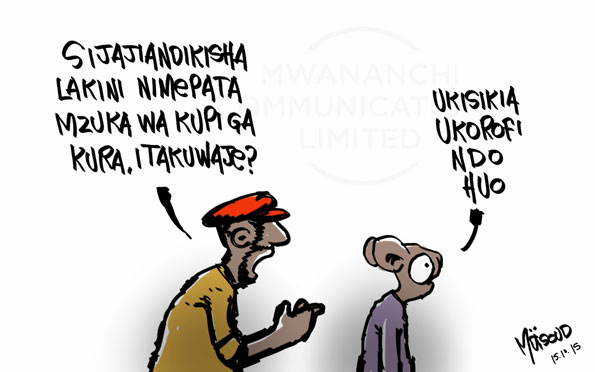
2015 Elections: Were they civic or protest elections?
Any
citizen who – having been registered as a voter – casts a vote for a certain
electoral contestant is sending a message to the rest of the society which
expresses at least two things: 1) that he or she believes in certain political
and socio-economic ideas or principles; and 2) that the person he/she votes for
is the right person to translate those ideas or principles into political and socio-economic
realities. Unfortunately, the majority of citizens in Tanzania, including the
so-called ‘wasomi’, have not taken (or do not take) the trouble and time to
think consciously about what is only at the level of feelings or guts. For
example, many Tanzanians feel that the political and socio-economic affairs of
this country are unjust; that is, they feel very strongly that there is no
adequate and satisfactory political and socio-economic democracy. However, many
cannot process these feelings or guts into critical views and express them
critically. At best such strong feelings have been expressed by casting a
protest vote. One thinks of Pemba ghost votes in the 2000 elections, the 80%
plus of votes to CCM in 2005, or just not voting at all! At worst such feelings
have been expressed by taking part in tragic rallies and demonstrations!
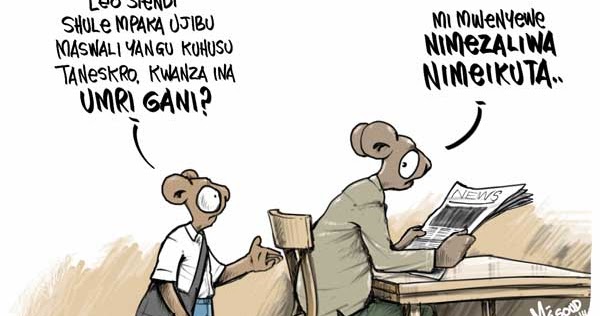
Who is a ‘critical thinking citizen’?
Tanzania
now needs critical thinking citizens
more than before. A critical thinking citizen has the following qualities or
characteristics: 1) a critical consciousness which expresses itself in terms of
critical thinking; 2) a power awareness which is based on the understanding
that structures and systems can be transformed by collective, human effort
because such things (structures and systems) are results of deliberate human
agency; 3) a critical literacy which shows itself by habits of critical
thoughts, reading, writing and speaking which goes beyond surface or
superficial meaning. Such critical literacy goes to the root of the matter,
that is it is radical in the literal sense of the word. Critical thinking digs
up the root causes of the prevailing socio-economic and political status quo in
order to ‘fish out’ the operational ideology, oppressive presuppositions or
self-interested assumptions; 4) a search for permanent de-socialization, i.e. a
continuous questioning of the prevailing social order that is characterized by
monopolized power and inequality in the status quo; and 5) a critical
self-education and organization by continuously developing one’s knowledge of
how to learn critically and how to organize transformative (and not merely
formative!) educational projects or programmes.
Let
me now point out what each of the agents I mentioned before should, and can, do
to transform Tanzanian citizens into a critical society.
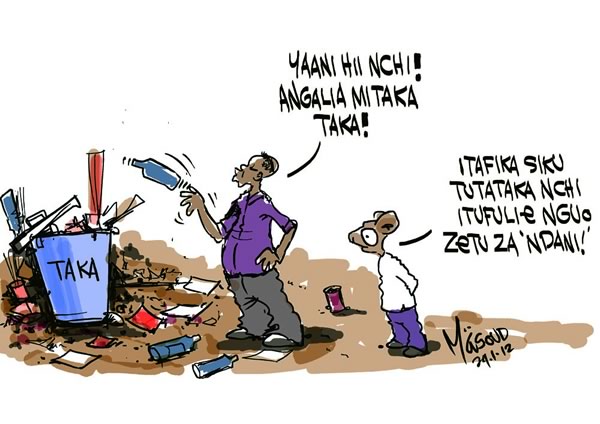
1) The NGO’s
Members and leaders in the NGO movement can do very well
in this noble task because they can easily muster collective human effort in
bringing about change in the ideological structures and systems. Such
ideological structures and systems are things like visions, statements of
mission, constitutions and electoral procedures in their very own
organizations. These NGO’s have to encourage critical literacy and a continuous
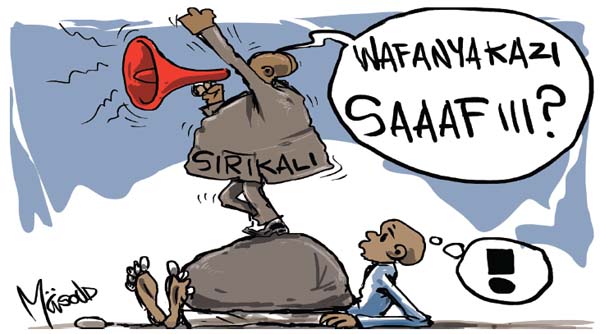
questioning of the status quo among their members. Unless NGO leaders take
initiative along these lines they will be contributing towards building a
non-critical society which cannot analyze, question and critique the slogans
and manifestos or policies of the leaders
2) The Trade Unions
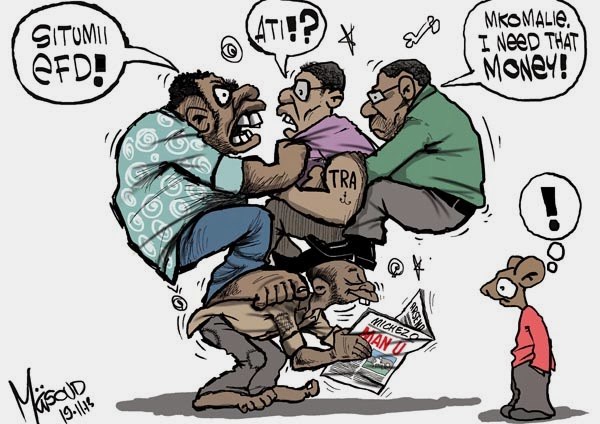
Most of the trade unions have members who are among the
educated Tanzanians. The union leaders do not only have clout with their
members but they also have the critical capacity and socio-political edge in
the society. Through their professionalism trade unions could help to create a
critical society by conscientizing their members and the society at large about
socio-economic and civic rights through nurturing a passion for justice at
places and stations of work, a concern for a humane organizational ecology, for
the labour community and for public life in general. Through dialogical
communication trade unions can awaken consciousness and prepare union members
for collective action. Dialogical communication allows people to voice their
socio-economic and political experiences in a country with the history of a having a government that works hard to accommodate an open labour market economy but at the expense of
basic human needs and aspirations.
3) Professional associations
Professional
associations in Tanzania will contribute a lot towards creating a critical
society if and only if they struggle to do away with that kind of worldview in
which cause and effect operate in fragmented (professional specialisms) ways.
Often there is a tendency among professionals not to address the fundamental
difficulties associated with their situations in which the professions are
embedded. Professional associations will help to create a critical society if
they work on the following:
a) Inspiring and challenging professional
association members (i.e. individual professionals) to develop continuously a
critical professional awareness and behaviour. This can be done by developing
the habit and custom of critically working on one’s body of professional
knowledge according to accepted standards of integrity. In doing so, the
professional associations will awaken in the minds and hearts of professionals
the civic sense of service ethos. In this way they will challenge the political
leaders to put their power and influence at the disposal of the citizens all
the time. They will critically challenge political leaders to serve citizens’
needs and interests to which they (i.e. political leaders) subordinate their
own self-interests. Too often political leaders have even ‘abused’
professionals simply because they wanted certain personal desires and
self-interests to be realized at the expense of the electorate and their money
as taxpayers.
b) Inviting and helping professionals and para-professionals
(e.g. in the informal sectors) to experience themselves as knowledgeable
persons by critically examining their knowledge and using it for the
development of the society; identifying the individual aspects and social
context of their professionalism and by identifying possible civic collective
actions, e.g. close monitoring of professionalism in good governance and in the
very process of the leaders’ implementation of their civic and political
duties.
The
objective here is for professionals to realize that their knowledge, expertise
and capacities should enable them to explore the complexity and
interrelatedness of individual, organizational and social issues that bedevil
our nation.
4) Cultural organizations
The
nature of cultural organizations in Tanzania is so communicative that these
organizations cannot really fail to create a critical society. Most cultural
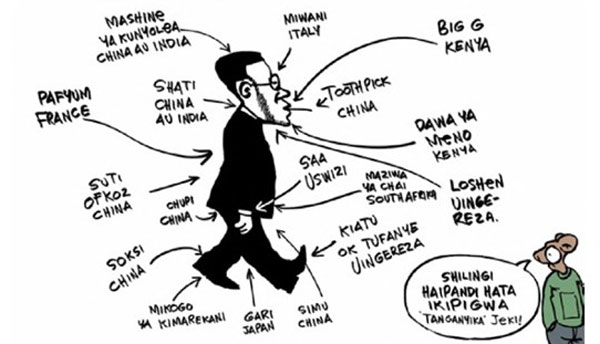
organizations in this country operate through music, dance, drama, paintings,
cartoons, diatribes etc. Through these means cultural organizations could help
our society develop critical awareness so as to become a critical community in
the following ways: (i) Through music cultural organizations could stimulate
reflection and engage the citizens into critical reflection based on social
issues that musicians would sing about. (ii) Through dance and drama social and
economic problems could be enacted to make the citizens aware of the forces or
interests behind the socio-economic status quo, which benefits only a few.
(iii) Through painting, art and sculpture the organizations could draw the
attention of the citizens to the inner aspirations and longings of our society
for a better, more just and legitimate order.
5) Co-operative societies
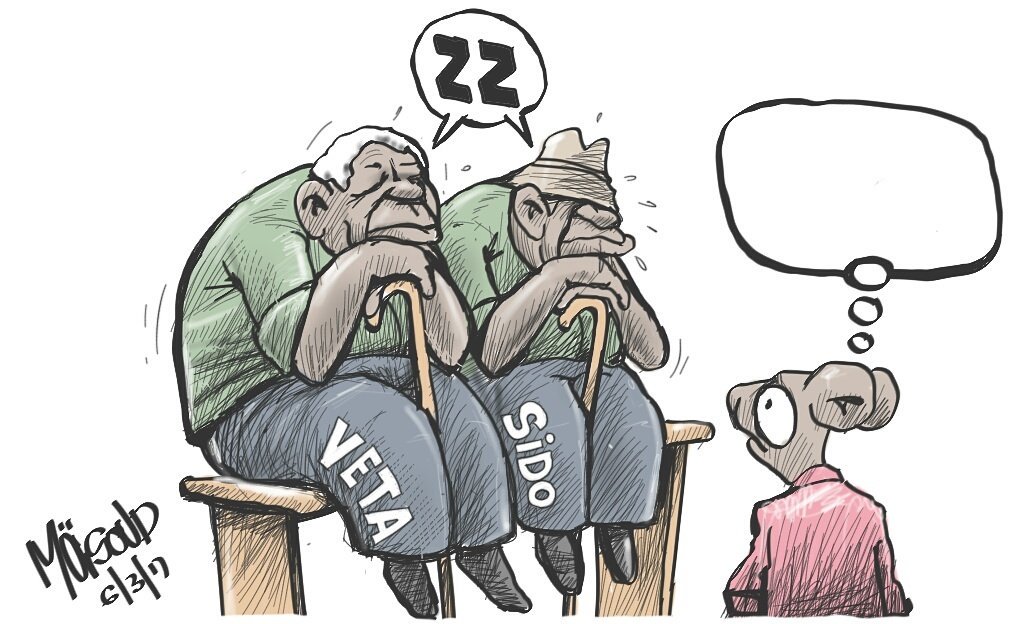
Cooperative
societies used to have very democratic organizational frameworks, and their
existence was a critique to any forces, powers or systems, which were against
self-determination of local or regional communities. Today, as a way of helping
to create a critical citizenry these societies could contribute a lot by:
(i)
Re-establishing among the people a sense of collective economic ownership, a
participatory democracy and democratic participation, a critical stance to
leadership that threatens their sense of socio-economic destiny.
(ii)
Enlightening their members about the potential dangers of electing leaders who
are not ‘co-operative conscious’ (i.e. leaders who are interested in economic
or financial cartels or oligarchies only) at the expense of the peasants,
artisans and small producers.
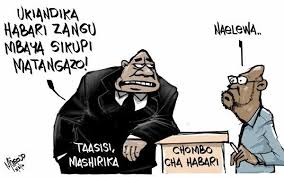
6) The media
Despite
the low rate of literacy among the citizens, most of them have very good oral
skills! Indeed the audio media can help to create a critical society if they
are more critical and analytical in their roles of informing, educating and
entertaining their audience, namely listeners and viewers. The effective impact
that sound and pictures can have on the subconscious of listeners and viewers
could be directed towards educating the targeted audience to become more
critical. This could be brought about as follows:
(i)
Invite well-informed and critical analysts of various issues of our society to
panel programmes to discuss, debate and prod the viewers/listeners to take the
issues in their interest communities and pressure groups and follow up their
practical implications.
(ii)
Organize and broadcast live or publish open for
debates on the crucial questions about leadership and governance,
questions on issues like integrity, national values (ethos), national
independence or autonomy, political and socioeconomic sovereignty, a caring
economy, cultural identity, etc.
(iii)
Prepare commentaries on burning issues with the aim of challenging readers (in
the case of the press), listeners and viewers not to be satisfied with the
status quo.
(iv)
Give plenty of air-time and page space to common citizens who will not only air
their views, but also will use the media to challenge leaders to think about
their (i.e. the leaders’) selfish interests.
(v)
To organize leaders’ debates, programmes and/or features like Face the
Viewers, Listen to Our Listeners and Write to Our Readers, at the
level of hamlets/villages, wards and districts so that the citizens can come
face to face and ear to ear with the leaders and debate on issues which are
pertinent to the local needs of the citizens themselves.
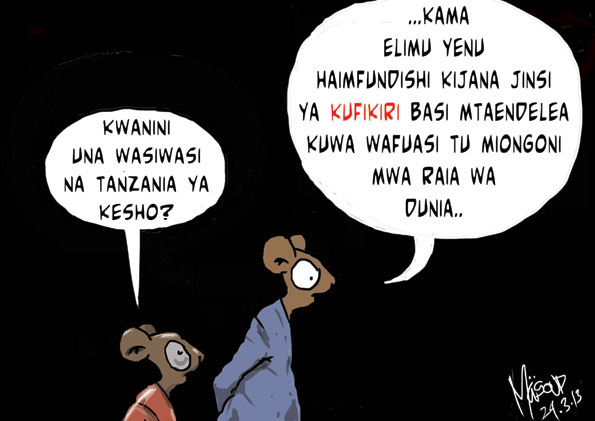
7) The academia
It
is generally felt that the world of scholars in Tanzania has not yet built a
good reputation of contributing adequately towards the development of this
country in general. Too often, a lot of people ask ‘Where are our ‘wasomi’ to
help us in this or that?’ Except for very few individuals, in my opinion, the
academia in Tanzania has not yet become conscious of its own intellectual
power. Such intellectual power, if given the right direction – the direction of
why and how citizens think of the leadership – would be a crucial factor in
confirming the citizens’ critical feelings towards their leaders.
The academics
can contribute a lot in terms of developing critical thinking among the people.
For many Tanzanians critical thinking is still regarded as ‘ubishi tu’; that is
something, which is merely arguing for the sake of arguing! The academia should
help the citizens to ask content critical questions. These academics could do
so in the following ways:
(i)
Each academic should engage himself/herself in social change efforts, and
consider teaching as an arena of social praxis and resistance.
(ii)
Develop consciousness of the socio-economic and political influences and help
students, young and mature, trainees and colleagues do the same in order to
develop education that is both democratic and liberating.
(iii)
Stimulate senior students debate on social transformation by helping them ask
and analyze critical questions and give answers that are truly powerful in
deconstructing social devices that breed unconsciousness or uncritical
consciousness.
(iv)
Resist theoretical domestication or ideological chains that leave the spirit of
critical inquiry numb; instead struggle for that academic freedom which is the
way towards praxis that liberates, and liberation that is practical.
(v)
Work courageously for socio-economic liberation and critical consciousness as
members of the society which is struggling to realize its sovereignty maturity.
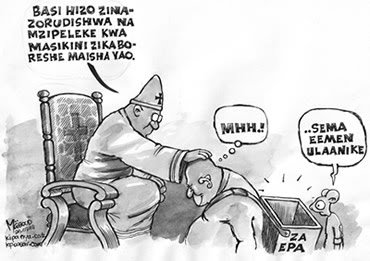
8) The religious institutions
Despite
the secular stance that the government always declares in matters political and
civic, citizens in Tanzania on the other hand are religious believers who, more
often than not, involve God and religious beliefs in their aspiration for a
peaceful, just, harmonious and human nation. For that reason, the influence and
moral authority that religious institutions have on the society through their
religious congregations could be harnessed to create prophetically critical
citizens in the following manner:
(i)
Through their religious and spiritual admonitions, religious leaders can help
the citizens to develop a sense of subjectivity, i.e. the consciousness of
being citizens who are not to be used as stepping stones, or objects, by
leaders, but these leaders should be made aware that they owe the citizens
accountability, respect and dignity; and that the citizens owe the leaders
nothing, not even “takrima”! The basis for this perspective is the common
religious principle that the voice of the people is the voice of God: and, as
is the case with Christians at least, every citizen was created in the image of
God, male or female.
(ii)
Religious leaders should encourage and insist upon the believers to read the
holy books or scriptures which do point out the type of leaders that are
suitable for a country like Tanzania. Although this is being done in some
circles, it needs to be read more critically in terms of comparing what the
holy books say about the society then, with the kind of society we have today.
(iii)
Religious institutions should assert their role as the critical conscience,
sensitive compass and as alert ‘co-adjutors’ of the national leaders and of the
citizens. They will assert this role if they follow the examples of prophets:
namely to remind the nation of its authentic cultural and moral values and
aspirations which were established at the birth of this nation, values and
aspirations expressed by the national anthem, the song of the Torch on The
Kilimanjaro, the constitutional Ujamaa and Self-Reliance philosophy, and the
opening prayer for the Parliamentary sessions. The values and aspirations
expressed in all these documented sources are still cherished and treasured in
the subconscious of the citizens. Let the religious leaders help the citizens
to voice them out critically.
God
Bless Tanzania!
God
Bless the Fifth Phase Administration!

Religion should be rightly used for its purpose in society, to influence social change, and as author pointed out, religious leaders should be forthcoming to instill in their congregation the sense of awareness and assertiveness of the social-political process. This instead of the current situation, where the government enforces that politics should not be discussed/preached in religious places.
"Poverty is nothing but a result of lopsided and unjust distribution of both the international (global) and the national (local) wealth." Well noted