
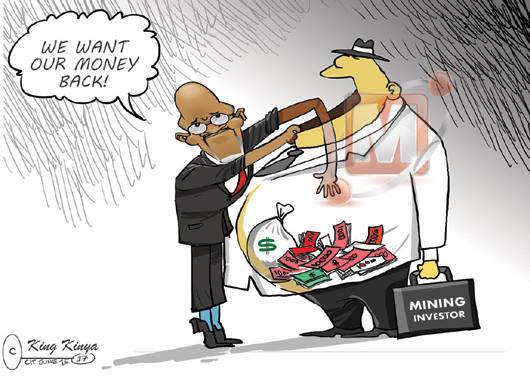
What is Magufuli hiding about Acacia?
Chambi Chachage
“Currently no one knows the secrets of this country than I do” –President John Magufuli
The government of
Tanzania is about to start negotiations with Barrick Gold Corporation. With a
stake of 63.9 per cent in Acacia Mining PLC, the stakes are high for the
Canadian multinational. In March 2017 President Magufuli suspended the shipping of concentrates
and subsequently ordered the impounding of its local subsidiary’s export-bound
containers.
In line with the ‘Art of War’, the President has publicly taken an offensive approach. This is hardly
a strategy of someone who is willing to compromise unless he is bluffing. “I was not crazy”, he recently reiterated in a rally, “when I impounded the containers of…big shots.” They “say
it is ‘sand’, he further pointed a finger to them, “but transport it with police
escort…there are more than 12 minerals there…they just take.” Isn’t this
smuggling?
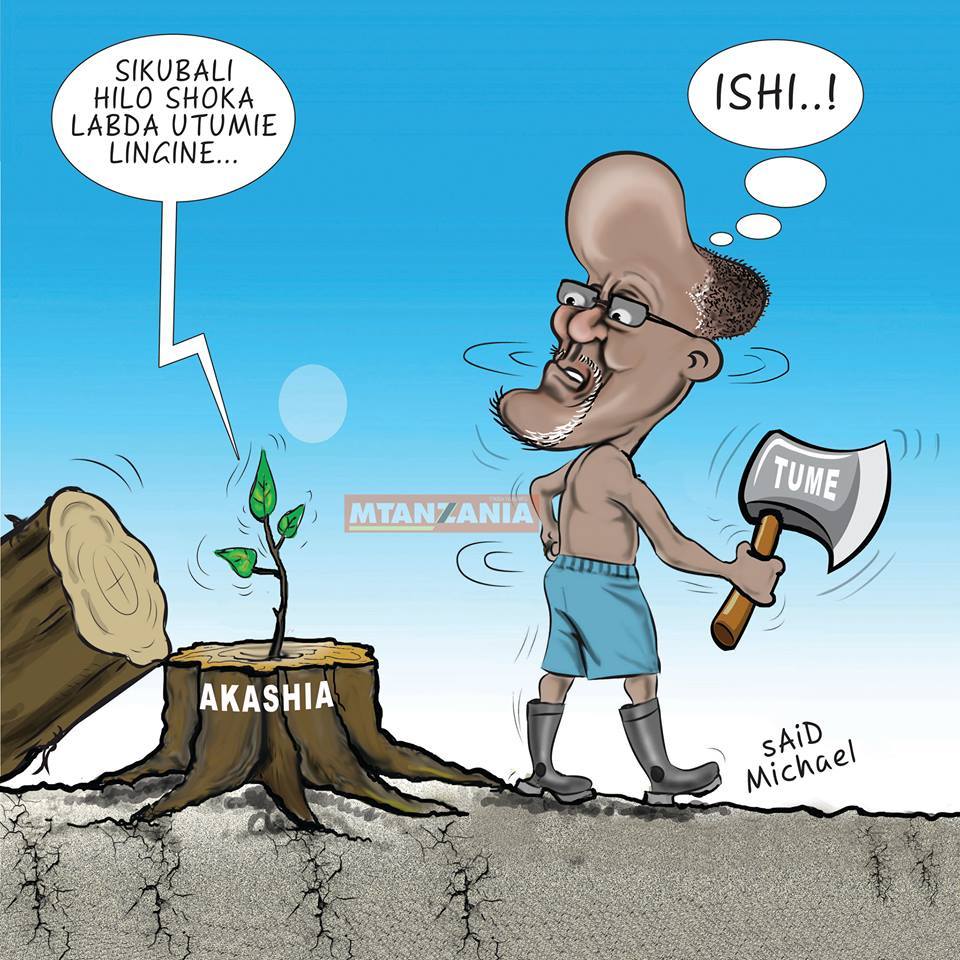
Acacia is also
not budging. In its online note on ‘Unearthing the Truth on the Tanzanian Concentrate Export Ban’, it states: “Acacia is a law-abiding company that has always declared all materials it has produced and paid all royalties and taxes that are due.”
Hence
its position on Professors Abdulkarim Mruma and Nehemiah Osoro’s submissions is as
critical as it is condescending: “Acacia has also called for an independent review of the recent First and Second Presidential Committee reports that generated, in our view, inaccurate and unexplainable findings and allegations. Acacia strongly refutes these unfounded accusations.”
Playing it safe legally, on 4 July 2017 Acacia announced
that Notices of Arbitration were served in Tanzania. Doing so at that time, its
press release insists, was necessary to protect it. However, it further noted, “Acacia remains of the view that a negotiated resolution is the preferable outcome to the current disputes and the Company will continue to work to achieve this.”
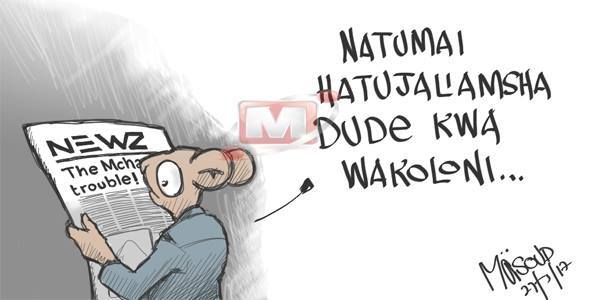
Such an affirmation from a company that
unequivocally dismisses the two presidential reports seems contradictory when one
reads its following take on the negotiations that are about to take place:
What these
statements mean in their totality is that Acacia is not ready to meet us
halfway. Doing so would imply that the President and his committees are
right, albeit partially. It would entail that they would have to comply with
his demands to bring back our money or minerals.
Casting doubts
on the presidential reports is thus one way of dealing with all this. International
tax experts have joined the fray. For instance, Maya Forstater and Alexandra Readhead have published an article on ‘A brutal lesson for multinationals: golden tax deals can come back and bite you.’ Therein they inform us that there
“are several reasons why the findings of President Magufuli’s committees are
hard to believe.” Yet they cite Acacia’s statistics and arguments on why they
are confident the two professors got it all wrong as the first reason.
Probably what
is more puzzling is that after doing so they present this rhetorical argument
that draws heavily from Acacia’s self-defense regarding its integrity and
compliance:

How does the
reaction of shareholders lead these experts to conclude that the “committees’
findings are implausible”? Why did the Executive Chairman of Barrick, Professor John L. Thornton fly all the way to the Julius Nyerere International Airport if
this was simply a matter of setting the records straight since our very own
professors missed the mark glaringly? The official website of Barrick informs us
that at “present, Mr. Thornton holds 2.4 million Barrick common shares, roughly 65 percent of which have been purchased using personal funds (not associated with incentive compensation).” So, how did they measure his reaction?
Nevertheless,
some of our own leading experts find their analysis compelling. This is
worrying given that they should also read it with the same healthy dose of skepticism
that they used when reading the report summaries of the presidential committees.
One would expect them to underscore that the article that has been gaining
traction since it was published in the prestigious British daily, The Guardian,
hardly engage with other Tanzanian sources.
By simply asserting that the Tanzanian
President is “accusing the company not only of striking an unbalanced deal but of massively under-reporting its gold exports to evade tax,” the
article is missing or dismissing a key argument. Smuggling. When its writers
opt to insinuate that “Acacia may not have stolen billions of dollars worth of minerals” without engaging with the possibility of smuggling, they are
bypassing a wealth of clues and cues out there.
Let us recall that Professor Osoro’s
summary uses the Kiswahili word “magendo”, which means ‘contraband’, when
describing the disappearance of containers. The summary does not only provide
the shipping number of containers that were shipped without trace, but also the
dates of shipping. In total, they were 43 containers that were not accounted
for in one year alone.

Does one need an
independent committee to even verify this? How many presidential committees
since the times of Mwalimu Nyerere were subjected to such verification? As a friend asked, rhetorically, why is it so easy for us to trust researchers other than our own?
One may, by way
of proxy, revisit the Controller and Auditor General’s (CAG) reports on the Tanzania
Port Authority(TPA) and Tanzania
International Container Terminal Services (TICTS) to get a glimpse of why it
easy for companies to collude to smuggle stuff inside or outside our country. “We noted”, CAG stated on 28 March 2016, “that TPA does not have controls to monitor total number of containers handled at TICTS.” Why? Because “TPA
only relies on information received from TICTS and does not reconcile this with
the actual number of containers handled by TICTS.” Moreover:
Fast-forwarding
to 27 March 2017, one notes CAG reiterating that TPA “should collect data from TANCIS showing all
containers handled at TICTS and reconcile this information with actual containers received at TICTS.” Now,
if such was the state of importation, why should we expect that the conditions
for exportation did not have a room for smuggling our minerals?
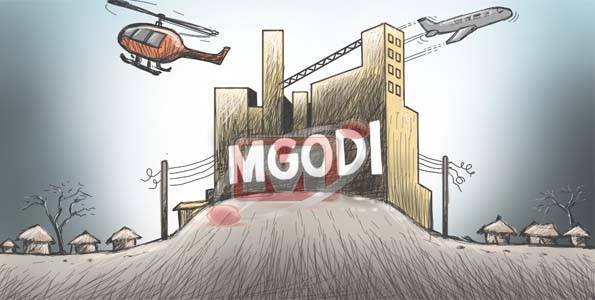
Reducing the
issue to tax deals or evasion can thus be misleading. “We have tax experts – good ones”, President
Magufuli indeed points out. “But”, he firmly stresses, “they were just allowing the containers to be carried away after being given a bit of money.”
Maybe the President should just share the
committees’ reports publicly in their entirety.

Hi Chambi,
This is a long winded piece.
Your last sentence should be your first, and a couple of paras summarising both sides should suffice.
The Bible tells us, "It is for freedom that Christ has set you free." Also, "The truth will set you free."
The last sentence will settle the matter.
Thanks and keep blogging.
Ubarikiwe ndugu yangu,
Kadoda
All in all the end of this saga will not be sweet to most of the people who think/believe /hope the president is doing it right and fairly. However we shouldn't forget that Magufuri is a politician and therefore he must be the sole beneficiary in the end. Keeping my fingers crossed.
This is a great read. I have noticed too, that the skepticism is one sided. But then again we shouldn't expect "them" to be objective either.