Will People Eat Boils?
Chambi Chachage
“Let them eat cake” – Marie Antoinette
The presidential honeymoon is not yet
over. President Magufuli is still enjoying the popularity he has earned in his
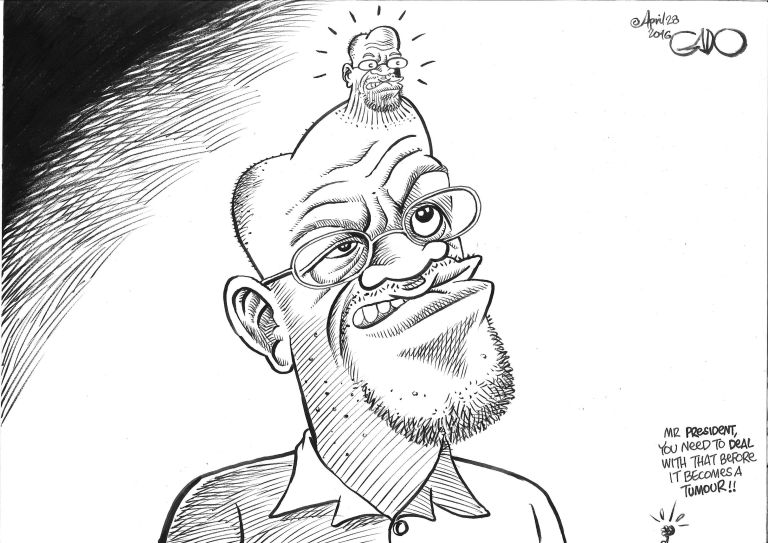
holy war on grand corruption. Christened “bursting the boils”, this crusade is
however raising eyebrows among champions of the rule of law.
Such criticisms, or rather critiques,
have not passed unnoticed in the corridors of powers. In a clear breach of the
separation of the church and state, recently the president used Sunday’s
Catholic Mass in Arusha to insist that the bursting of boils through the
suspension of public officials should not be interpreted as cruelty. For him, all
those civil servants have breached the code of ethics for public service.
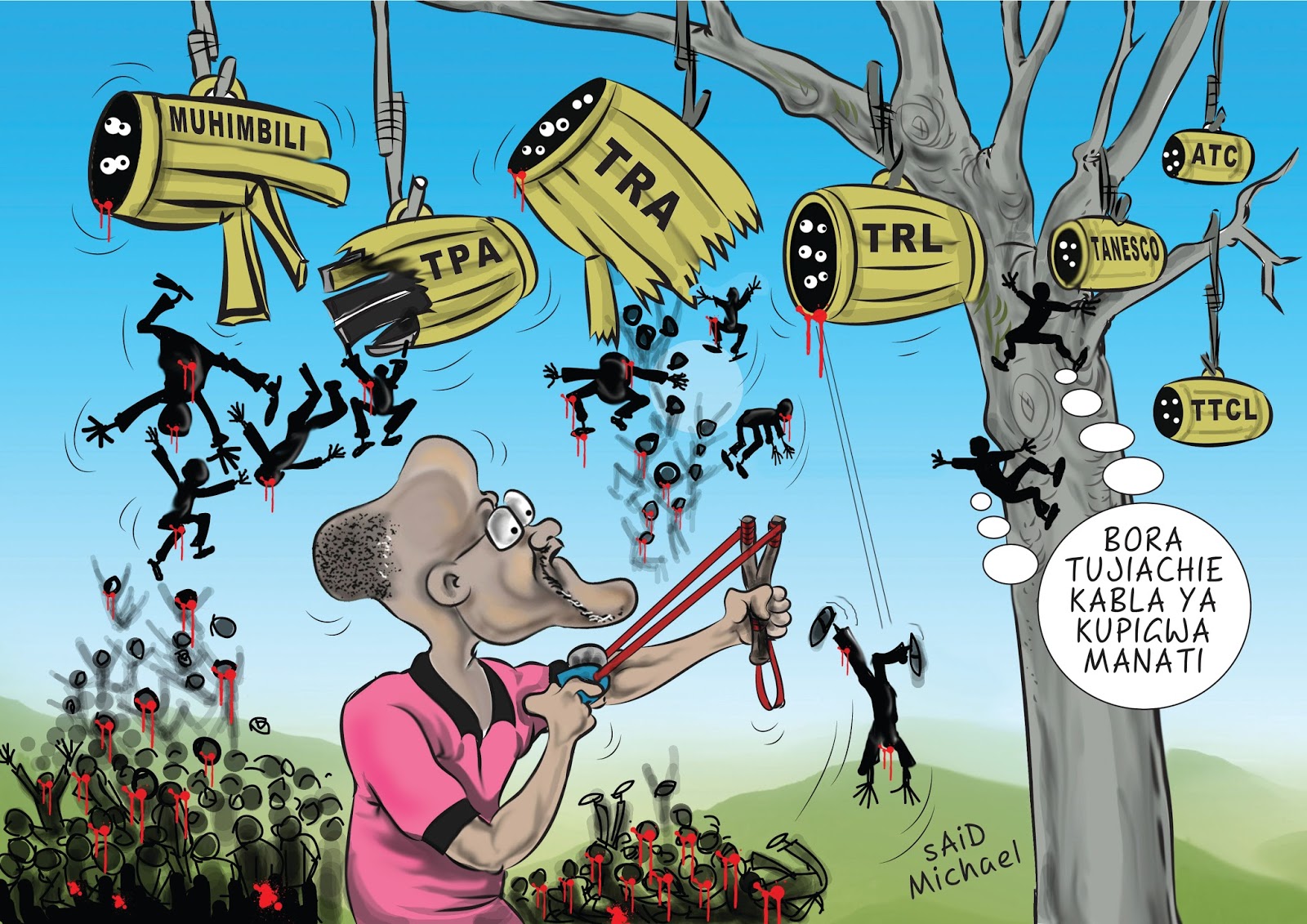
Elsewhere the president chided those who
defend them, stating – sarcastically – that such critics may also be boils therefore they will start watching them. These human rights defenders have been wondering
what is wrong with demanding a fair hearing – and indeed trial – for the
‘accused’? To them, justice is best served when one and the same person is not
a judge and prosecutor, that is, when there is separation of powers.
Recall, for instance, the case of
officials who were suspended for travelling abroad without the permission from
the State House. It is claimed that they applied; however, they did not receive
a response on time. Given that Tanzania was regarded as the coordinating secretariat
– and thus host – of an important anticorruption event, they opted to rush
there, hoping their boss would cover for them. Alas, he got dismissed.
What if they were unfairly suspended?
Would they get a public apology? When?
Away with constitutional procedures, some
may even dare to say. How many boils have they burst? Why don’t we just let the
President do his job of bursting them?

Many of us are indeed not happy with the
state of corruption in the country. We are yearning to see all those behind the
Escrow and Lugumi scandals, among others, have their day in court. Yet some of
us need all this to be done according to the legal and institutional parameters we have been busy building. That is why we are still calling for a new
constitution that would curtail the concentration of powers on one entity.
Yet in the context of a centralized
system, we appreciate the role of a strong leader in enabling an
anti-corruption dispensation. More significantly, we are aware that in the
short term things might be difficult even to those who are supposed to benefit
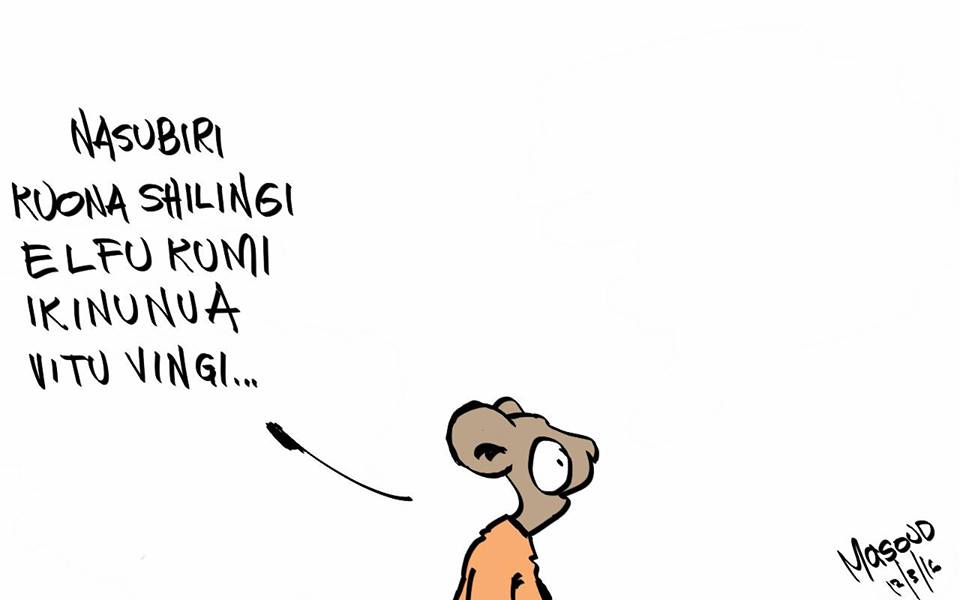
from the war on corruption. As they note, the ‘circulation of money’ is limited
in the sense that it is no longer ‘trickling down’ to them from the ‘boils’
that have been ‘burst.’
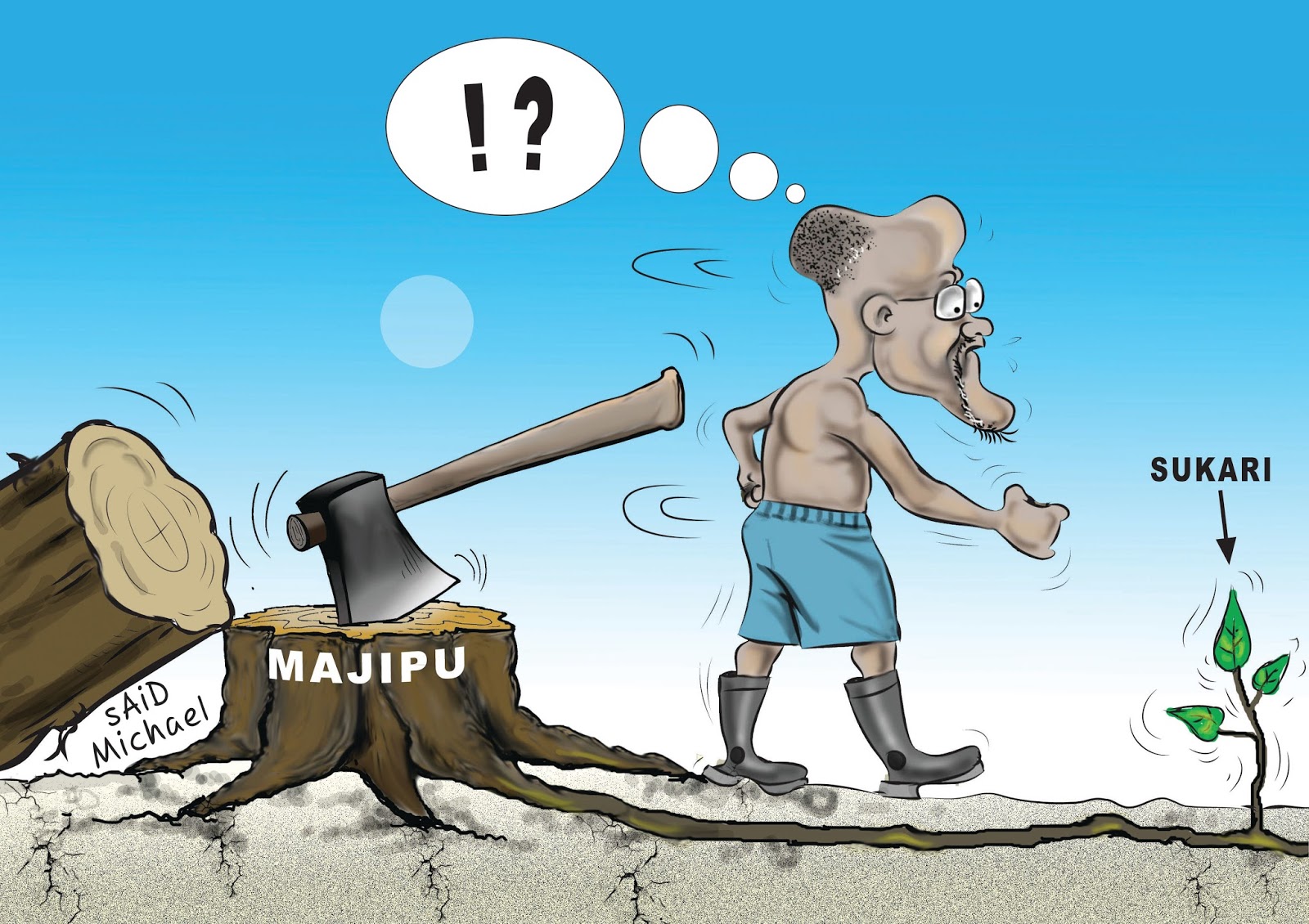
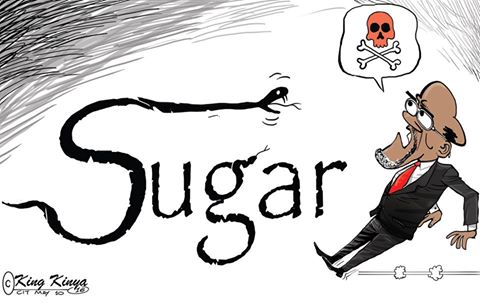
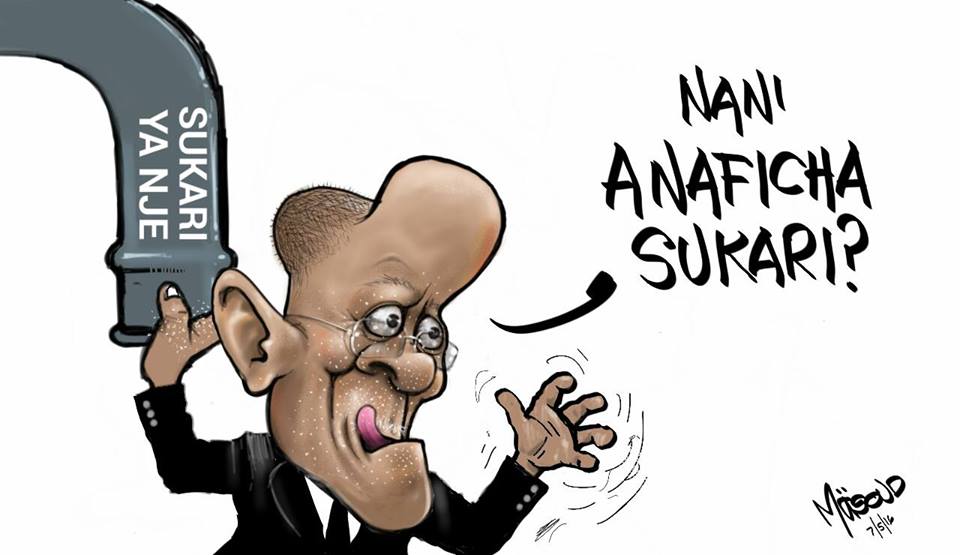
Probably nothing captures this irony more
than the sugar scarcity saga that came in the wake of the presidential decision
to intervene on its importation. By deciding to crack on those who allegedly
hoard sugar to create artificial scarcity, Magufuli seems to be living up to
the standards of the very person that some people believe is like him i.e. the
late Edward Sokoine. However, it was during the latter’s crack on ‘economic
saboteurs’ that Tanzania experienced its worst shortage of foodstuffs in
shops yet.
Reminiscing on the battle for sugar that
has been recurring since the beginning of liberalization, a seasoned politician
notes: “I was almost killed by sugar importing mafia!” Such is
the gravity of the war against any corrupt element in the country. It has to
involve the society as a whole and not only one individual no matter how good
his/her intentions are. Haven’t we seen benevolent dictators turning into
despots? After all, we are told that power corrupts and absolute power corrupts
absolutely.
For sure, when it comes to institutional
building, it is one thing for the Executive to give additional money to the judiciary
and quite another to nudge it to speed up the cases on corruption so that the
government coffers can get filled when the public prosecutor wins. How does one
win against corruption by doing the very thing that those involved in it are
accused of? Is this how one builds an independent judiciary?
One cannot help but wonder whether we are
eroding even the few gains in the separation of powers between the three arms
of the state namely the executive, the judiciary and the legislature. If this
accusation from a Member of Parliament, Zitto Kabwe, is true then the signs of
the times are troubling: “Whenever we challenge the government here, we are
being given letters and sometimes taken to the ethics committee. That is a
threat to us and it diminishes our freedom of expression”.
Living in the
times of Magufuli is so exciting. Yet it is frightening. Strange times.
It is thus in the long run that a
sustained war on corruption that goes hand in hand with strengthening oversight
institutions and upholding the constitution would yield a scaled-up ‘trickle
down effect’. What we are experiencing now is a serious strain on what has been
referred to as the ‘economy of affection’ or ‘shadow economy.’ The ‘patrons’ of
corruption can hardly share their looted money with the people in the
constituencies. It may take time for the people to get used to be free from
‘patronage’.
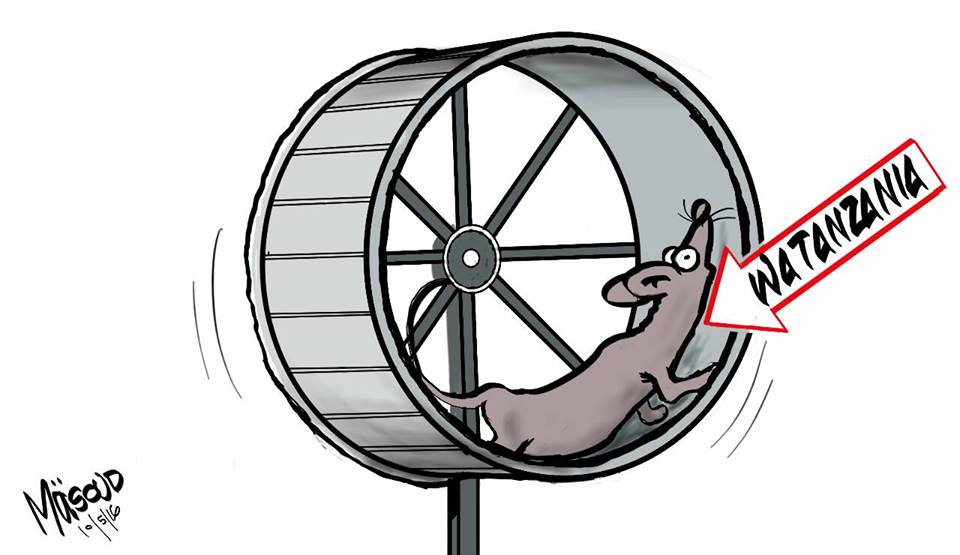
However, when the presidential honeymoon
is over it is not the burst boils that people will be hungering for. Rather, ‘a
better life for all’. Why not institutionalize it now?