
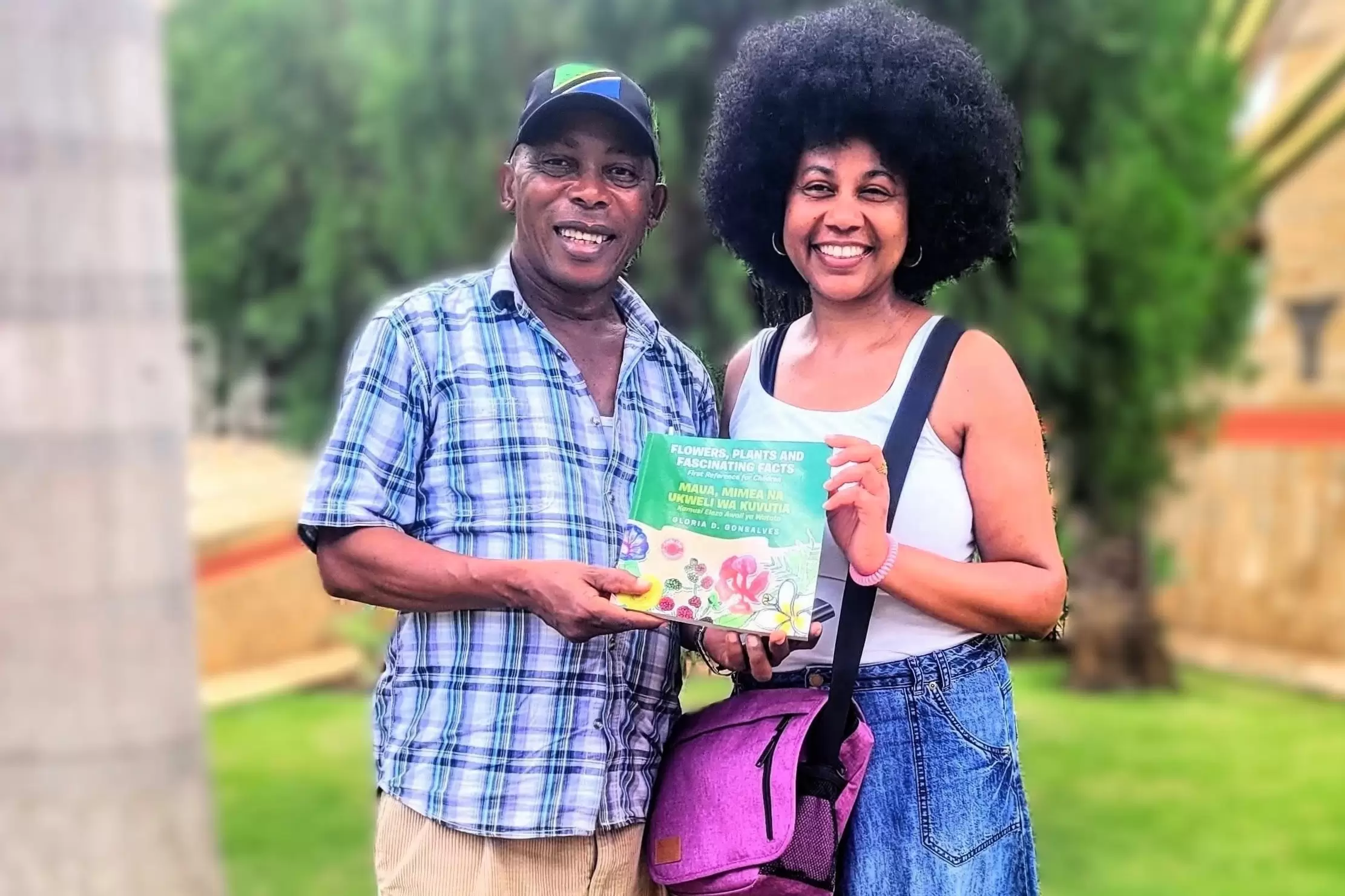
I first had the idea of interviewing Frank Mgalla Mbago in 2022. A sibling introduced me when I was working on my bilingual book project, Flowers, Plants, and Fascinating Facts: First Reference for Children. I needed a botanical expert to assist me with some aspects of the book, including the naming of plants in Kiswahili. Mbago guided me specifically in translating and adding species endemic to Tanzania. I quickly grasped that he is a national treasure with a copious amount of knowledge about the plant taxonomy database of my motherland.
Mbago is a retired curator of the herbarium at the University of Dar es Salaam (UDSM). Although he spent most of his time in the field, he found a way to communicate with me, even with an erratic internet connection. When not growing the taxonomy database, he is the saxophonist for the Wagosi Star Band. Thanks to his botanical knowledge and expertise in Tanzania, and the discovery of species, he has two plants named after him. Mbago is also a writer.
After publishing my book, we first met in person in 2024. In April 2026, I had the honour of interviewing him by phone.
What is your background?
I was born in the village of Bungu Msiga. It is located in the Ambangulu Estate in the West Usambara Mountains of the Tanga Region. I was practically raised in the forest. With friends, we hunted and gathered. We knew which forest sections had wild strawberries and wild cardamom. We used climbing plants for swinging. We hunted birds for food. As children, we played in the forest a lot. We found tools for carving children’s toys, such as catapults and wooden bicycles. We learned to identify which tree logs had mushrooms for foraging.
After completing secondary school, I attended Galanos Agriculture School and studied agriculture. I was very interested in the Latin names for plants. For example, I found the name Manihot esculenta for cassava quite fascinating. After secondary school, I joined the Olmotonyi Forestry Training Institute, where I studied forestry, including plantation management, protection, naming, and related topics.
What motivated you to study plants?
After earning the forestry certificate, I worked at the catchment forest in Udzungwa Forests as bwana miti (forester). The protection work did not appeal to me. I applied to join the University of Dar es Salaam (UDSM) as a botany technician. I was hired, and my tasks included collecting plants and identifying them. Simultaneously, I taught in the Herbarium Department. The late Professor Tesha advised me to focus on plant taxonomy. I was assigned the responsibility of finding and studying plants throughout Tanzania and accompanying foreign researchers.
From 1989 to 1994, I acted as a coordinator and tour guide for the Frontier Tanzania Expedition. This collaboration between the UDSM and the UK-based Society for Environmental Exploration (SEE) sent young British people to work on environmental projects. I was also involved in other ecology projects. I loved this job as it related to forestry, and I was keen to study with international experts. These experiences led me to consider further education abroad. In 1991, I was a local botanist resident in Gombe. In 1992, I was sponsored to undertake the International Diploma in Herbarium Techniques at the Royal Botanic Gardens, Kew, in the United Kingdom for a year. At Kew, many global botanists inspired me.
Which is your favourite plant and why?
I love the Asclepiadaceae family, including Calotropis procera, the milkweed family, and orchids. There is an orchid (Telipogon diabolicus) that grows wild in Colombia, often called the Devil’s Orchid or Demon Orchid for its resemblance to a devil’s head with demon-like horns. Such small plant details always fascinate me. They made me wonder how nature could have created such a form. Even students find it difficult to illustrate this orchid.
I also admire the custard apple family, botanically known as Annonaceae. What I love is their unique flowers, which do not wilt easily due to their remarkably sturdy petals.
Another one of my favourites is a rare evergreen tree found in Tanzania. Botanically, it is known as Warburgia stuhlmannii. In Kiswahili, it is known as Mkaa. In the Maa language, the Maasai people call it Sokonoi. It grows in the Tanga Region. The leaves taste like hot pepper. No insect attacks it. And it does not experience any fungal attack even after heavy rains. It does not rot but remains dry after falling. This tree has a high medicinal value. Its medicinal uses include treating infertility, use as an anti-fibroid, treating hormonal balance for women, and also against prostate cancer.
What challenges have you encountered in the field?
When studying plants, I can get stung by nettles and irritated by their sap. Before picking the plant up, I ensure I study it and the surroundings first.
In the fields, there is a risk of being attacked by animals, including snakes. Some dangerous snakes, such as cobras, live in mounds. In these mounds, there is high biodiversity: they are home to animals, plants grow there, termites eat the plants, mice eat the termites, snakes eat the mice, and some animals help decompose matter.
Humans are another danger. I can meet locals practising rituals or criminals hiding in the bush. The locals might misunderstand my intent and chase me away with weapons. I might encounter anti-poachers with weapons who could accidentally harm me. I can get lost or trapped in the poachers’ traps. Sometimes it is impossible to inform everyone in the local area that I will be working in their territory. Consequently, locals could suspect and harm me based on their beliefs and interpretations.
As a botanist, one cannot wear a helmet. You wear shoes to protect against thorns and gloves for picking plants. You do not wear scents and perfumes to avoid getting stung by bees. One important rule is that the team must keep talking when in the field. We practise the motto: “I don’t bother you; you don’t bother me.” I had to learn about animal interactions in the wild. For example, I avoid stalking. Snakes leave you alone if they hear you walking and speaking. Zoologists do not speak when in the wild. Botanists use conversation as a protection mechanism. We speak to scare animals away.
What is the most rewarding experience you have encountered as a botanist?
There is a financial reward because the job pays well. I travel and research because I can cover expenses through allowances.
There is also the social benefit. The job is universal, and I correspond with a range of professionals, travellers, visitors, and researchers. I gained cultural experiences by travelling to different countries, including Kenya, Uganda, South Africa, Cameroon, Zambia, Mauritius, the DRC, Germany, the United Kingdom, Switzerland, the Netherlands, Belgium, Italy, the USA, the UAE, and Japan.
I am a prominent Tanzanian botanist thanks to my job. I have received extensive exposure working with people in similar professions or by travelling to where they are. I am recognised beyond my profession through interactions with other professional areas, including mining, land investors, development assessment, and impact assessments. For example, before a development project takes off, I make an assessment. A project site may require clearing some plants, or the area may be a critical habitat with plants threatened with extinction.
Tanzania has few botanists from academic institutions. As a skilled botanist, I teach students and simultaneously identify plants. Although retired, I still visit various academic institutions.
You have contributed significantly to the Tanzania plant taxonomy database. What skills are essential for this work?
Always study publications and literature related to botany.
One must stay up to date to identify gaps. There are existing gaps in the earlier collections made by colonialists. Each plant family has experts. As a botanist, you do not collect only what has already been identified; you seek new records and discover new species.
It is essential to know the classification characteristics.
When going into the field, prepare an itinerary outlining what you expect to see. For example, there are existing collections where naming was incomplete for various seasons due to phenology. A plant might have been collected when flowering, but not named because it was not the season for fruiting. To obtain information on a complete family, you need to study it in its native habitat during both the dry and wet seasons. A plant can be published without a name because some characters are missing. Tanzania has about 1,500 plants that are not named at the species level. Most of these were collected during colonial times.
Once you have reached a proficient level, you must remain curious and adventurous.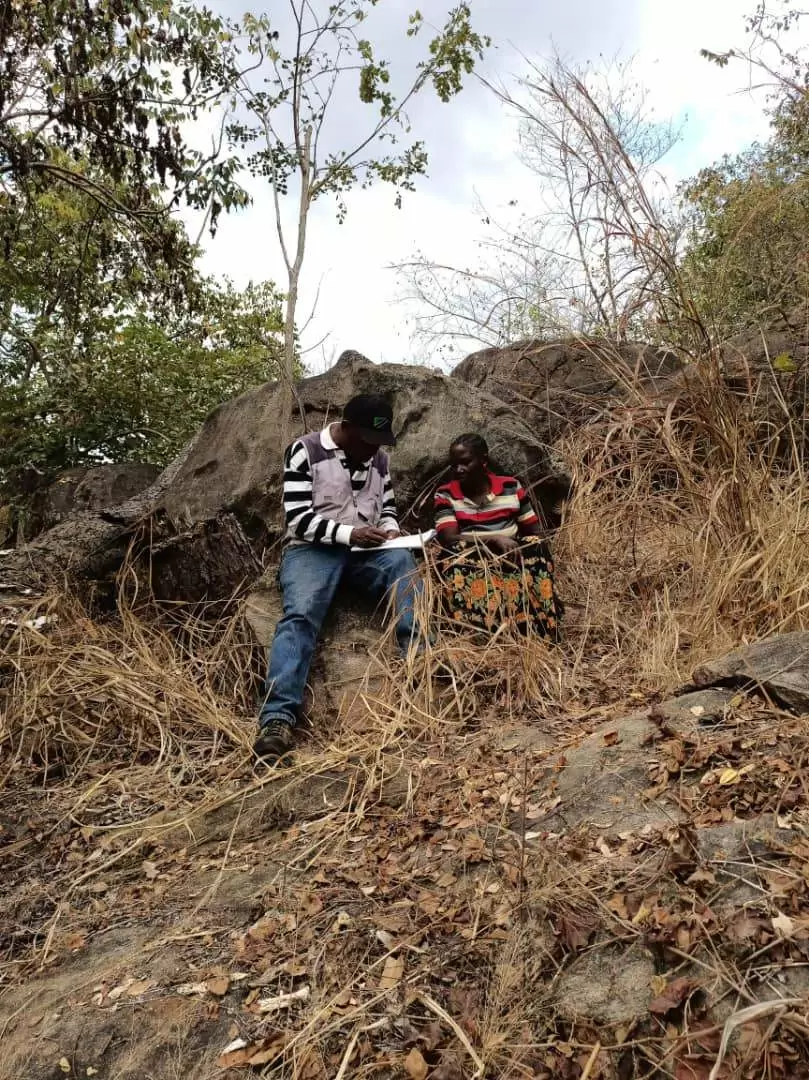
Two plants endemic to Tanzania are named after you. Can you tell us about them?
The two plants named after me are Emilia mbagoi and Uvariodendron mbagoi.
- Emilia mbagoi, this was named after me as an honorarium for my contribution in collecting new plant species. The team I was accompanying had found many new species in the Sumbawanga Region and honoured me by naming one of them after me.
- Uvariodendron mbagoi was a plant I knew before it was named. It grows in Kwamsisi, Handeni. In Kiswahili, it is known as Mkenene. The Zigua people use the tree bark as a spice for game meat. The plant was not yet named because it was difficult to get its flowers. I timed my visit to find it when it was flowering and researched it with a French botanist.
What is the process involved in identifying and naming a new plant species? In what language do you name them, and why?
You may identify a plant through experience by having observed it for a long time. If it is not known to you, you must collect and bring it into the herbarium. First, you need to conduct genus-level matching. Alternatively, read identification books with keys to family, genus, and species for matching purposes.
Before any plant is named, correspondence must be made with all specialists and herbaria worldwide to ensure the new species does not already exist elsewhere. One must study collections similar to the discovered species by either requesting a loan of a specimen or travelling to the respective herbarium.
Plants are named in Latin according to the guidelines. Some are named after a person. Some are named after a place. Some are named after a shape (symphonica). Some are named after odour (odorata). If named after a person, you add “i” at the end. If named after a place, you add “ensis” at the end. Some names may differ depending on the gender of the genus name.
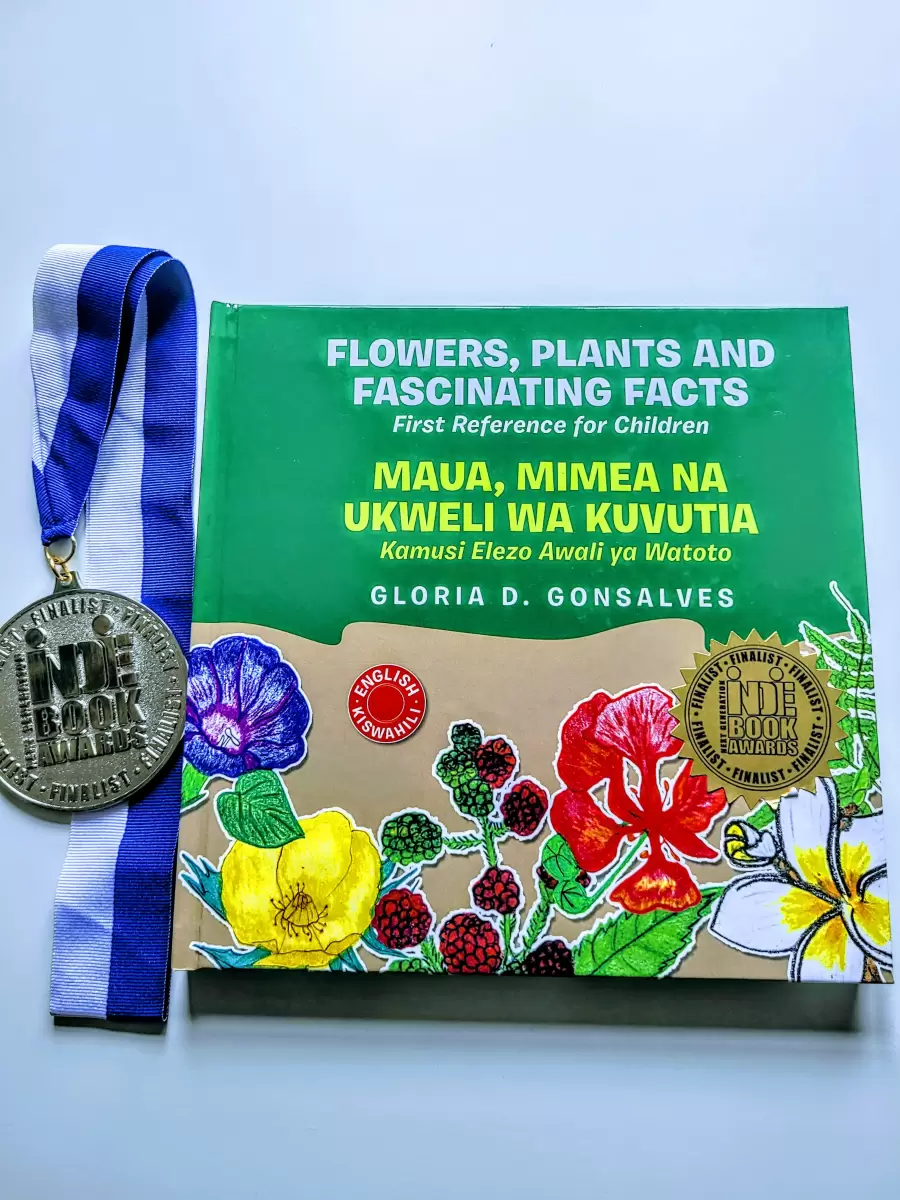
In Tanzania, we are still discovering plant species and naming those already in collections. For your book Flowers, Plants, and Fascinating Facts: First Reference for Children, I was happy to assist you with the Kiswahili naming by providing translation (tafsiri) and transliteration (utohozi). I wish to see more botanical books that inform Tanzanians about our flora.
You are a native of the Usambara Mountains. The Tanzanian history of naming plants is connected to the Usambaras since colonial times. Can you elaborate on this?
Tanzania’s botanical history began during German colonial times. It began with trees because they were easy to identify. The Germans had their headquarters in the Usambaras. Naturally, it made sense to begin studying the forest trees in their headquarters. The weather in the East and West Usambaras also played a role, as it was similar to their accustomed weather in Europe. After naming the plants in the mountain areas, they continued into the valley areas. Many Sambaa people are botanists because they were used as porters.
Some of the plants were named after the honorarium of the place where they were first seen, although they may also be available elsewhere.
In the former Tanganyika, some wives of the governing officers were used as plant collectors. Although they were amateurs, their names appear today as collectors. If one has contributed to a botanical society, one has access to any herbarium in the world.
During World War II, the German centre that housed plant specimens from Tanzania was destroyed. After this, the Kew Gardens became the centre for East African species. The Germans did not write the flora of Tanganyika. The British did. This foundation for studying Tanzania’s diverse flora is laid out in the historical two-part book Check-lists of the Forest Trees and Shrubs of the British Empire. No. 5. Tanganyika Territory. However, not all plants are named. If one is interested, one can research to identify what is not named and conduct further research to complete the naming.
How do you think botany can contribute to solving Tanzania’s environmental issues?
I believe that botany contributes about eighty per cent to environmental protection. Plants are food and shelter. Without plants, all living things cannot survive. Even in the Bible, plants were created first.
For land use planning, plants serve as a guide. For example, the Serengeti grassland must be protected because it is a source of food for animals.
Plants are a soil indicator when evaluating land use. For example, plants indicate the type of soil by how well they grow in it or by how well they resist soil erosion. Sustainable land use involves identifying which plant species are present and why. Most of the time, a particular plant is the reason animals are there.
You are also a writer. What drives you as an author or contributor? What is your next writing project?
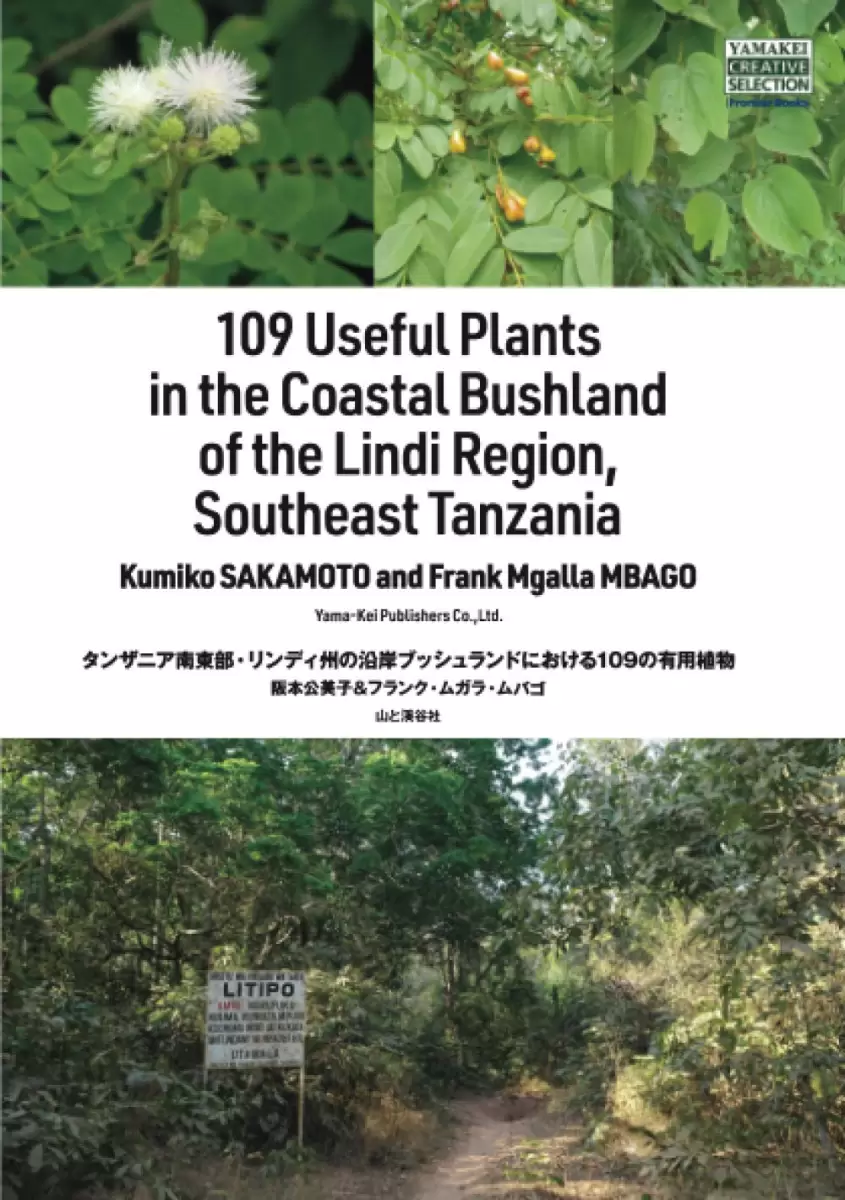
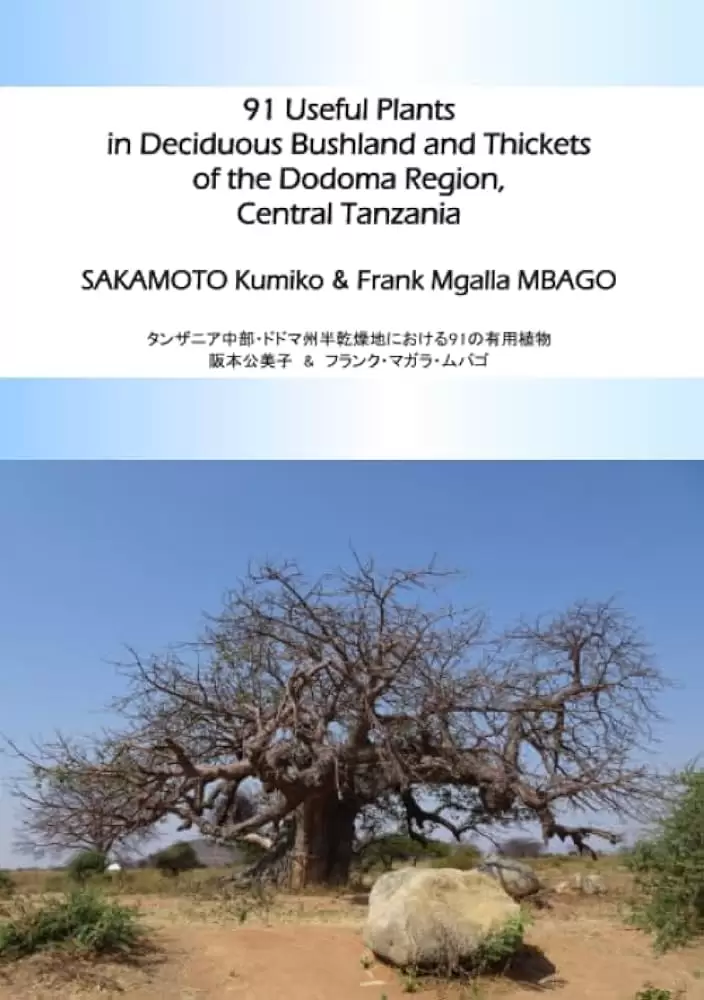
I have gained sufficient knowledge, and now is the best time for me to share it. I began writing in 2018. To date, I have authored and co-authored four books: 104 Plants for Spices, Fruits and Traditional Medicine in Zanzibar (2018), 91 Useful Plants in Deciduous Bushland and Thickets of the Dodoma Region, Central Tanzania (2020), 109 Useful Plants in the Coastal Bushland of the Lindi Region, Southeast Tanzania (2020), and Field Guide to Edible Plants in Tanzania and Their Nutrition: Focusing on Wild Plants in Dodoma and Lindi (2024).
I am also proud of your children’s botanical book and of the effort you put into it. You wanted to include my name, but we agreed it is sufficient to acknowledge me. Well done.
My next focus is on ethnobotany, the study of plants and their uses by humans.
Final thoughts about the study of botany?
Books are no longer seen as important sources of knowledge. Libraries are not being used. Students rely heavily on online sources. Imagine a PhD holder who does not own a bookshelf. Botany cannot be studied solely through online reading. Many materials are available off-site. Studies must be conducted onsite. Thinking capacity is being undermined by excessive reliance on quick reading and scrolling. It is difficult to write a botanical book these days because there are no readers. People have stopped buying and reading such books. I commend you for writing yours, which introduces children to botany.
Another potential area for studying botany is tour guiding. Many tour guides lack ecological knowledge. Visitors do not need to be told, “Look, there is a lion.” Tourists have eyes and do not need to be told to look. Instead, a visitor needs a story that is interconnected with the surrounding environment. For example, a guide can say, “That lion is resting on a tree branch. That tree can be found only in Manyara. Lions love it because the bark produces special oil against ticks.”
Tanzania has more than one thousand unnamed plant species. If you are interested in naming new plant species, you may contact Frank Mgalla Mbago at mbagomgalla@gmail.com.

congratulation
Wow! I am moved. Beautiful writen. Plants, flowers and nature always fascinated me since I was a little girl. I had plants, flowers pots And garden everywhere we lived. I was purnished for stealing flowers from school, because I thought I would grow thém better ať home. I collected plants from Mazinde and Moshi, hoping they will survive in Dar. I sent many letters to ask and beg fór a Volunteering job ať Kews garden in London. I have visited many botanic gardens in London, in Czech Republic in United States and in Austria.
I wish your book existed when I was a little girl, I wish I knew someone like Frank Mgalla Mbago when I was a little girl. I am still passionate and inspired with Plants, flowers And nature. Knowing and reading about you two brings excitment in me. I read through this article and I am burting with joy. I feel free somehow, I feel and see hope fór Tanzania plants and children. Thank you!
I think this book will be a beautiful gift to Georgina Magessa, children in Tanzania and East Africa at large.
Well done to you all!
A very inspiring flora journey that Mr Frank Mgalla Mbago has invested his life and energy in.Africa in particular and the world at large need people like him to preserve our natural heritage – biodiversity. Africa has a lot of wild fruits and flowers that we should not let them disappear from our sight.
Thank you Gloria (Glory), for your fore-sightedness to connect with Tanzania’s renowned botanist. Well done both of you.
Thank you for writing such a beautiful and insightful article on plants. I really enjoyed reading it and appreciated the effort and knowledge you shared. It was both informative and inspiring. Well done!
umefanya ulichopangiwa na Mungu kukifanya tangu ukiwa mtoto na siyo kulazimishwa na vya dyniani.
Hongera sana.
What a pleasure digesting this and so very insightful! Thank you for always bringing Tanzania to the forefront of all that you do!
Hongera mwalimu wangu F.M. MBAGO, kwa kazi nzuri, tunazidi kujifunza ujuzi wako katika mimea
Hongera mwalimu wangu F.M. MBAGO, kwa kazi nzuri, tunazidi kujifunza ujuzi wako katika mimea, nakumbuka tulivyo jifunza mimea inayo patikana katika hifadhi ya taifa Saadani.
What an inspiring story! Dr. Frank Mgalla Mbago is truly a national treasure, a botanist whose lifelong dedication to Tanzania’s flora has earned him the rare honour of having Emilia mbagoi and Uvariodendron mbagoi named after him. From the Usambara forests to Kew Gardens, his journey reflects passion, resilience, and an enduring love for nature. May his legacy inspire future generations to cherish and protect our botanical heritage.
Thankyou, I really enjoyed reading the beautiful and inspiring article on plants.I appreciate the effort and knowledge you shared, congratulations
Thanks for this Gloria, very interesting!
Imeandikwa vizuri, Asante sana
Pamoja na kutembelea Kew Gardens mara kadhaa na familia, sikujua kuwa mule kuna mmea una jina la Mtanzania
Mara nyingine nikienda lazima niutafute