
anag

Home>Anagrace Masinde

About Anagrace Masinde

This author has not yet filled in any details.
So far Anagrace Masinde has created 24 blog entries.

The Witness of Nina Mvungi and Other Stories

“The mystery of a failing marriage, the uncertainty of dystopia, a spirit with a dubious handle on his job. Esther Karin Mngodo turns her eye and pen to inventing worlds both realistic and speculative as she deftly moves us through the lives of Tanzanians. Mngodo’s stories are invitations: go on, sit beside her, she has something to tell you.” - Book Critic

2025-12-27T09:19:06+03:00

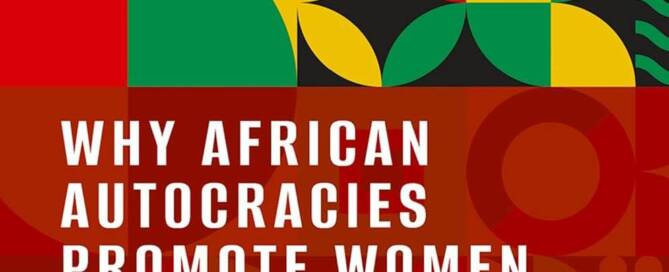
Why African Autocracies Promote Women as Leaders

“The face of African politics has changed significantly since the mid-1990s as more women have entered politics in both democracies and autocracies. At the same time, in authoritarian countries this has created a conundrum: these successes in attaining leadership roles for women potentially end up strengthening the very regime that violates human and women’s rights… Drawing on cross-national research in Africa and over 188 in-depth interviews in Uganda, Rwanda, Zimbabwe, Mauritania, Morocco, and in two democracies, Namibia and Botswana, the book explains how and why authoritarian countries promote women as leaders in Africa” – Book Abstract

2025-12-26T21:51:30+03:00

Artificial Intelligence, Society and Religion: Crossroads of Algorithm, Neoliberalism and Faith

“Karim Hirji’s Artificial Intelligence, Society and Religion: Crossroads of Algorithm, Neoliberalism and Faith is a path-breaking, inspiring and challenging book on AI that will help strengthen the social movements of resistance throughout the world. It delegitimizes the ideological obfuscations of imperialism—from the crimes of Eugenics to the fantasy of a happy AI future. It takes us on a fascinating and challenging journey, warns us of the grave dangers posed by corporate AI, and prepares us for the next stage of the lifetime battle for anti-imperialist and socialist humanity” – Book Reviewer

2025-12-26T20:05:55+03:00

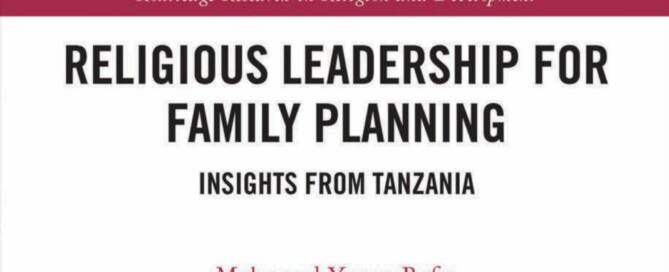
Religious Leadership for Family Planning: Insights from Tanzania

“Challenging the conventional view of development as a linear process between developer and developee, this book reveals development as a layered and dynamic process shaped by intersecting visions and competing desires for spatio-temporal transformation. The book uses the Kiswahili concept kujiendeleza [to make oneself go] to capture the awkward, unequal, and creative connections between NGOs and the Muslim and Christian religious leaders they work with for the implementation of their plans…. Providing an innovative and nuanced theorization of development, religion, and health, this book will be an important read for researchers of African studies, and of faith- based development"-Author

2025-12-26T11:32:05+03:00
Go to Top